
Google Ads Adds Spend Benchmarks to Compare Your Budget With Similar Advertisers
Google Ads is surfacing a Spend Benchmarks report that compares weekly ad spend and clicks with similar businesses, offering context rather than a profitability target.
 Written byEze Chidiebere Paul
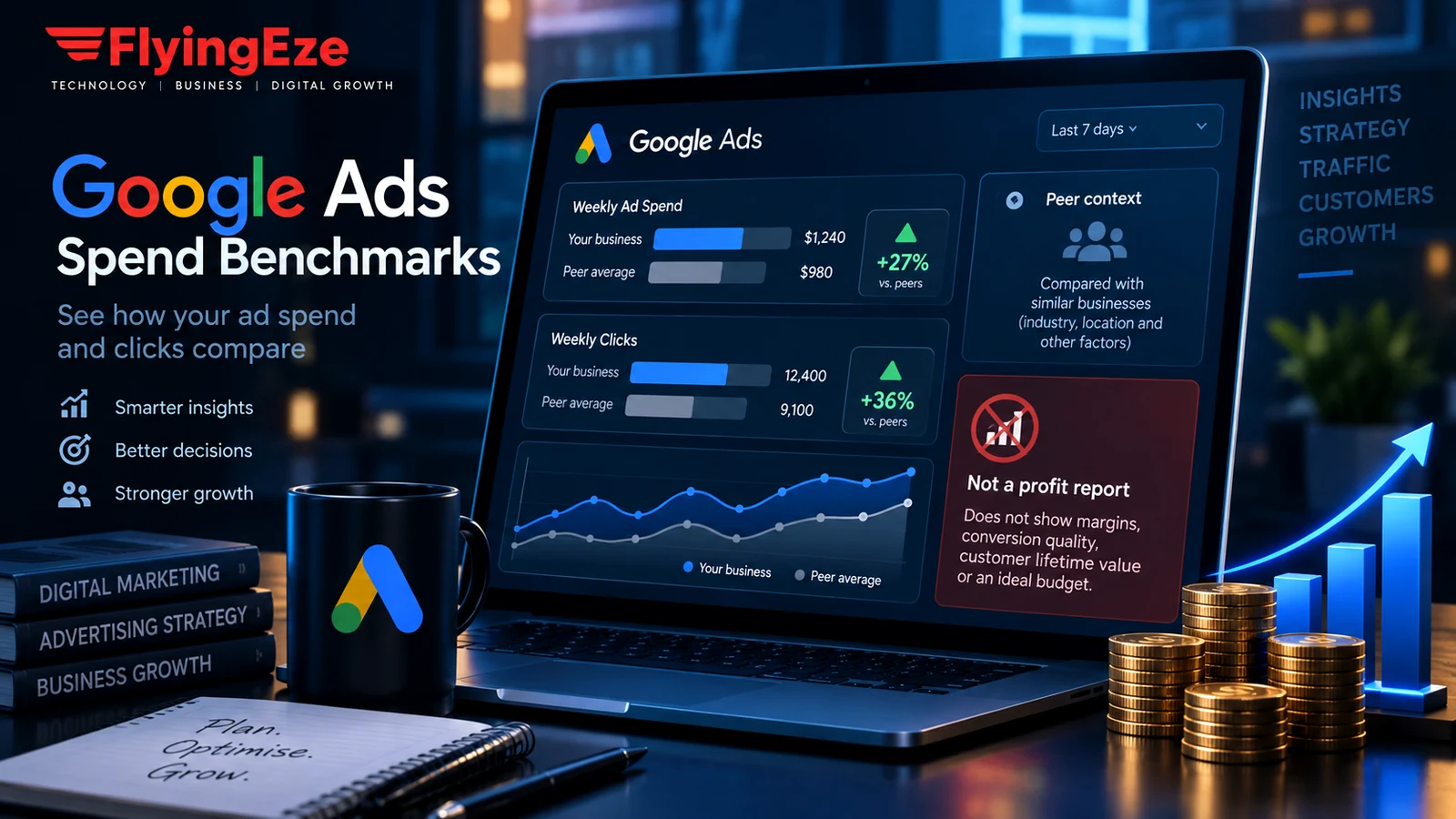
Google Ads is giving some advertisers a new way to see how their weekly spending and clicks compare with businesses Google considers similar.
The new Spend Benchmarks report has been spotted in the Google Ads Overview area. It compares an advertiser’s weekly ad spend and click volume with a peer group that Google considers comparable, using signals such as industry and advertising location.
What the Spend Benchmarks report shows
According to reporting by Search Engine Land, the report presents a side-by-side comparison of an account’s weekly spend and clicks against peer benchmarks. That can help advertisers quickly see whether they are operating above or below the level of businesses Google places in the same comparison group.
The feature is useful because many advertisers know their own budgets and results but have limited visibility into what comparable businesses may be spending.
What the benchmark does not tell you
A peer benchmark is not the same thing as an ideal budget. A business can spend more than its peers and still be profitable, or spend less and still outperform them.
The report does not, by itself, reveal profit margins, lead quality, conversion value, customer lifetime value or the incrementality of paid search. Those factors matter more than matching a competitor’s budget.
How advertisers should use the data
The best use of Spend Benchmarks is as a diagnostic signal. If your account spends much less than its peer group while campaigns are consistently limited by budget and profitable, the comparison may support a closer look at expansion opportunities.
If your account spends more than peers but produces weak conversion quality, the answer is not necessarily to spend less. It may indicate a need to review targeting, bidding, creative, landing pages or measurement.
Why the new report matters
Google Ads has steadily added more automated bidding, recommendation and measurement tools. Benchmarking adds another layer of context that can help advertisers understand where their account sits relative to a broader market.
But advertisers should avoid turning the report into a spending target. Peer activity can explain the competitive environment; it cannot determine the economics of an individual business.
What to check before changing your budget
- Conversion quality and revenue, not only clicks.
- Profit margins and contribution after advertising costs.
- Campaigns that are actually constrained by budget.
- Cost per acquisition and customer lifetime value.
- Whether more spend would reach genuinely incremental demand.
The bottom line
Google Ads Spend Benchmarks can help advertisers understand whether their weekly spend and traffic are unusual relative to similar businesses. That is useful competitive context, but it should remain one input among many.
The strongest budget decisions still come from combining market context with the economics of the business itself.
Continue reading

Dangote Refinery IPO Rush Exposes Stress Points in Nigeria’s Fintech Infrastructure
The Dangote Refinery IPO overwhelmed several Nigerian investment platforms, exposing fintech scaling and third-party risks while widening retail market access.

Anthropic Weighs New AI Model as OpenAI’s GPT-6 Astra Intensifies Enterprise Race
Anthropic is considering a new AI model as OpenAI’s GPT-6 Astra gains enterprise momentum, raising questions about safety, competition and IPO timing.

Cloudflare Lets Websites Block AI Training Without Leaving Search
Cloudflare's Disallow AI Training setting separates traditional search discoverability from AI-training permission for mixed-use crawlers such as Googlebot, Bingbot and Applebot.
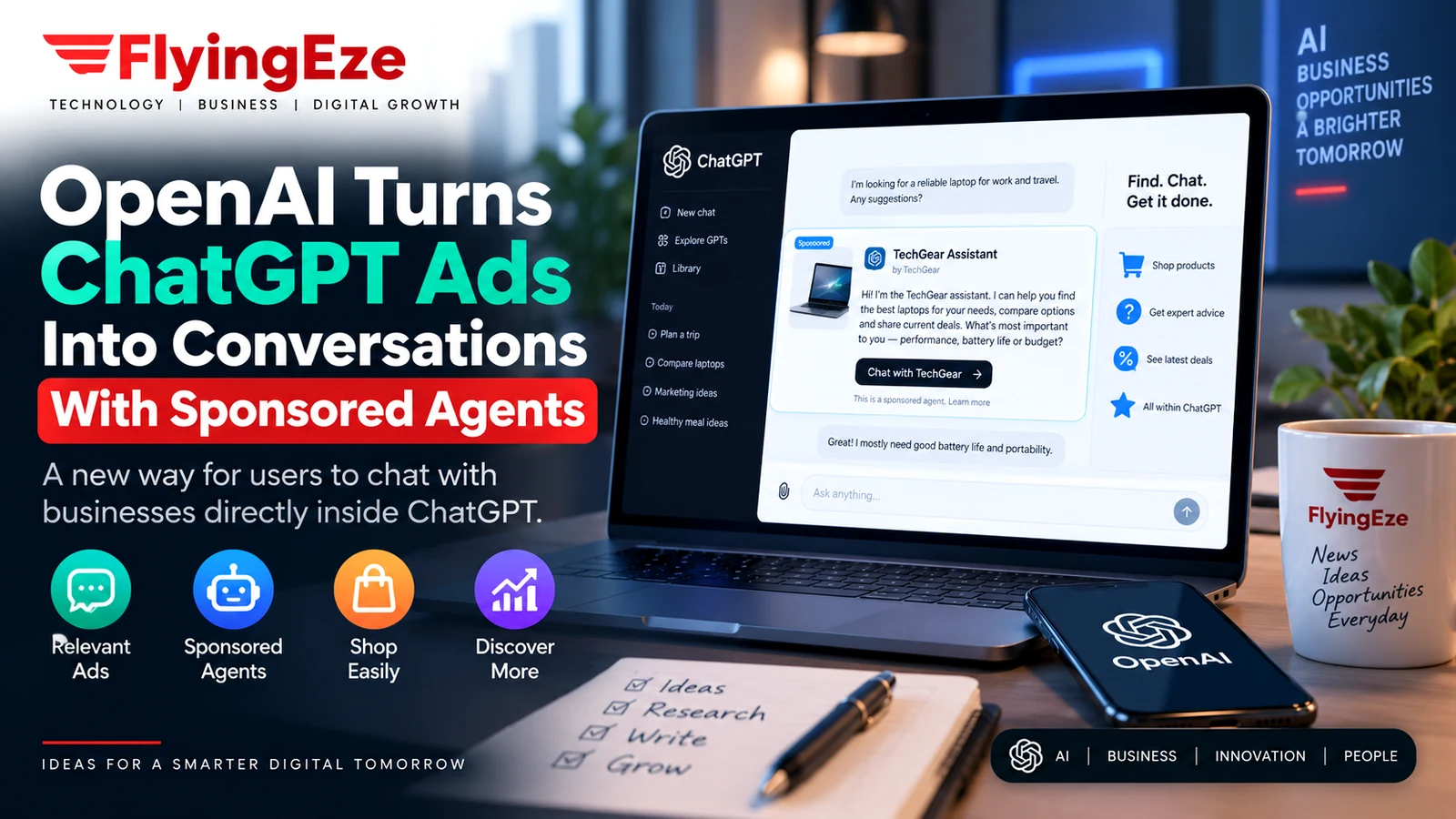
OpenAI Turns ChatGPT Ads Into Conversations With Sponsored Agents
OpenAI is testing Sponsored Agents in ChatGPT Ads with selected US advertisers, alongside new AI campaign tools and HubSpot and Shopify integrations.