TERRIFYING hoax emergency alerts warning of nuclear and chemical attacks have been sent to millions of civilians across Russia and Ukraine.
Hackers reportedly issued several bogus announcements through official warning apps and text messaging services to spread panic among the .
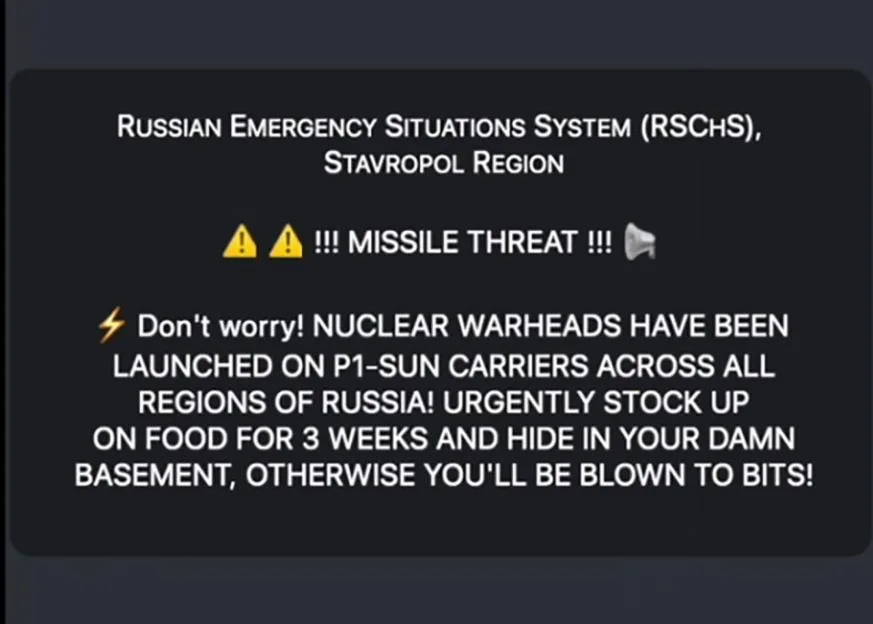
emergency warning system was feared to have been infiltrated by a team of hackers overnight as Russians were sent messages about incoming nuclear warheads.
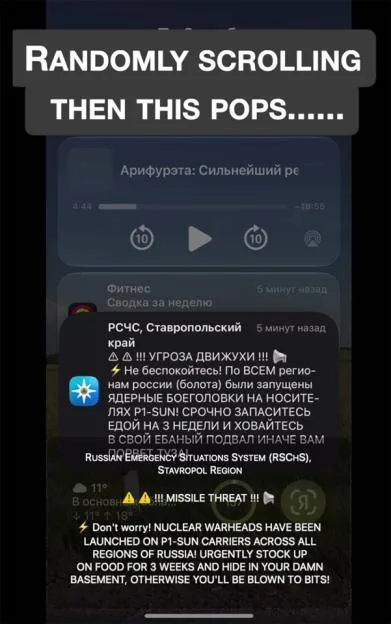
The panic-inducing alerts appeared on official channels of Russia’s Emergency Situations Ministry [EMERCOM] in Moscow, St Petersburg and multiple other regions.
Russians were ordered to stockpile food for three weeks and hide in their cellars – or face being “blown to bits” by bombs at around 2:45am.
Identical messages appeared on official emergency channels and the ministry’s mobile app.
There were also reports of Russians receiving the frightening alerts by SMS as alerts popped up on MAX, Russia’s state-backed messaging service.
Kyiv doesn’t possess any but hackers are suspected of being behind the cyber attack.
Russia’s Emergency Situations Ministry publicly acknowledged a massive cyberattack.
It claimed the country’s sirens, loudspeakers, television and warning systems hadn’t been compromised despite the alert system’s humiliation.
The ministry was working to restore normal service into the early hours.
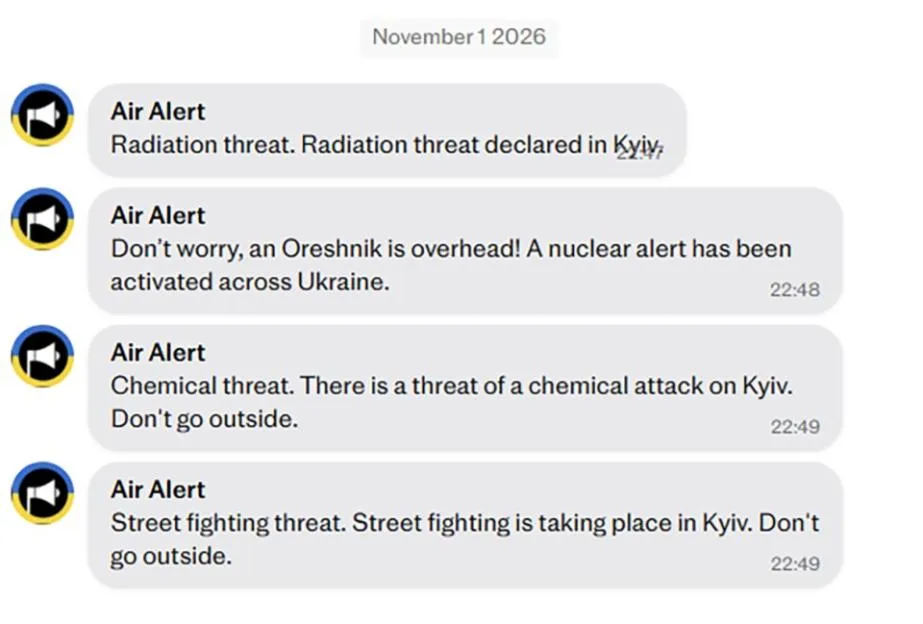
The nuclear scare came just hours after a similar cyberattack breached Ukraine’s official Air Alert system.
Scared Ukrainians were warned of a radiation hazard followed by a serious incoming nuclear and chemical threat.
Four back-to-back messages read: “Radiation threat. Radiation threat declared in Kyiv.
“Don’t worry, an Oreshnik is overhead! A nuclear alert has been activated across Ukraine.
“Chemical threat. There is a threat of a chemical attack on Kyiv. Don’t go outside.
“Street fighting threat. Street fighting is taking place in Kyiv. Don’t go outside.”
The Ukrainian authorities immediately confirmed their emergency alert service had been targeted by hackers.
The system is crucial for Ukraine as it acts as the main line of defence for civilians against Putin’s drone and missile strikes.
The app is used to warn people in real time of the threat of air strikes from Russia.
People often have only minutes to find shelter with thousands often left running to underground hideouts.
Ukrainian authorities issued a statement saying the system was working normally after midnight.
Hours later, the systems were activated for real as the Kremlin ordered an attack on Odesa, injuring four people.
It comes as a top Russian propagandist claimed from Volodymyr Zelensky.
One of Vlad’s key cronies, chief foreign affairs aide Yuri Ushakov, said of the despot: “I believe he would answer, of course. Putin has never once refused to engage in talks.”
Putin has declined calls from Zelensky several times – notably on the eve of the war, February 23, 2022.
On the same day, Ukraine unleashed fury on Russian oil refineries close to Moscow.
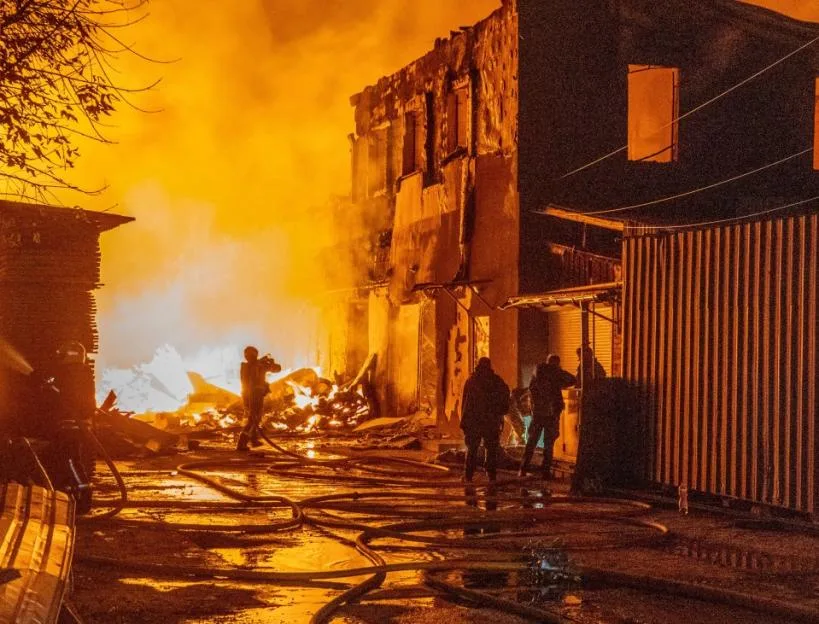
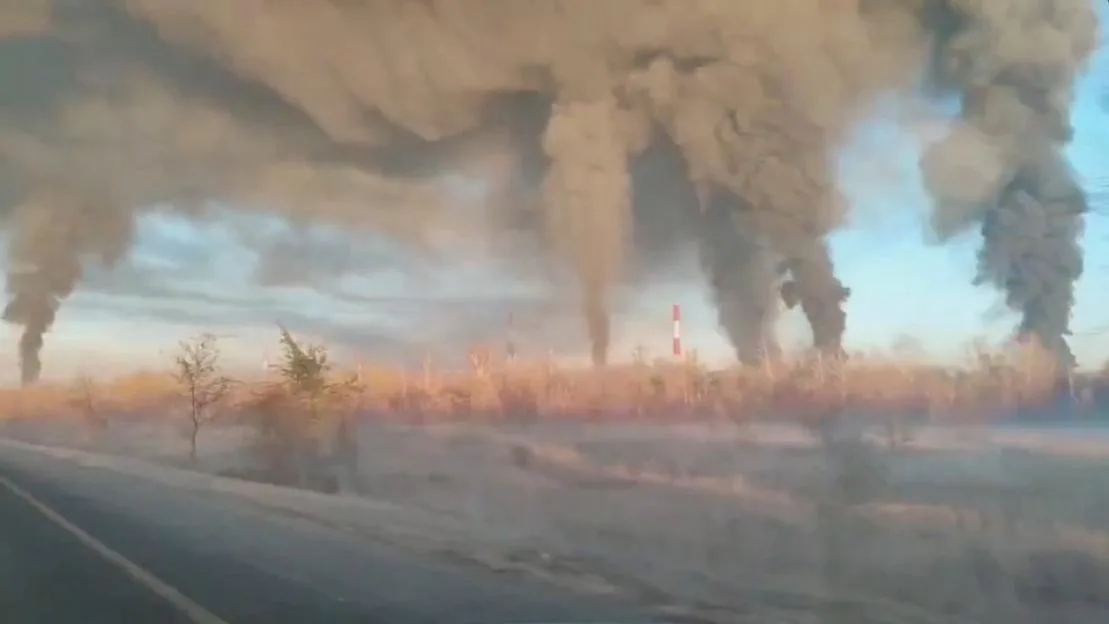
Shocking images showed a refinery engulfed in flames and covered by a mushroom cloud after the devastating strike.
A thick blanket of dark, acrid smoke can be seen drifting across the region as the blazes illuminate the sky.
A massive drone swarm targeted an “industrial enterprise” in the Nizhny Novgorod Oblast overnight, governor Gleb Nikitin said.
Ukraine has repeatedly struck Russian oil and sites in retaliation for Putin’s relentless attacks on its infrastructure.
has been pressuring Kyiv for weeks to stop such attacks, blaming them for the rising cost of .
even for Ukrainian terminals after , leaving cities vulnerable to Russian attacks.