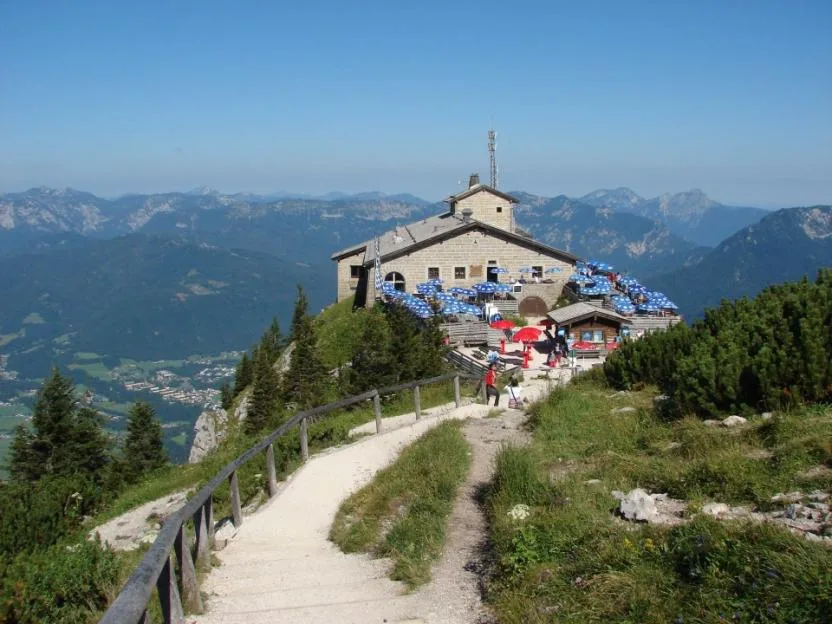
THERE is much confusion in Germany as to whether Adolf Hitler’s Alpine guest house will – or should – be rebuilt after a fire that gutted it.
The Kehlsteinhaus, also known as Eagle’s Nest, has been a thorn in the side of authorities for the better part of 60 years after surviving World War Two unscathed.
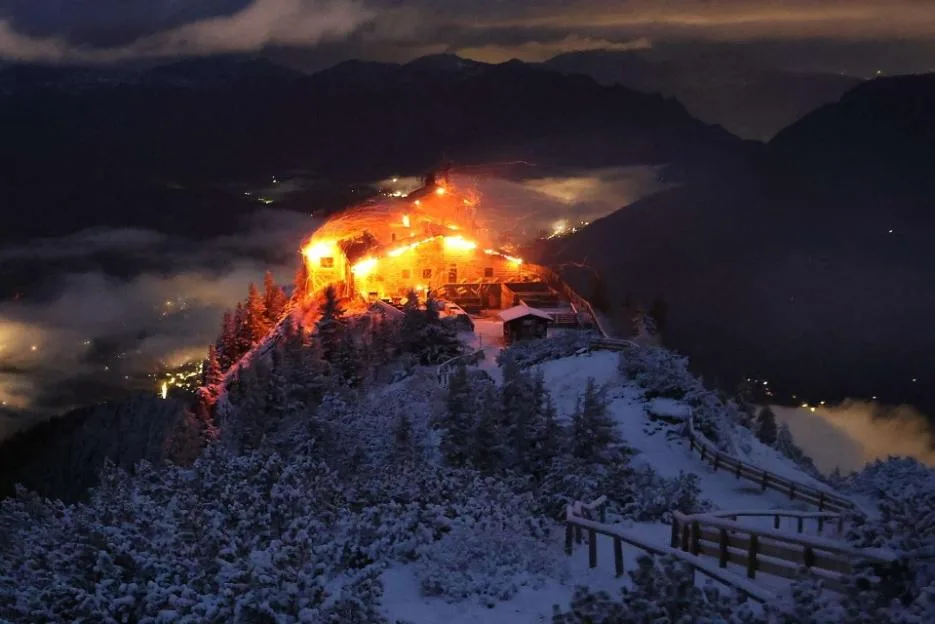
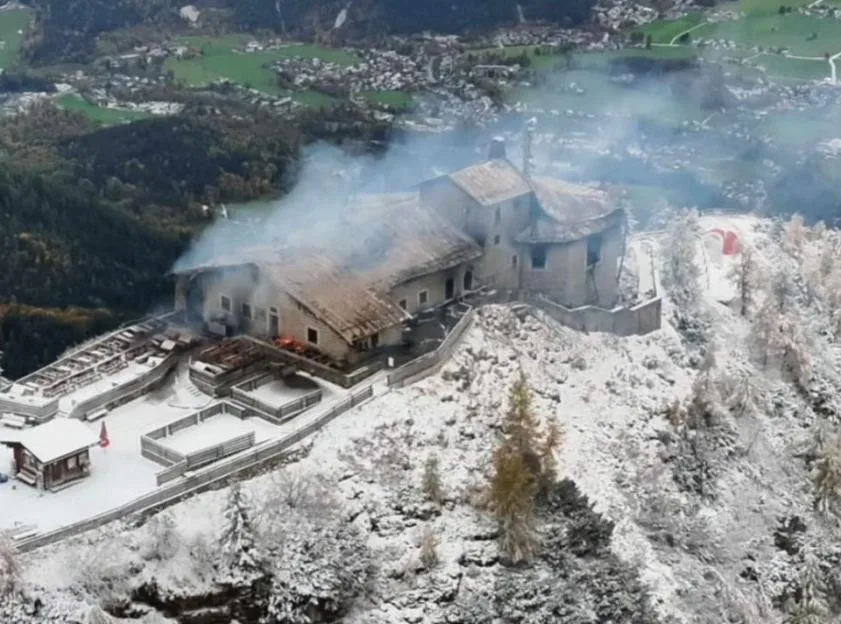
The debate over whether it should be preserved has now resurfaced after the Nazi relic – , particularly for visitors from the US and Israel – was over a week ago.
Now the site has been cordoned off until a decision is eventually reached.
There are major concerns over the possibility of squatting or pilgrimages by neo-Nazis.
Barriers and further scaffolding will be transported by helicopter to the top of the mountain to guard the remains.
“We can hardly leave the ruin standing there,” said Joachim Herrmann, the conservative Bavarian interior minister, who advocated reconstruction.
But Sven Keller, the director of the Obersalzberg Documentation Centre, argued that a perfect reconstruction was “out of the question”, owing to the extent of the damage.
Jens-Christian Wagner, director of the Buchenwald concentration camp, described Eagle’s Nest and other architectural relics from the Nazi era as “pieces of evidence”.
“They lose their evidential value if they are not preserved in their original form but are instead replicated,” he told The Telegraph .
“For this reason, no replicas should be built, as these would, in a sense, constitute ‘fake history’.”
Wagner wants to see the site repurposed in a historically responsible manner.
Meanwhile, Mary Fulbrook, a professor of German History at UCL, said the project was fraught with the risk of attracting right-wing Nazi sympathisers.
She said: “Reconstruction of a site so closely associated with Hitler risks creating a focus attractive to Right-wing sympathisers with Nazi ideology and recreating the impact of the grandiose of the dictator in this impressive setting.
“On the other hand, preservation of the ruin in some way to provide historical contextualisation, and still draw tourists, could be a very useful adjunct to Germany’s extensive memorial landscape.”
Earlier this year, The Sun travelled to Vienna, where a similar debate has been simmering over the terrace of the Hofburg Palace, where Hitler announced the annexation of Austria to the Third Reich.
People were invited to cast their vote on whether it should be reopened – but there were fears that Neo-Nazis would flock to it to perform Hitler’s salute.
Peter Hohenhaus – a world authority on the industry, who has visited over 900 “dark” destinations – is concerned about the “wrong kind” of pilgrims, those who treat tragedy less as and more as a shrine.
“I have difficulty with Nazi sites, for example, Eagle’s Nest [built in 1938 as a Nazi party conference and social venue] in ,” he told The Sun.
“I went on an organised tour once. Interestingly, they only exist in English and are mostly taken up by Brits and Americans. I was the only non-native English speaker.
“I had a very uncomfortable feeling as there is always the risk of glorifying Nazism.”