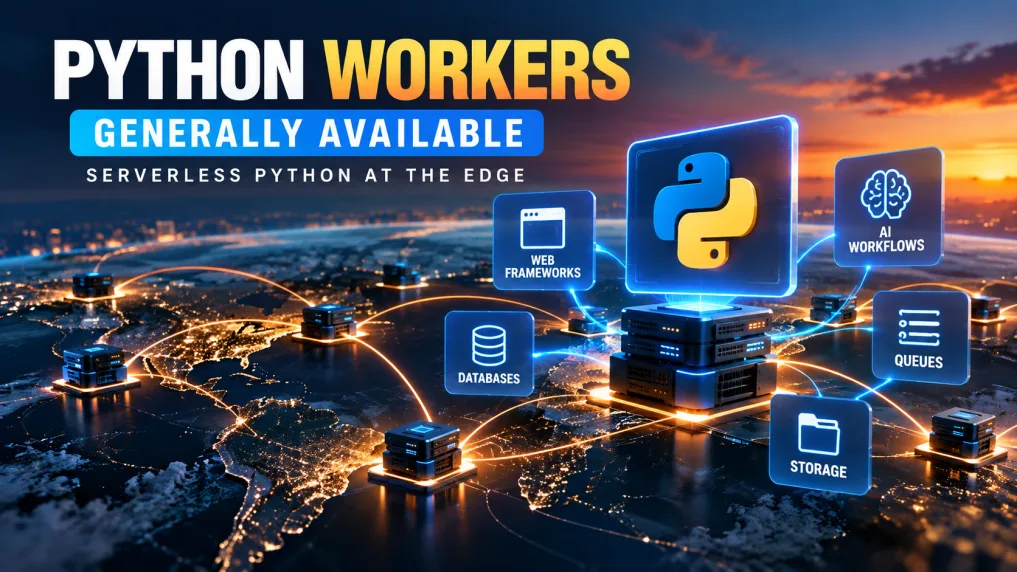
Cloudflare has moved Python Workers to general availability, making Python a first-class supported language on its serverless developer platform.
The change is significant for developers who previously had to rely more heavily on JavaScript or TypeScript for Cloudflare Workers. Python code can now connect directly to services across the Workers platform, including Workers AI, D1, R2, Hyperdrive, Durable Objects, Queues and Workflows.
Key takeaways
- Python Workers are now generally available rather than experimental or beta-only.
- Cloudflare says Python is now a first-class supported language on its developer platform.
- Developers can use familiar Python frameworks and packages while connecting to Workers platform services.
- Cloudflare provides an FFI layer that lets Python code work with JavaScript runtime objects and APIs when needed.
- GA does not remove the need to test package compatibility, deployment behaviour and performance for each application.
What does general availability mean?
Cloudflare introduced Python Workers two years ago as an effort to make Python development on its edge platform feel as natural as building Workers in TypeScript. The company now says the runtime is production-ready and fully supported.
That changes the status of Python Workers from an emerging capability into a supported option for teams that want to deploy Python applications at Cloudflare's edge.
Which Python frameworks and packages are supported?
Cloudflare's current documentation highlights support for packages and frameworks including FastAPI, LangChain and Pydantic. The platform also includes package tooling designed to make Python dependencies install and boot quickly in the Workers runtime.
Developers should still verify that the exact libraries they depend on behave correctly in the environment. Some Python packages assume access to operating-system features or native extensions that may not map cleanly to a serverless runtime.
How Python connects to Cloudflare services
One of the more useful parts of the GA release is that Python Workers can access the wider Cloudflare platform rather than operating as isolated functions.
That includes:
- D1 for SQL data;
- R2 for object storage;
- Durable Objects for stateful coordination;
- Queues for asynchronous workloads;
- Workflows for multi-step durable processes;
- Workers AI and Vectorize for AI workloads; and
- service bindings for connecting Workers to other internal services.
Cloudflare also exposes JavaScript objects and runtime APIs through a foreign-function interface, which can help Python applications use capabilities that originated in the Workers JavaScript ecosystem.
Where Python Workers could be useful
Python's large ecosystem makes the runtime relevant to several common workloads. Lightweight APIs and web applications are an obvious fit, particularly for teams already using frameworks such as FastAPI.
AI and data-oriented applications are another strong use case because many orchestration, validation and machine-learning libraries are Python-first. Moving selected logic closer to users could reduce the operational complexity of maintaining a separate Python service solely to support edge-facing applications.
What should developers test before migrating?
Package compatibility
Do not assume that every package available through Python package indexes will behave exactly as it does on a traditional Linux server. Test dependencies individually, especially those that depend on native binaries or low-level operating-system behaviour.
State and storage assumptions
Serverless runtimes are different from long-running application servers. Code that relies on local persistent state should be redesigned around durable platform services such as D1, R2 or Durable Objects.
Cold-start and latency behaviour
Measure the application that matters rather than relying on generic benchmarks. Package size, dependency loading and external API calls can affect real-world response times.
Secrets and service bindings
Use the platform's environment variables, secrets and service bindings rather than hard-coding credentials. That matters particularly when a Worker connects to databases, AI services or third-party APIs.
How this fits Cloudflare's broader developer strategy
Cloudflare has been expanding Workers from a JavaScript-centric edge runtime into a broader application platform. Recent additions span databases, storage, AI, queues, workflows and developer tooling.
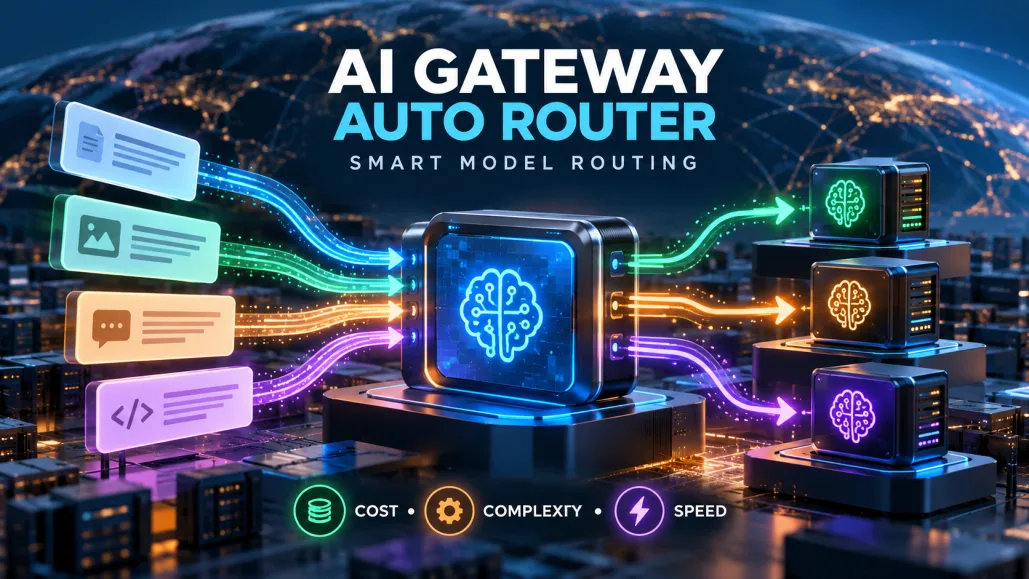
FlyingEze has also covered Cloudflare AI Gateway's Auto Router and Cloudflare's Monetization Gateway for AI-agent payments , both of which show the company extending beyond basic edge functions.
Bottom line
Python Workers reaching general availability lowers the barrier for Python teams that want to build directly on Cloudflare's serverless edge platform.
The biggest benefit is not merely that Python code can run in Workers. It is that Python applications can now participate more directly in the wider Cloudflare developer stack. Teams considering migration should still validate package support, state-management patterns and production performance before moving critical workloads.