Data residency means knowing where a software provider stores or processes your information—and which locations and people can access it. For a Nigerian business using software as a service (SaaS), that may involve customer records in one country, backups in another, technical support in a third and payment or messaging integrations operated by separate companies.
Location matters for privacy, regulatory duties, recovery, customer contracts and operational risk. But an important distinction is often missed: Nigerian law does not impose one universal rule that every commercial SaaS database must remain physically inside Nigeria. The Federal Ministry's announcement of the National Digital Cloud Policy on 17 August 2026 expressly distinguishes ordinary commercial data from defined categories of government and regulated data that may be subject to specific sovereignty requirements. Separately, the Nigeria Data Protection Act 2023 regulates cross-border transfers of personal information.
For customers, the right question is not simply “Is the SaaS hosted in Nigeria?” It is “What data is involved, where does it go, what legal and technical protections apply, and can the provider demonstrate them?” Here is how to find out.
Data residency, localisation and sovereignty: three different ideas
Data residency describes the geographic location of data storage or processing. A vendor may promise that a defined category of customer data stays in a specified cloud geography. As Microsoft's data-residency documentation explains, such commitments can apply differently to data at rest and data being processed, and can vary by product or service.
Data localisation is a requirement that certain data remain or be processed within a specified territory, often with limits on transfers. It is a legal or contractual restriction, not merely a technical preference.
Data sovereignty concerns legal jurisdiction and effective control over data, including the laws that may affect its custody, access or disclosure. Storing files in Lagos does not automatically settle every sovereignty question if a foreign vendor, parent company or subprocessor can access them remotely.
| Term | Practical meaning | Example question |
|---|---|---|
| Residency | Where data is stored or processed | Which country hosts the primary database and backups? |
| Localisation | Whether a rule requires specified data to remain within a territory | Does our regulated workload have an in-country hosting requirement? |
| Sovereignty | Which jurisdictions and parties can exercise legal or operational control | Who can compel disclosure or administer the data? |
| Cross-border transfer | Moving or making personal data available across national borders | On what documented basis does an overseas vendor receive it? |
These terms overlap, but they should not be treated as interchangeable.
Does Nigeria require all SaaS customer data to be stored locally?
No blanket commercial-data localisation requirement can be inferred from the general privacy law or the August 2026 cloud-policy announcement. The Federal Ministry of Communications, Innovation & Digital Economy says the 2026 policy maintains an open market and applies narrowly targeted sovereignty measures to defined government and regulated datasets rather than imposing general localisation on commercial information.
That is not permission to transfer personal information anywhere without safeguards. It also does not override obligations that may apply to a specific public-sector contract, financial service, critical system or other regulated activity. A SaaS customer should identify its sector, the data involved, and any applicable contract or regulator-specific directive before selecting a location.
The regulatory landscape has evolved. For example, FlyingEze previously reported on Nigerian banks seeking more time over payment-data localisation . That report provides sector-specific context; it should not be used to claim that the same rule applies to every online shop, school or appointment-booking service.
What the Nigeria Data Protection Act says about overseas transfers
The main general statute is the Nigeria Data Protection Act (NDPA) 2023 . The General Application and Implementation Directive (GAID) 2025 provides further implementation guidance, including Article 45 and Schedule 5 on cross-border transfers.
Sections 41 and 42: document a valid transfer basis and protection
Section 41 restricts transfers of personal data from Nigeria unless the recipient is covered by a qualifying protection mechanism—such as appropriate law, contractual clauses or binding corporate rules that affords adequate protection—or a condition in section 43 applies. It also requires controllers or processors to record the transfer basis and adequacy.
Section 42 describes factors relevant to adequacy, such as enforceable rights, available legal remedies, data-protection laws and supervisory authorities. The existence of a foreign data centre or a marketing claim of “GDPR-ready” does not, on its own, prove that an NDPA transfer requirement has been met.
Section 43: other lawful grounds are conditional
Where adequate protection has not been established, section 43 provides specified alternative grounds, including properly informed consent about transfer risks in the circumstances described by the Act, necessity for a relevant contract, important public interest, legal claims and vital interests. These are not all-purpose shortcuts for routine outsourcing. A business should document why a particular ground genuinely applies rather than assume that a broad consent box cures every transfer problem.
GAID 2025: contracts should identify processing locations
Article 34 of the GAID describes the content expected in a data processing agreement (DPA), including the purpose, responsibilities and location of data processing in light of cross-border transfer rules. Article 45 and Schedule 5 address the evaluation of transfers. This is especially relevant when a Nigerian company buys CRM, payroll, healthcare, education or hospitality software from a vendor whose hosting arrangements are not obvious.
The Act regulates personal data—information relating to identifiable individuals—not every piece of commercial information on the internet. Other duties can arise from contractual confidentiality, sector-specific rules and cybersecurity obligations even when a dataset is not personal data.
The hidden places SaaS data may travel
A SaaS provider's advertised cloud region is only the start of the investigation. Consider these components separately:
Primary databases and application storage
Customer profiles, payroll entries, booking records, invoices and other core application data may reside in the selected cloud region. Ask the vendor to identify the country and geographic boundaries—not just say “secure servers” or “hosted on AWS”.
Backups and disaster-recovery replicas
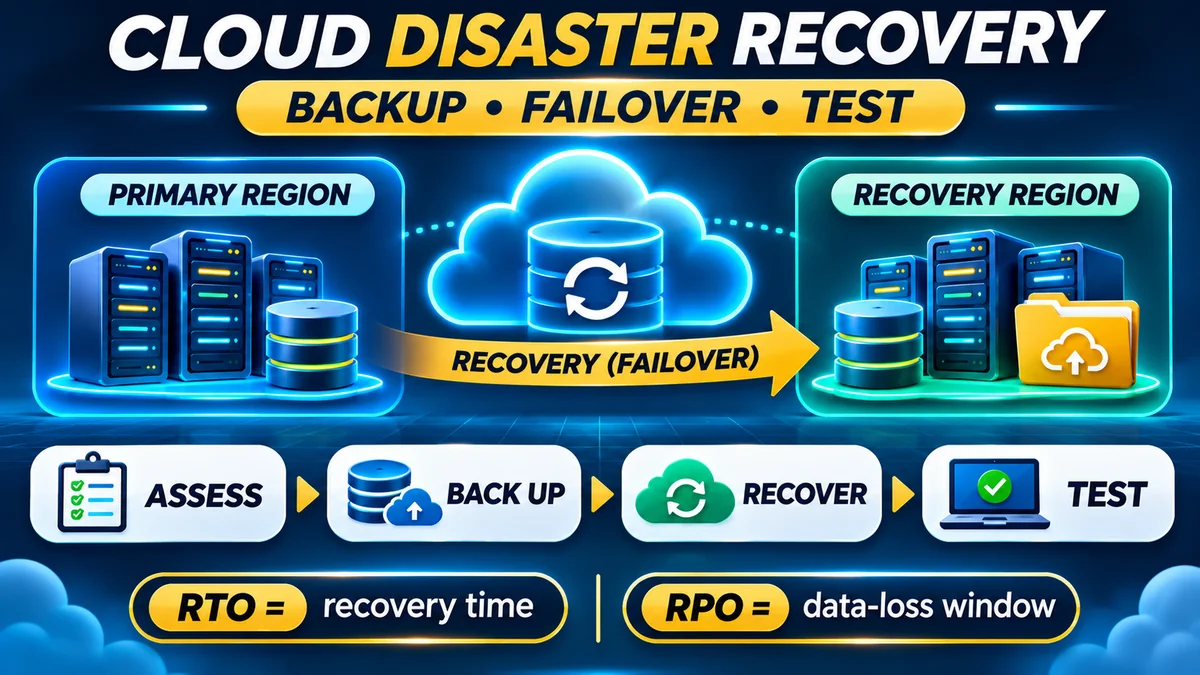
A provider may copy backups to a different location to improve disaster recovery. That can improve resilience while raising residency and transfer considerations. Ask about the backup country's location, retention period, security controls and who can initiate a restore. FlyingEze's 3-2-1 backup strategy guide explains why backup independence matters, but a separate location still requires appropriate legal and contractual treatment.
Support access, logs and analytics
Remote troubleshooting can expose selected customer information to support staff or technical contractors abroad. Logs may contain names, email addresses, IP addresses, identifiers or free-text messages. Analytics, crash reporting and AI assistants may add further recipients. Vendors should explain their support-access controls and whether sensitive records are masked or exported.
Payment, communication and other subprocessors
A Nigerian SaaS product might use one company for card payments, another for emails or SMS, and another for customer-service tickets. Those services may process personal data in their own environments. The location of the main application server is therefore not a complete map of data transfers.
Microsoft's Dynamics 365 and Power Platform residency guidance illustrates why customers should check product-specific commitments and exceptions: a selected geography for core customer data does not necessarily describe every connected service, identity component, support system or preview feature. Do not assume another vendor follows Microsoft's exact architecture.
Data residency is not the same as data security
Keeping data in Nigeria may meet a relevant residency requirement or simplify some operational choices, but it does not automatically secure a system. A poorly configured server in Lagos can expose records; a properly configured overseas service may offer strong access controls while still needing lawful transfer arrangements.
Assess identity management, multifactor authentication, least-privilege roles, encryption in transit and at rest, key management, audit logs, vulnerability management, incident response and restore testing. The AWS shared responsibility model is a useful illustration: the cloud provider secures its infrastructure while customer responsibilities vary by service and include important application and data configuration decisions.
For Nigerian consumers, data-access rights also matter. FlyingEze's guide to open banking consent, data access and customer rights provides related context on why access and accountability matter as much as where information is stored.
How data location can affect performance, availability and cost
Geographic proximity sometimes reduces network delay, but real performance depends on internet routing, application design, caching, database queries and connectivity quality. A Nigerian customer may find that a well-connected regional service performs better than a poorly maintained server situated closer to home. Measure typical and peak response times instead of judging by geography alone.
Resilience also involves trade-offs. Replicating a system to a distant region may limit single-site failure risks, yet add costs and transfer restrictions. A strict in-country-only design may require multiple suitable local facilities, independent connectivity and tested backups to avoid concentrating all recovery resources in one location.
Prices can include compute, database, storage, private connections, cross-region replication, outgoing transfer and support. A residency requirement may narrow the set of available services or introduce contract terms and additional costs. Businesses should compare full multi-year costs and recovery objectives, not just a subscription's headline price.
What SaaS customers should ask before signing a contract
Use the following due-diligence questions. A trustworthy provider should be able to answer with documentation appropriate to the service and sensitivity of the data.
| Question | Evidence to request |
|---|---|
| Where is core customer data stored? | Country, region, product-specific residency statement |
| Where are backups and replicas? | Backup location map, retention and recovery policy |
| Who can access data from abroad? | Support-access rules, role restrictions, audit information |
| Which third parties process personal data? | Subprocessor list and services performed |
| What is the legal basis for relevant transfers? | Documented NDPA assessment and appropriate transfer instruments or grounds |
| What happens after a security incident? | Incident-notification terms, escalation contacts and response plan |
| Can we export or delete our information? | Data export format, retention, deletion and exit procedures |
| Can the provider demonstrate safeguards? | Relevant assurance reports, technical measures and restore-test evidence |
For processing of personal data, obtain a suitable DPA, not merely a marketing page. Review which party determines the purpose of processing, which acts on instructions, how new subprocessors are approved, and what happens if hosting locations change. The GAID's Article 34 gives Nigerian customers a clear reason to request details of processing location in contractual documentation.
Practical examples for Nigerian businesses
A small retailer choosing online inventory software
A retailer may store staff identities, customer contact information and purchase histories in a SaaS product. It should ask where those personal records and backups are kept, whether foreign support staff have access, and which integrated services receive them. There is no sound basis for assuming that an overseas-region option is always prohibited; the retailer must instead evaluate applicable requirements and safeguards.
A school or clinic managing sensitive records
Student and patient records may involve more sensitive information and greater harm if disclosed. The organisation should apply more demanding due diligence, including confidentiality, retention, access roles and any education- or health-specific obligations. Geographic location alone is insufficient to establish compliance or security.
A bank or public institution procuring cloud services
A regulated financial institution or government body may face additional requirements beyond the NDPA. It should examine current sector directives, procurement terms and cloud-policy classifications with legal and compliance teams. It would be misleading to treat a requirement for defined payment or government datasets as a universal rule for all private businesses.
A Nigerian SaaS vendor serving customers across Africa
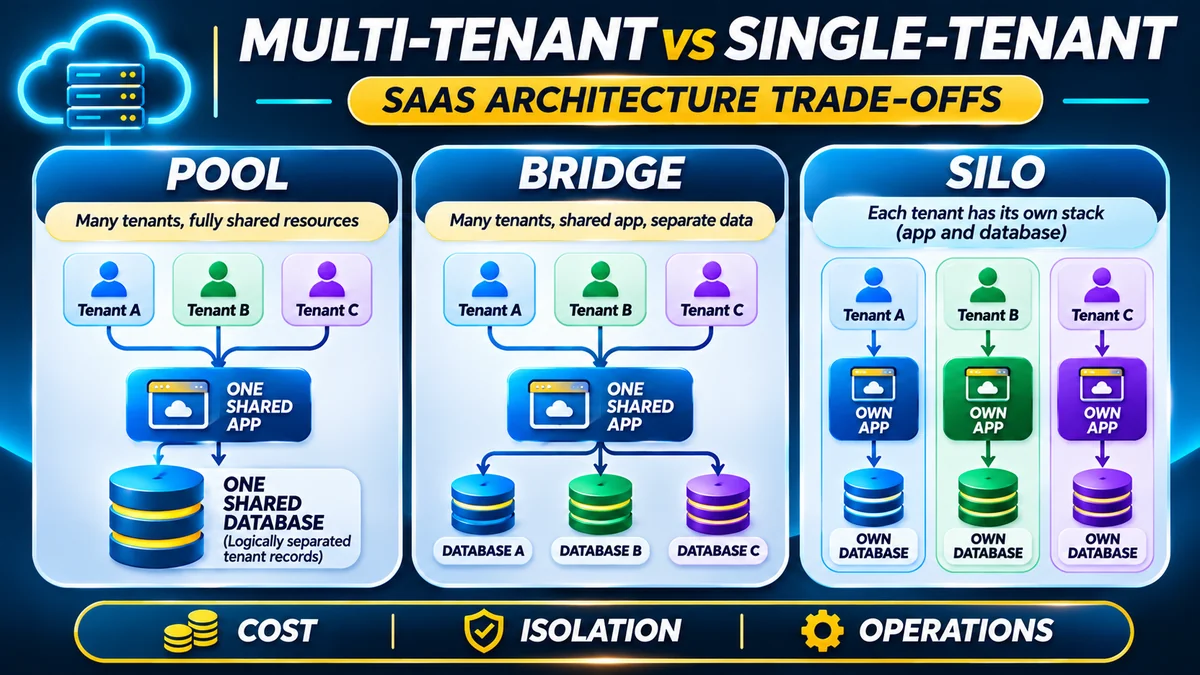
The vendor may process information for customers in multiple countries. It should maintain a location and transfer inventory by tenant and service, support contractual residency choices where offered, restrict cross-tenant access, and account for other jurisdictions' requirements. A promise to host a tenant's main database in one country should not omit shared logs, email or support tools.
A 10-step data residency checklist for Nigerian SaaS buyers
- Identify the dataset. Separate personal data, confidential business records, public content and any specifically regulated information.
- Map the full service. Include main application, database, file storage, backups, logs, analytics, support tools and integrations.
- List each country. Document where each component stores or processes relevant information, including overseas remote access.
- Identify the rules. Assess the NDPA, GAID, sector-specific directives and contractual restrictions that actually apply.
- Document transfer safeguards. Obtain the provider's explanation and supporting instruments or other applicable lawful ground for relevant transfers.
- Review the DPA. Confirm processing locations, purposes, subprocessor terms, incident provisions and security responsibilities.
- Check technical security. Verify MFA, role-based access, encryption, audit logging and protected backups.
- Test performance and recovery. Confirm user experience, uptime expectations, restore arrangements and support escalation.
- Plan for exit. Ask about exports, migrations, deletion verification and retained backup copies after cancellation.
- Reassess on changes. Review changes to cloud region, processors, features and applicable requirements before renewal or major migration.
Maintain this assessment as a short, dated document that procurement, technology and compliance teams can update. The most useful answer is evidence-backed, not a checkbox that says “data hosted securely”.
Frequently asked questions
Is it illegal for a Nigerian business to use foreign cloud hosting?
Not categorically. The NDPA establishes conditions for cross-border transfers of personal data, and specific sectors or contracts may impose additional location requirements. The August 2026 National Digital Cloud Policy announcement explicitly says it does not impose general localisation on ordinary commercial data.
Does data residency mean information never leaves the selected country?
Not always. A commitment may address primary data at rest while specific support, telemetry, identity services or permitted subprocessors operate elsewhere. Check the vendor's precise contractual scope and exceptions.
Is Nigerian hosting automatically safer?
No. Security depends on configuration, access, operations, incident response and recovery. Location may matter for legal obligations and latency, but it does not replace good security controls.
What is the difference between data residency and a cross-border transfer?
Residency describes location; a transfer concerns moving or making relevant personal information available across borders. A local primary database does not automatically eliminate the possibility of overseas support access or outsourced processing.
Should a small business insist on a data processing agreement?
Where a vendor processes personal data on the business's behalf, a documented DPA is an important control under the NDPA framework and GAID Article 34. It should clearly allocate responsibilities and describe processing locations.
Does a cloud provider's compliance certificate prove our business complies with the NDPA?
No. A certificate may be useful supplier evidence but does not, by itself, establish that the customer's processing purpose, legal basis, notices, access controls or transfer arrangements comply with Nigerian law.
The bottom line
Data residency is about more than a dot on a cloud-provider map. Nigerian SaaS customers need to understand where core information and backups reside, which parties can access it, whether relevant cross-border transfers are lawful, and which additional requirements apply to their sector.
The practical starting point is a verified data-location map, a suitable DPA, a documented transfer assessment and tested security and recovery arrangements. Avoid both extremes: assuming all Nigerian data must always stay inside Nigeria, or assuming an international cloud subscription removes every local compliance duty.
Editorial note: This is general information, not legal advice. Regulatory guidance and sector obligations can change. Verify the requirements for your specific business and contracts before making a hosting or migration decision.