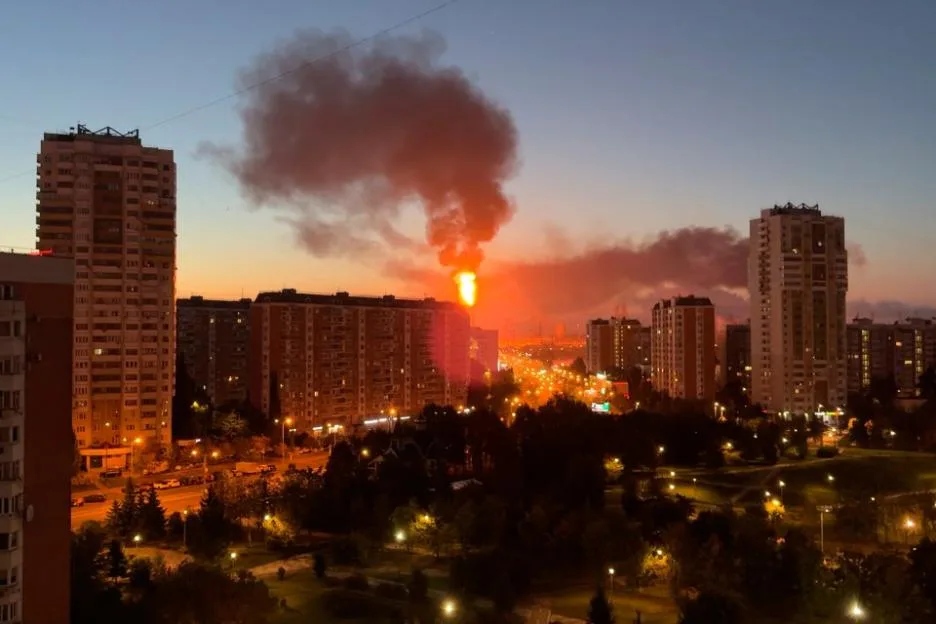
UKRAINE has unleashed a new ballistic missile on Russia, blasting Moscow in its largest attack since the start of the war.
Volodymyr Zelensky hailed the “strength” of Kyiv’s “long-range capabilities” afterwhich struck on the final day of
In a Telegram post, the Ukrainian leader said his forces launched the Pelican alongside the long-range and a massive wave of drones.
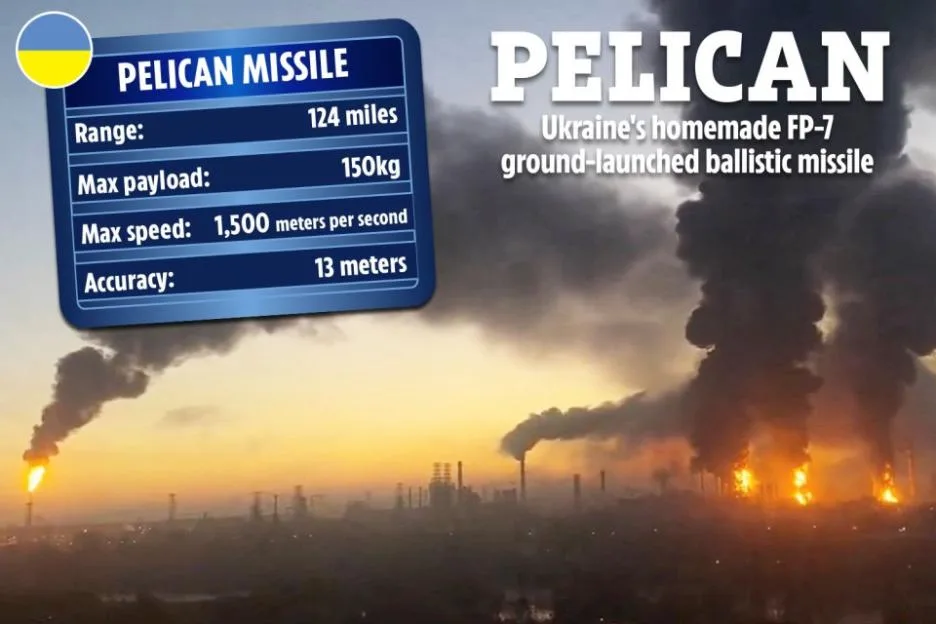
Pelican – a FP-7 ground-launched ballistic missile – was designed and built in Ukraine by defence start-up Fire Point.
Sunday marked the first official confirmation that the weapon has been used in combat after it finished testing earlier this month.
The FP-7 has a maximum range of 124 miles with a 150kg payload and accuracy of 13 metres.


Pelican’s incredible speed is aimed at overwhelming Russian defences to allow longer range missiles to attack unimpeded.
The strikes across Moscow left two dead, with gaping craters in apartment blocks and huge plumes of smoke filling the sky.
Russian officials said 450 drones approaching Moscow were intercepted and 1,110 were destroyed across Russia, occupied Crimea and the Black Sea.
The Moscow Oil Refinery – which reportedly produces some 11.6million tonnes of oil a year – was also damaged, according to Russian authorities.
All planes were halted at Vnukovo airport in Moscow, while passengers at Sheremetyevo airport were warned about “temporary restrictions”.
Sharing footage of the attack Zelensky said: “Our long-range responses had a very significant impact in the Moscow region last night.
“One of Russia’s key oil industry facilities and the aggressor’s logistics facility were hit. These are billions of dollars that sustain the war machine.”
Before the launch of the Pelican, Ukraine relied on its allies for replacement ballistic missiles like the US-made ATACMS.

The breakthrough comes as Ukraine has begun testing its longer-ranged FP-9 missiles, The Telegraph reports.
It comes as Russia turns its cross hairs to the West in a reckless bid to pressure the military alliance into pulling its support for Ukraine.
European spy chiefs have now warned that Putin could be planning to launch attacks on Nato countries.
Speaking to The Guardian , Michal Koudelka, the head of the Czech Republic’s BIS security service, said the Kremlin could intensify its campaign against the military alliance in “months not years”.
The warnings come just days after Poland’s prime minister Donald Tusk said Putin could launch a drone or missile attack on Nato territory.
The assault would be used to test the military alliances collective defence clause, Tusk added.
last week as it emerged Russian drone and missile provocations had more than tripled this year.
Putin is thought to have ordered a ramping-up of on Nato territory from 18 in 2025 to 60 already this year.
, , Latvia, Estonia, and have seen an increase in air raids and the use by of long-range Shahed and low-tech, primarily decoy, Gerbera drones.
Intelligence chiefs have warned they could soon be .