WE are one week into Sober October, when thousands of people ditch the booze for a month after a heavy summer.
If the idea of going alcohol-free fills you with dread, I’d ask you why.

This month is a good time to assess your relationship with , to see if it’s problematic.
Signs include hiding drinking from others – empties stashed in the wardrobe, for example – and it causing problems in your relationships.
Many of us have a glass of after a stressful day but if this is your singular coping mechanism, that could signal a problem too.
Drinking should be limited to no more than 14 units a week to keep risk low.
If your drinking is frequent, often alone and secretive, I’d urge you to take it seriously.
If you drink heavily and think you may be dependent, don’t stop suddenly without medical advice, as this could be dangerous.
Speak to your or a local alcohol service for support.
Here’s a selection of readers’ questions this week . . .
WHY AM I TIRED ALL THE TIME?

Q) I FEEL so tired and have no energy at all. I’m 58 and a full-time carer for my disabled sister and elderly mum.
Seven years ago I was having B12 injections prescribed by my doctor.
But when we moved, my new doctors put me on B12 tablets instead, which didn’t help as much.
Then I was taken off them entirely as blood tests apparently showed I didn’t need them. This was still the case 18 months ago.
I feel the B12 injections helped me so much. Is it worth me going private to get them?
I can’t carry on like this, I feel my days are being wasted.
A) Being a full-time carer for two people is demanding, both physically and emotionally.
But whether there is a medical cause for your exhaustion should be investigated.
The key question for me is why you were originally prescribed B12 injections.
If you had a dietary deficiency that was corrected, treatment may no longer be needed.
But some people cannot absorb B12 properly, e.g. because of pernicious anaemia or certain stomach or bowel conditions, and may need lifelong replacement.
In some conditions, injections are recommended rather than tablets.
So I would go back to your GP and ask them to review your previous records. Explain that the fatigue is now significantly affecting your quality of life.
I’d also want to know the actual results of your recent blood tests rather than simply being told they were “normal”.
Ask specifically about your full blood count, B12 and folate, ferritin or iron stores, vitamin D and thyroid function.
Depending on your symptoms and medical history, your GP may also consider kidney and liver function, and other causes of persistent fatigue.
At 58, is worth considering too. Even without hot flushes, disrupted and hormonal changes can contribute to fatigue.
If your B12 level and other investigations are genuinely normal, having B12 injections privately is unlikely to provide a lasting solution and could distract from finding the real cause.
You spend a great deal of energy looking after other people.
Please make an appointment specifically about your now.
PLAGUED BY ULCERS
Q) FOR as long as I can remember, I have lived with mouth ulcers. I am a 66-year-old female.
In later years, they have become more aggressive and pretty much constant with barely a couple of days free of them.
My GP said it was something I have to live with.
My dentist referred me to the oral clinic, where staff said they are normal mouth ulcers and gave me steroid mouthwash for any flare-ups.
I can’t believe there’s not a cause.
Sometimes the ulcers are very debilitating with no surface unaffected. They affect my daily life.
My sister has been diagnosed with Sjögren’s syndrome. Could this be a cause?
A) Mouth ulcers are extremely common, but what you describe is at the more severe end of the spectrum.
The commonest type of recurrent mouth ulcer is called recurrent aphthous stomatitis (RAS). We don’t fully understand why some people are particularly prone to them.
There can be a hereditary element, and sometimes no underlying cause is ever found.
However, when ulcers are this frequent, and having only a couple of days free of them, it is worth making sure potentially treatable causes have been excluded.
These include iron-deficiency anaemia, low vitamin B12 or folate, coeliac disease and inflammatory conditions such as Crohn’s disease.
Certain medications can also contribute. Your sister having Sjögren’s syndrome is worth mentioning to your GP.
The autoimmune condition particularly affects the glands producing saliva and tears and can cause a very dry mouth.
This makes the tissues inside it more vulnerable to soreness and damage, although recurrent ulcers alone would not be enough to diagnose it.
Dry or gritty eyes, difficulty swallowing dry foods, needing water frequently, increased dental problems, joint pains or significant fatigue would make it more relevant.
The fact the specialist identified these as ordinary ulcers is reassuring.
But given it’s having such an impact on you, especially when they are painful enough to interfere with eating and everyday life, it is reasonable to go back to your GP to discuss your family history and blood tests.
If one individual ulcer lasts longer than three weeks, or looks or feels different from your usual ones, get it checked rather than assuming it is another aphthous ulcer.
LATEST ITCHY FLARE-UP IS NOT HEALING

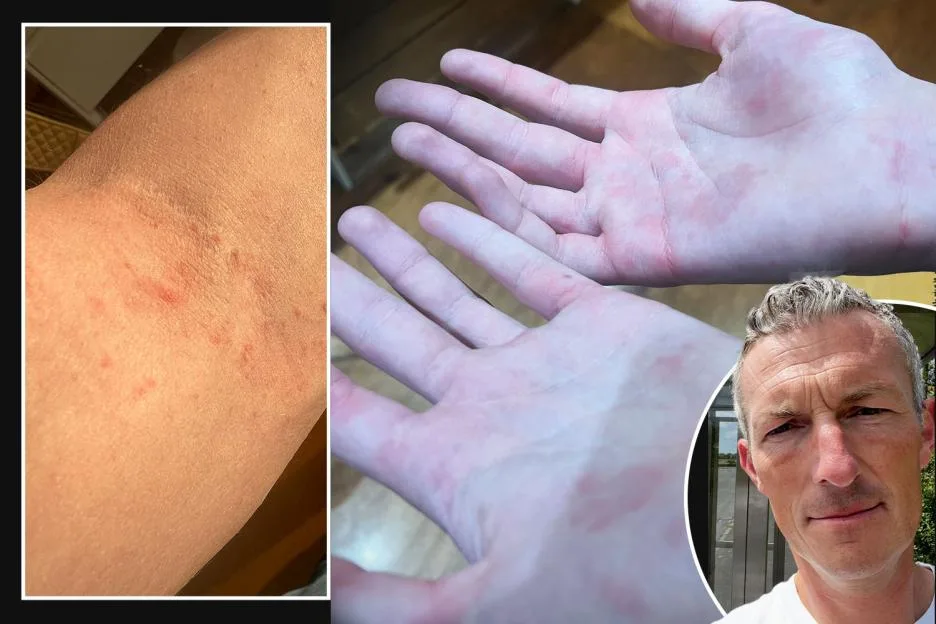
Q) TWO or three times a year I get an itch all over my body, like an allergy.
After treatment of antihistamines, it clears up within days.
But I have this problem now, and it’s not healing, despite me having used Eurax, Cortopin and Eumovate.
My recent blood tests came back all OK but I take iron tablets. Do I need to see a dermatologist?
A) Itching, medically called pruritus, has lots of possible causes – dry skin, , urticaria or hives, contact allergy, fungal infections and scabies are some.
Antihistamines can only help certain types of itch.
The fact they helped previously does not necessarily mean this is an allergy.
As this episode is persisting, I would go back to your GP.
An important clue is whether there is an actual rash or whether the skin looks fairly normal but feels intensely itchy.
Normal blood tests are reassuring, but if the itching is widespread without much of a rash, ask exactly what has been checked.
Persistent generalised itching can occasionally be associated with thyroid, kidney or liver problems, diabetes and iron abnormalities, as well as certain medications.
Rather than automatically referring you to dermatology, your GP may be able to use the Advice and Guidance service to ask a dermatologist for their opinion.
They might ask you to upload photos through an eConsult or similar system.
Take some good quality photos, particularly when the skin is at its worst, in natural light – some showing the overall distribution and some close-ups.
If the dermatologist feels you need to be seen face-to-face, they can advise accordingly.
In the meantime, keep simple with fragrance-free products, lukewarm showers and plenty of unperfumed moisturiser.
Avoid repeatedly adding different medicated creams without advice.
PAINS PEAK AT AGE 50
ACHES and pains reach their peak around the age of 50 and about half the UK population is estimated to live in daily pain.
A study of six million people worldwide now suggests that niggles pile up and become more intense during our working lives, between the ages of 20 and 55.
People are estimated to experience the most intense pains around the ages of 48 to 50, it found.
After that time, most types of suffering decreased as life slowed down in later middle and old age.
Researchers from McGill University in Canada said the overall proportion of people in pain increased in elderly populations but it was less severe on average.
Gut pain tended to peak earliest, at age 23, followed by headaches at age 34, then facial pain at 45, elbow at 59 and neck and shoulder at 62.
Back, hip and knee pains broke the trend and continued to rise steadily all through life.
Women reported suffering more than men for all 11 types of pain measured in the study.
Writing in the journal Nature Medicine, study author Matt Fillingim said: “For most pain types the steepest rises occurred before 55 years old.
“That indicates that a substantial share of lifetime pain develops during working-age adulthood.
“Upper body pain, including neck, shoulder and elbow peaked around midlife and declined thereafter, whereas lower body pain including back, hip and knee continued to increase.”
YOUNG HIT BY CANCER

RATES of at least seven different cancer types are rising among under-50s, experts have warned.
is a top concern and a UK study, funded by Dame Deborah James’ Bowelbabe , has launched this week with a call for 250,000 adult volunteers from across the UK.
Now the World Cancer Research Fund (WRCF) warns that prostate, kidney, womb, liver, pancreas and breast cancers are also rising among young adults, and called for urgent research to find out why.
Dr Giota Mitrou, director of research at the WRCF, said: “While cancer is still more common in older adults, these changing patterns among younger generations need to be treated as a priority.”
The charity’s analysis of NHS England statistics found the rate for under-50s had tripled from one case per 100,000 people in 2001 to 3.6 per 100,000 in 2023.
Rates of kidney and womb cancers doubled from 1.5 to 3 and from 1.8 to 3.9 per 100,000 respectively.
Breast, bowel, liver and pancreatic cancers all increased significantly too.
Mum-of-two Deborah was diagnosed with bowel cancer at the age of 35 and died at 40 in 2022.
As part of the new study, scientists at King’s College London will track volunteers’ diets, lifestyles and medical records to find out why early-onset bowel cancers are increasing.
Dr Vanessa Gordon-Dseagu of the WCRF added: “This information will help determine where action would have the greatest impact for younger generations.”
TIP OF THE WEEK
COUGHS and colds are starting to circulate.
For a sore throat, medicated anti-inflammatory throat sprays containing benzydamine (such as Difflam) or flurbiprofen (such as Strefen) can provide localised pain relief, while lozenges may also help mild symptoms in the short-term.