Commercial shipping through the Strait of Hormuz has slowed sharply amid continuing Middle East tensions, adding to pressure on one of the world's most important oil and liquefied natural gas routes.
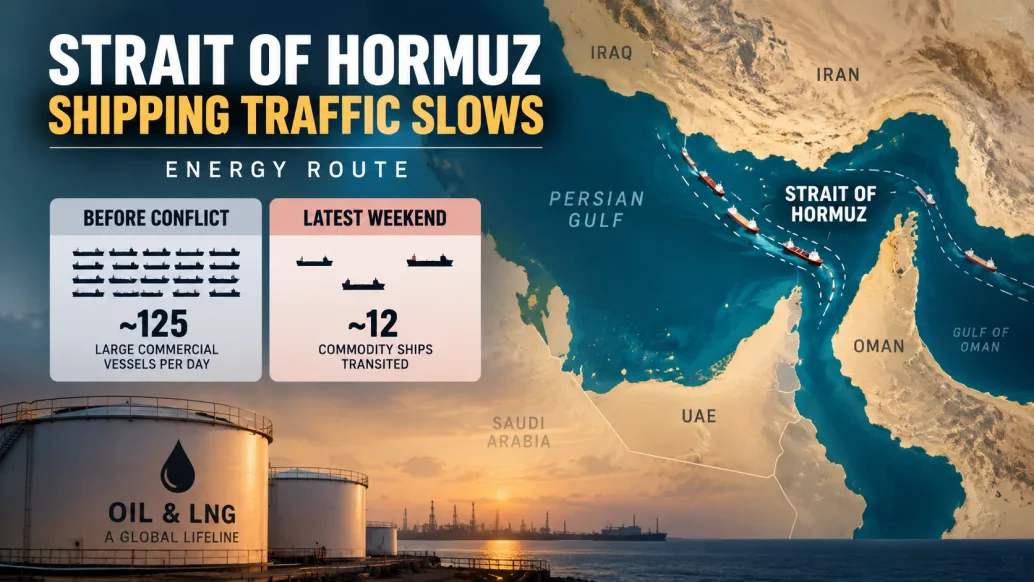
Reuters reported on 21 September that only about a dozen commodity ships transited the waterway over the latest weekend, compared with 35 the previous weekend and roughly 125 large commercial vessels per day before the conflict.
Traffic through the strait has dropped dramatically
The fall in vessel movements is significant because the Strait of Hormuz connects the Persian Gulf with the Gulf of Oman and the wider Arabian Sea. It is a key export route for major oil and gas producers in the region.
Before the conflict, around one-fifth of global oil and LNG flows passed through the strait, making any prolonged disruption important for energy markets, shipping companies and economies that depend heavily on imported fuel.
Why fewer ships matter for global energy markets
When fewer vessels use a strategic route, the effect can spread well beyond the waterway itself. Traders may face delays, higher freight costs and increased insurance premiums, while energy buyers can become more concerned about the reliability of future supply.
Even when physical exports continue, uncertainty around shipping can influence oil and gas prices because markets respond not only to actual shortages but also to the risk of further disruption.
Shipping companies are balancing risk and demand
Commercial operators must weigh contractual obligations against security conditions, insurance requirements and the availability of alternative routes. For some cargoes, there is no practical substitute for the Strait of Hormuz, particularly for exports originating inside the Gulf.
That makes the traffic data an important measure of how shipping companies are responding to the latest security environment.
Energy markets remain sensitive to developments
Oil prices and freight markets have remained highly sensitive to developments across the Middle East. Any signs of de-escalation can reduce risk premiums, while renewed attacks or threats can quickly push costs higher.
The reduced shipping traffic therefore matters even if individual ports and export terminals remain operational. A sustained fall in transits can tighten logistics and create delays across the global energy supply chain.
What to watch next
The key indicators are whether vessel traffic begins to recover, whether insurers adjust coverage or premiums, and whether oil and LNG exporters are able to maintain normal shipment schedules.
A prolonged reduction in transits would increase pressure on energy-importing economies and could raise costs for industries and consumers. A sustained improvement in security conditions, by contrast, could allow shipping activity to normalise gradually.