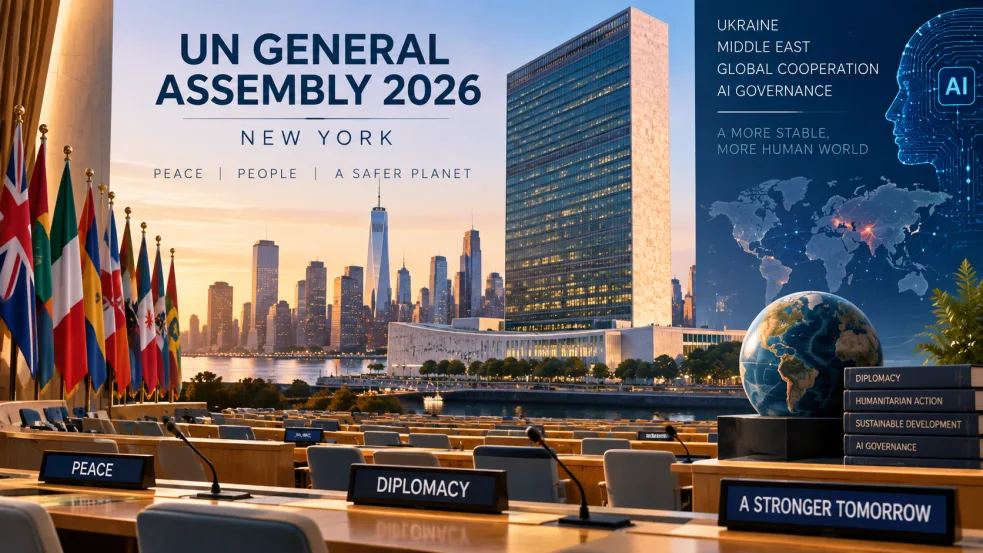
World leaders are converging on New York for the United Nations General Assembly's 2026 high-level week, with wars in Ukraine and the Middle East, artificial-intelligence governance and questions over the future of multilateral cooperation set to dominate discussions.
The United Nations says nearly 130 heads of state and government are expected to attend. The General Debate of the 81st session is scheduled to run from 22 to 26 September and resume on 28 September, while a broader programme of high-level events spans the surrounding days.
This year's General Assembly comes as governments confront several overlapping crises: prolonged wars, humanitarian emergencies, pressure on global food and energy security, climate risks and rapidly advancing artificial intelligence.
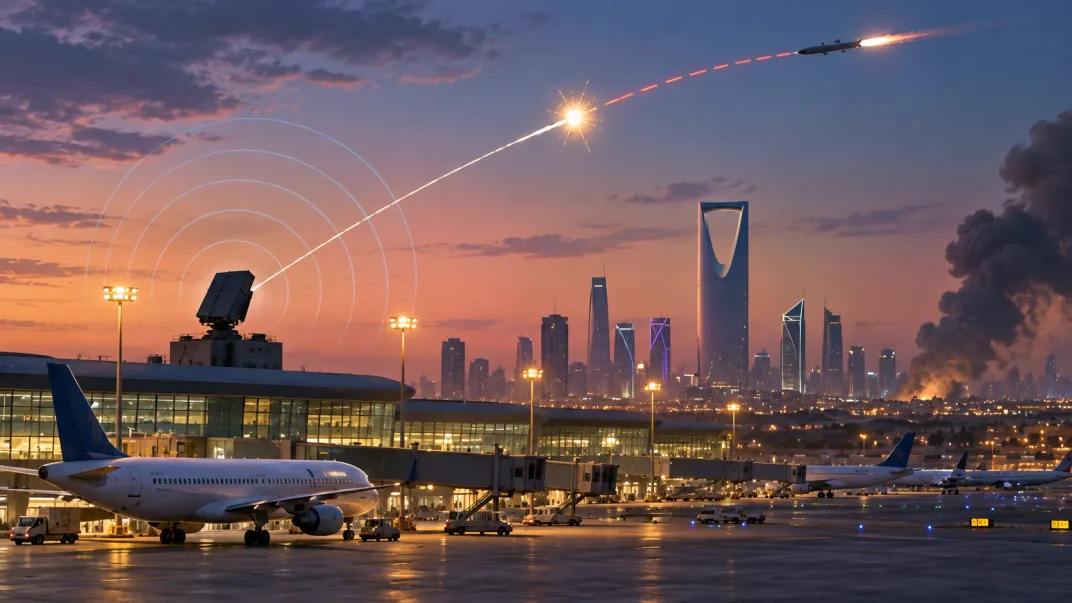
Wars in Ukraine and the Middle East loom over UN week
The wars in Ukraine and the Middle East are expected to be central to diplomatic meetings in New York. Leaders will use both formal speeches and bilateral meetings to set out their positions and test whether there is room for diplomatic movement.
Ukraine's President Volodymyr Zelenskiy has said he expects to meet US President Donald Trump in New York during the gathering. Russia is due to be represented at the General Assembly by Foreign Minister Sergey Lavrov.
Middle East conflicts will also feature prominently, with leaders from the region expected to address the Assembly and hold meetings on security, humanitarian conditions and wider regional stability.
AI governance moves higher on the global agenda
Artificial intelligence is no longer a peripheral technology topic at the United Nations. It has increasingly become an international-security and governance issue as governments consider how to manage powerful AI systems, cross-border risks and potential misuse.
The UN's programme for high-level week includes AI governance among the subjects receiving attention. The debate comes as policymakers, researchers and technology companies continue to argue over what international coordination should look like and how common safety principles could work across jurisdictions.
The challenge for governments is to find areas of cooperation without assuming that countries with different economic, security and regulatory interests will adopt identical rules.
What is happening during UN General Assembly high-level week?
The United Nations' official programme says the General Debate begins on 22 September. Heads of state, heads of government and other senior representatives use the debate to outline national priorities and positions on international challenges.
The theme of the 81st session is “Restoring trust, managing transformation: A United Nations that delivers for all.”
Other high-level events during the period cover climate action and a just transition, the right to development, sea-level rise, pandemic prevention and preparedness, racial justice and nuclear disarmament.
Climate, health and development also remain on the programme
While wars are likely to command much of the political attention, the formal agenda extends well beyond security crises.
A high-level climate event is scheduled for 23 September, bringing together major economies, developing countries, vulnerable nations and energy producers and consumers. The UN says the meeting is intended to strengthen cooperation on the energy transition, climate justice and protection from worsening climate impacts.
A meeting on sea-level rise follows on 24 September, while a high-level meeting on pandemic prevention, preparedness and response is scheduled for 25 September. Those events provide governments with opportunities to discuss longer-term risks that can be overshadowed during periods of geopolitical crisis.
The UN itself faces questions about its future
The gathering also arrives at a difficult moment for the institution. Funding pressure, divisions among major powers and repeated deadlock over conflicts have intensified debate over the UN's effectiveness.
The Security Council's structure remains a particular source of tension. Permanent members can veto substantive resolutions, meaning major geopolitical disagreements can prevent the council from reaching a unified position even during severe international crises.
Secretary-General António Guterres is approaching the end of his term in 2026, adding leadership transition to the questions surrounding the organisation's next phase.
What to watch as leaders arrive in New York
The General Assembly does not guarantee agreements simply because leaders are in the same city. Much of its importance comes from the concentration of diplomatic activity around the formal debate.
Key developments to watch include bilateral meetings on Ukraine and the Middle East, proposals on AI governance, climate commitments, discussions over UN reform and any announcements that emerge from meetings held outside the General Assembly Hall.
The high-level week will therefore serve both as a public forum for national positions and as a dense diplomatic calendar in which governments test possible areas of cooperation at a time of unusually high geopolitical strain.