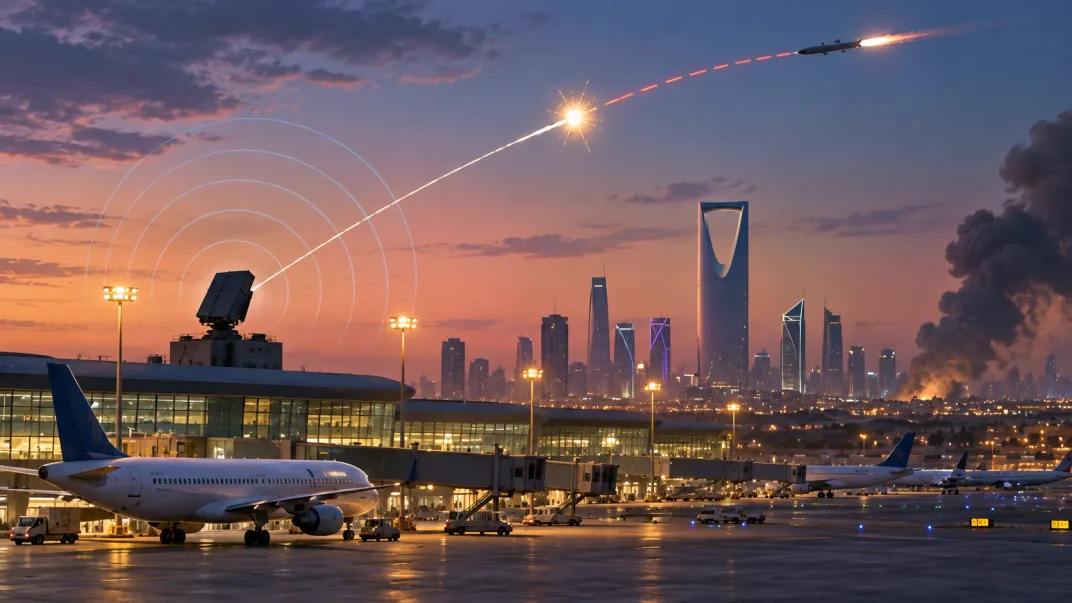
Saudi Arabia says its air defences intercepted and destroyed a ballistic missile launched by Yemen's Houthi movement towards Riyadh, in a new escalation with direct implications for travellers and aviation in the kingdom.
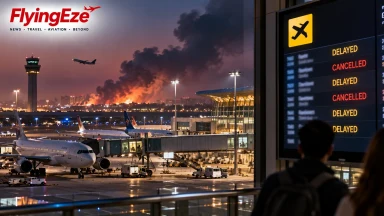
Explosions were heard in the Saudi capital on 19 September and a large plume of smoke was seen near King Khalid International Airport, according to international reporting. Saudi authorities said the incoming missile was intercepted, but the precise cause of the smoke and fire reported near the airport was not immediately established.
There were no reported casualties from the intercepted missile in the initial official and international reports.
What Saudi Arabia has confirmed
Saudi authorities said air defences detected and destroyed a ballistic missile launched towards Riyadh from Yemen. The interception followed warnings and explosions heard around the capital.
The Houthis separately claimed attacks on what they described as sensitive sites in Riyadh and facilities in Yanbu. As with claims made by parties to an armed conflict, those statements require independent verification and should not be treated as confirmation of specific damage.
The key established fact is that Saudi Arabia reported intercepting a missile aimed towards Riyadh. Reports of smoke near the airport do not, by themselves, establish that King Khalid International Airport was directly hit.
Smoke near Riyadh airport: what remains unclear
Images and reporting from Riyadh described a substantial plume of smoke near the airport area after the overnight incident. At the time of the initial reports, Saudi authorities had not publicly established the precise cause of that smoke.
That distinction matters for travellers. An air-defence interception over or near a major city can create debris, temporary airspace restrictions or precautionary operational changes without meaning that an airport terminal, runway or aircraft has been struck.
FlyingEze is therefore not describing the incident as an attack on King Khalid International Airport unless Saudi authorities or other reliable evidence directly establish that conclusion.
What the incident means for travellers
Passengers travelling to, from or through Saudi Arabia should check their flight status directly with their airline before leaving for the airport. Security incidents involving missiles or drones can lead to short-notice airspace changes, rerouting, delays or cancellations even when airport infrastructure remains operational.
Travellers with connections should allow additional time and monitor messages from airlines, particularly if their itinerary involves Riyadh or other airports that could be affected by regional airspace restrictions.
Current travel advice for Saudi Arabia
The United States currently rates Saudi Arabia at Level 3, “Reconsider Travel”. Its travel advisory cites the threat of armed conflict and missile and drone attacks and warns that commercial flights can at times be significantly disrupted.
British travel advice also warns of renewed Houthi attacks across Saudi Arabia and advises travellers to monitor developments and check with airlines where airport operations may be affected.
Travel advisories can change quickly during regional security incidents. Passengers should consult the latest official guidance applicable to their nationality and destination rather than relying on screenshots or older social-media posts.
Regional aviation remains exposed to sudden disruption
The incident illustrates the operational challenge airlines face when missiles and drones are launched near major aviation corridors. Carriers may alter routes to avoid areas assessed as higher risk, which can increase flight times and fuel consumption even when airports remain open.
Airlines and aviation authorities make those decisions using security assessments, notices to air missions and changing airspace restrictions. A flight operating normally earlier in the day can therefore be rerouted or delayed later if the risk picture changes.
What to watch next
The immediate questions are whether Saudi authorities provide further information about the smoke near King Khalid International Airport, whether additional attacks are reported and whether airlines announce schedule or routing changes.
Passengers should distinguish confirmed operational notices from claims circulating online. For now, Saudi Arabia has confirmed the interception of a ballistic missile towards Riyadh; the cause of the smoke seen near the airport area was not immediately established in the initial reporting.