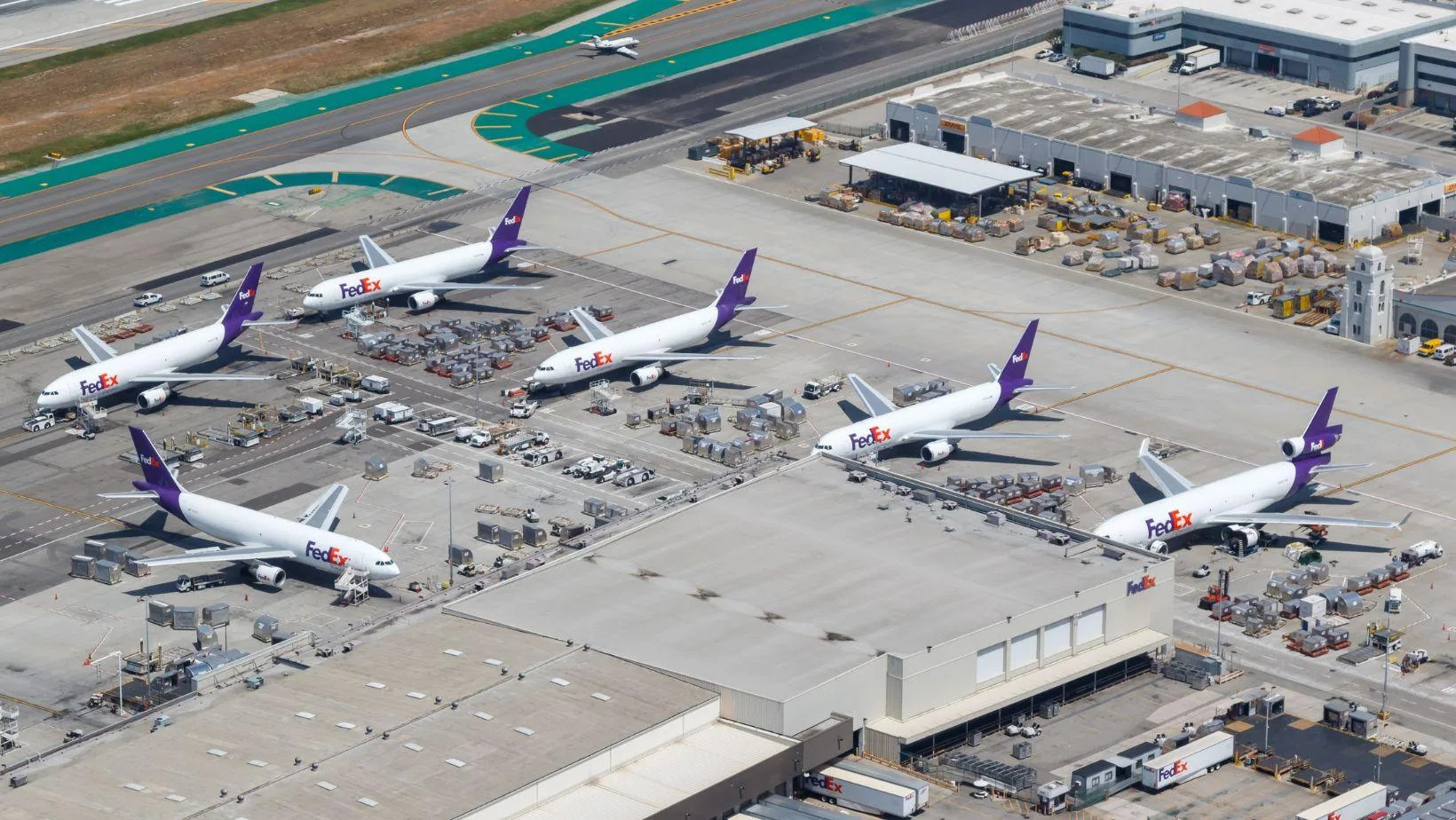
Choosing a United States entry airport can influence an African exporter's delivery time, landed cost and ability to serve customers. Los Angeles International Airport (LAX) is a substantial air-cargo gateway, but it is not automatically the best destination for every shipment arriving from Nigeria, Ghana, Kenya, South Africa or elsewhere.
The more useful question is: where will the goods be sold or distributed, what handling do they need, and which routing delivers them reliably at an acceptable total cost? A comparison of LAX with New York's John F. Kennedy International Airport (JFK), Miami International Airport (MIA), Chicago O'Hare (ORD), Atlanta (ATL) and Dallas/Fort Worth (DFW) illustrates why the answer differs by product and US market.
This guide explains the published cargo evidence, each gateway's geographical advantages, customs and product rules, and a repeatable framework for selecting a US market-entry route.
What the 2025 cargo numbers actually show
Airports Council International's 2025 airport cargo dataset reports about 2.07 million metric tonnes handled at LAX, against approximately 3.13 million at MIA and 2.13 million at ORD. The ACI-North America 2025 rankings additionally report approximately 1.46 million metric tonnes at JFK and 779,000 metric tonnes at DFW.
These are airport-wide volumes of freight and mail, including applicable transit freight, not Africa-specific imports, customs-clearance speeds or prices offered to a particular exporter. The Los Angeles World Airports freight series publishes a different “tons” measure, which should not be mixed directly with ACI's metric-tonne ranking.
| Gateway | 2025 cargo, approximately | Practical market fit to investigate |
|---|---|---|
| LAX — Los Angeles | 2.07m metric tonnes | Southern California and western US customers |
| MIA — Miami | 3.13m metric tonnes | Florida and onward Americas distribution; perishables |
| ORD — Chicago O'Hare | 2.13m metric tonnes | Chicago and Midwest distribution networks |
| JFK — New York | 1.46m metric tonnes | New York metropolitan area and northeastern buyers |
| DFW — Dallas/Fort Worth | 779,000 metric tonnes | Texas and south-central US fulfilment |
| ATL — Atlanta | Not included in this five-airport comparison | Georgia and southeastern US deliveries |
Source and methodology: ACI's 2025 air-cargo statistics and the ACI-North America rankings; figures rounded for readability. Airport volume is a measure of throughput, not a recommendation ranking. ATL is included qualitatively rather than assigned an unverified comparable figure.
LAX: strongest when the customer and delivery network are in the West
Los Angeles World Airports describes LAX as a cargo gateway supported by freight forwarders, customs brokers and access to the Southern California economy. Its natural appeal for an African company is the concentration of potential buyers and logistics services in the greater Los Angeles region, plus access to western US distribution networks.
For example, a Nigerian apparel brand with buyers in Los Angeles, or a South African supplier serving California businesses, should obtain a real LAX quotation before routing freight through an eastern airport. But if the end customer is in New York, the west-coast arrival can add a long domestic delivery leg and unnecessary handling.
Importantly, LAX airport and the Port of Los Angeles seaport are different gateways. An air shipment does not clear through a marine container terminal simply because both are in the same region. Ocean freight may be more cost-effective for nonurgent, heavy consignments, but the applicable arrival port, carrier and inland transport arrangements must be quoted separately.
JFK: a logical first option for northeastern US market entry
The Port Authority of New York and New Jersey identifies JFK as the region's busiest international air-cargo airport. JFK is worth considering when the importer, warehouse, distributor or first major customers are in New York, New Jersey or nearby northeastern states.
This is particularly relevant to an exporter testing demand through a small distributor or fulfilment partner in the New York metropolitan area. The airport's cargo ecosystem may reduce the onward distance compared with landing in California. The trade-off is that warehouse handling, urban collection and final-mile costs must be priced: metropolitan proximity does not automatically mean faster release.
Newark Liberty (EWR) can also be worth requesting as an alternative quote for the wider New York–New Jersey market, particularly where the integrator or carrier already routes cargo through Newark.
MIA: specialised relevance for perishables and Americas connections
Miami International Airport's cargo division reports substantial international freight activity and a notable business in perishables, pharmaceuticals and onward shipments across the Americas. MIA's 2025 airfreight performance makes it an important comparison for certain temperature-controlled or time-sensitive goods.
A Kenyan flower exporter or Ghanaian food supplier might investigate Miami's handling capabilities, but the existence of perishable infrastructure does not mean any agricultural product is automatically eligible for US import. Importer approvals, agricultural restrictions, treatment requirements, temperature monitoring and onward delivery still determine feasibility.
Miami is especially worth evaluating where the commercial plan serves Florida or includes onward customers in Latin America or the Caribbean. An exporter selling only to California should compare the extra inland leg carefully.
ORD, ATL and DFW: where inland distribution may win
Chicago O'Hare (ORD)
Chicago's location and cargo infrastructure make O'Hare a serious option for Midwest buyers and nationwide road distribution. O'Hare has an established international freight network and extensive cargo-handling facilities. For a manufacturer supplying customers in Illinois, Wisconsin, Indiana or neighbouring markets, ORD might reduce domestic road miles versus LAX or JFK.
Atlanta (ATL)
The official Atlanta airport cargo page describes North, Midfield and South cargo complexes, interstate connections and local customs-broker and freight-forwarder activity. An importer supplying the Southeast should compare ATL with MIA and other nearby airports, especially if the warehouse is near Georgia.
Dallas/Fort Worth (DFW)
DFW's cargo programme emphasises access to North Texas, central US markets and connections among the Americas, Asia and other regions. DFW may be attractive when customers, fulfilment operations or distributors are in Texas or the south-central United States.
For all three hubs, available cargo space on the actual date, airline routing, screening arrangements and destination trucking matter more than broad airport branding.
Customs rules do not become easier just because you change airport
US Customs and Border Protection (CBP) applies federal entry and compliance requirements at US ports of entry. Airport choice can change which broker, cargo handler or inspection facility is involved; it does not remove the importer's legal responsibilities.
Before booking, agree on the importer of record and any licensed customs broker. CBP explains that a broker may submit entries on an importer's behalf, but the importer retains responsibility for compliance. A foreign company may be able to act through suitable arrangements, which should be confirmed with qualified advisers rather than assumed.
Regulated goods need additional checks. The FDA food-import guidance covers requirements relevant to imported food, including facility registration and prior notice for covered shipments. USDA APHIS determines plant and agricultural commodity eligibility according to the specific product and country of origin. Cosmetics, medical devices and other products may have separate agency requirements.
Also calculate duties using the current Harmonized Tariff Schedule of the United States . As of October 2026, the former general US$800 de minimis duty-free treatment remains suspended for eligible low-value imports under measures effective 29 August 2025, subject to statutory exceptions. See CBP's guidance . A parcel's small value does not itself guarantee duty-free entry.
Which airport produces the lowest landed cost?
An airport-to-airport freight quote is only the beginning. Compare the total cost of getting goods to the buyer's agreed delivery point, not just the advertised air-cargo rate.
| Cost component | Questions for the forwarder or broker |
|---|---|
| Origin costs | Collection, export clearance, screening, terminal handling and documentation? |
| Main transport | Chargeable weight, connection points, flight frequency, insurance and surcharges? |
| US entry | Brokerage, duties, bond, exams, agency charges and cargo-terminal fees? |
| Inland delivery | Truck distance, warehouse receiving, storage, temperature control and final mile? |
| Delay exposure | Free-storage hours, demurrage-like storage charges, missed connections and insurance exclusions? |
Use a consistent Incoterms® 2020 rule and named place across quotations so costs and obligations are comparable. An airline's “two-day transit” may describe the flying portion only, excluding customs release and inland delivery.
Illustrative decision: If one quote lands goods at LAX cheaply but adds several days of ground shipping to New Jersey, and a second quote costs more to JFK but places the goods close to the buyer, the second could deliver a lower overall cost or better service. Actual quotations—not hypothetical dollar savings—must decide.
Market entry requires more than the right runway
African exporters should also select the import market based on demand, distributor reliability, sales channels and compliance costs. A good airport near no paying customers is not necessarily a useful launch point.
For a first shipment, consider a limited, commercially realistic test order. Confirm a genuine buyer or distribution agreement; prepare accurate invoices and packing lists; and secure the appropriate air waybill and product certificates. The US International Trade Administration explains the purposes of commercial invoices, packing lists, air waybills and origin documents.
Export formalities also vary by African country. For Nigerian businesses, the Nigerian Export Promotion Council describes exporter registration, commercial and quality documents, and the Nigeria Export Proceeds (NXP) process. Ghanaian, Kenyan and South African exporters must consult their own competent authorities.
Buyers should specify who pays for testing, customs exams, returns and unsold stock before dispatch. A US fulfilment partner may simplify domestic delivery, but it introduces warehousing and commercial obligations of its own.
A six-step decision framework for African exporters
- Locate the real customer. List buyer postcodes, US warehouse addresses and the states expected to generate demand.
- Confirm product eligibility. Check federal agency requirements and origin documentation before committing to a route.
- Shortlist practical airports. Choose LAX, JFK, MIA, ORD, ATL or DFW based on market geography and real carrier availability.
- Request matched quotations. Use identical weight, dimensions, commodity description, Incoterms rule and delivery address.
- Compare end-to-end performance. Evaluate total delivered cost, customs arrangements, likely handling risks and delivery reliability.
- Test and review. Track shipment milestones and reconcile the final expense against the quoted amount before expanding.
For practical paperwork and clearance preparation, see FlyingEze's related guide, Practical checklist for African exporters using LAX , once it is published. Travellers making business-development visits rather than shipping cargo can also read our Los Angeles business-trip guide .
Frequently asked questions
Is Los Angeles International Airport the best US airport for imports?
It can be appropriate for Southern California customers and west-coast distribution. For a buyer in New York, Miami, Chicago or Texas, a closer cargo gateway may reduce inland transport. Compare real quotes and regulatory requirements.
Does the airport with the most cargo always clear shipments fastest?
No. Total throughput says little about an individual consignment's inspections, paperwork, carrier handling, storage availability or final-mile delivery time.
Can African exporters switch between LAX and JFK without changing customs duties?
Federal duty classification generally depends on the goods, origin and applicable measures rather than the airport alone. However, entry arrangements, local handling charges and inspection logistics can differ; a broker should confirm shipment-specific costs.
Is Miami better than LAX for perishables?
Miami has established perishables activity, but the right answer depends on product eligibility, cold-chain capability, buyer location, flight schedules and onward delivery. Do not ship regulated produce before obtaining necessary approvals.
Conclusion
LAX deserves a place on an African exporter's US entry-airport shortlist, particularly when Southern California is the commercial target. Yet JFK, Miami, Chicago O'Hare, Atlanta and Dallas/Fort Worth each offer different market geography and cargo networks.
Rather than selecting the largest or most famous airport, select the route that satisfies product rules, reaches confirmed buyers and produces the best defensible landed cost and delivery outcome. For market entry, the destination customer—not the airport ranking—should drive the decision.
Research checked 27 October 2026. Cargo volumes refer to 2025 reporting; tariffs, air services and handling arrangements may change. Obtain up-to-date, shipment-specific advice before booking.