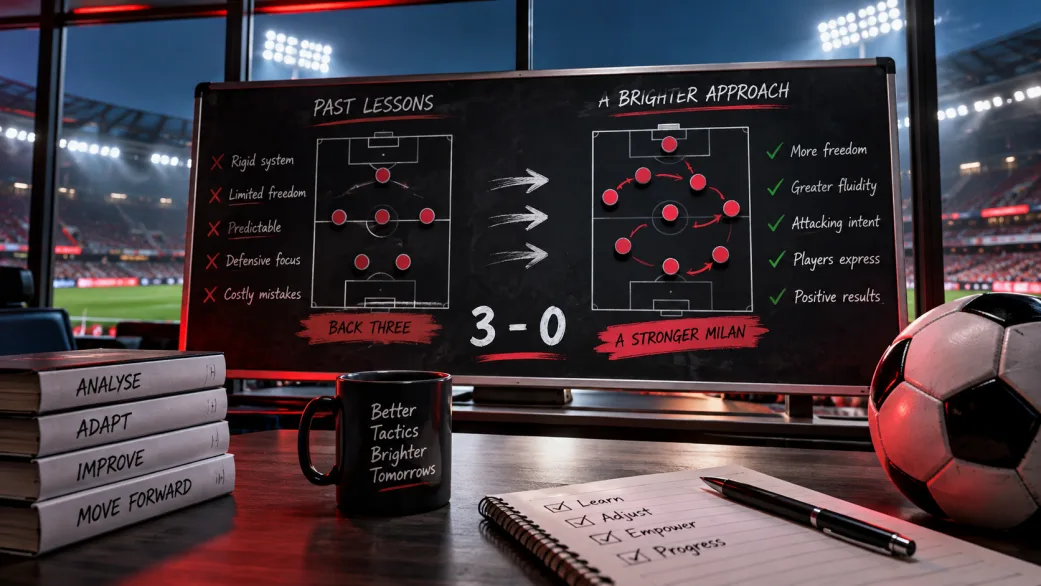
Ruben Amorim says the greater tactical freedom he has given AC Milan reflects lessons learned from mistakes during his time at Manchester United.
The Portuguese coach made the comments after Milan's 3-0 Serie A victory over Lecce, explaining that he does not want to repeat the rigidity that defined parts of his unsuccessful spell in England.
Amorim says he is adapting
Amorim became closely associated with a back-three system at Manchester United and often persisted with it despite poor results. At Milan, he says he is trying to give players more freedom within the structure.
The shift does not mean abandoning tactical principles. Instead, it reflects an attempt to avoid forcing every phase of play into one fixed shape when the players or match situation may demand something different.
Milan's 3-0 win provides early evidence
The 3-0 victory over Lecce offered a positive example of the more flexible approach. Milan played with greater attacking freedom and controlled the match without appearing tied to a single rigid pattern.
For Amorim, the result was significant because it came with a performance that matched the ideas he has been discussing since taking charge.
Lessons from Manchester United
His United tenure was marked by criticism over tactical inflexibility, particularly the repeated use of a back three. Amorim has now acknowledged that some of those choices did not work and that he intends to be more adaptable at Milan.
That admission is notable because coaches often defend their preferred systems even after difficult spells. Amorim's comments suggest he is treating the experience in England as a source of practical lessons rather than simply a chapter to move on from.
What it means for AC Milan
Milan will still need consistency before any conclusions can be drawn about the long-term impact of the changes, but the early signs point towards a more flexible version of Amorim's football.
The next challenge will be maintaining that balance against stronger opponents and in matches where Milan have less control of possession.