Table of Contents
- Remarks from Kenneth Okonkwo
- Party Response
- Supreme Court's Role
- Democracy and Military Control
- Call to Action
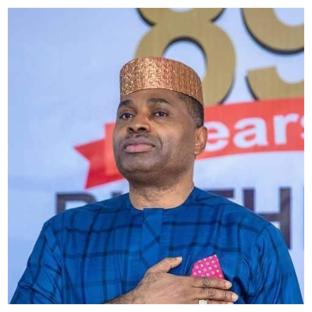
The Lagos State chapter of the All Progressives Congress (APC) has labeled comments made by Kenneth Okonkwo, a chieftain of the African Democratic Congress (ADC), as “reckless and misleading.” Okonkwo suggested that President Bola Tinubu could now “rule Nigeria with the military” following a Supreme Court ruling concerning emergency rule in Rivers State.
The party asserted that Okonkwo’s statements are not only inaccurate but also “intellectually dishonest,” emphasizing that Supreme Court rulings are not akin to military decrees.
Mogaji Seye Oladejo, the spokesperson for the state chapter of the party, clarified that the Supreme Court did not suspend democracy in Rivers State; it merely interpreted the law as authorized by the Nigerian Constitution.
In a signed statement, Oladejo remarked that in a constitutional democracy, while court decisions may not always align with the expectations of political actors, they are binding on everyone.
According to Oladejo: “A Supreme Court judgment represents the highest expression of constitutional authority in a democracy. It is neither a military decree nor an executive order. To intentionally equate a judicial ruling with military governance reflects a misunderstanding of the fundamental principles of democracy or a deliberate attempt to mislead the public for partisan purposes.”
“President Bola Ahmed Tinubu, contrary to the alarmist narrative being circulated, has neither sought nor exercised powers beyond the Constitution. His democratic credentials are well established. He has been a prominent opponent of military rule, a victim of oppression, and a contributor to the reinstatement of civil governance in Nigeria. The implication that such a leader would now govern through military means is both absurd and offensive.”
“What is evident from Mr. Okonkwo’s remarks is a familiar reflex among the opposition: when the judiciary does not support their political aspirations, they attempt to undermine the legitimacy of the courts and instill fear in the populace. This recurring narrative of dictatorship in response to unfavorable rulings is irresponsible and perilous.”
“More concerning, however, is that this type of anti-democratic rhetoric and the promotion of chaos seem to have become the default response of the opposition to constitutional challenges. This poses the greatest threat to our developing democracy. When political figures deliberately erode public trust in the judiciary and vilify lawful authority, they undermine the very foundations of the republic they claim to uphold.”
Oladejo emphasized that Nigeria remains a constitutional democracy governed by laws, institutions, and the separation of powers.
He stated: “The military is under civilian oversight as mandated by the Constitution, and there has been no action, directive, or policy from President Tinubu that indicates otherwise.”
The Lagos APC urged all well-meaning Nigerians, democrats, and patriots to denounce what it characterized as a troubling new low from the opposition.
“Supreme Court rulings are tools of justice, not instruments of tyranny. They fortify democracy; they do not dismantle it,” he concluded.
Frequently Asked Questions
What did Kenneth Okonkwo suggest about President Tinubu?
Kenneth Okonkwo suggested that President Bola Tinubu could potentially rule Nigeria with military force following a Supreme Court ruling regarding emergency rule in Rivers State.
How did the Lagos APC respond to Okonkwo's remarks?
The Lagos APC described Okonkwo's comments as reckless and misleading, asserting that they are false and intellectually dishonest. They emphasized that Supreme Court judgments are not military decrees.
What is the significance of a Supreme Court ruling in a democracy?
A Supreme Court ruling is the highest expression of constitutional authority in a democracy. It is binding and reflects the rule of law, not military authority.