MOUTH cancer cases have doubled in 20 years but half of adults cannot name a single symptom.
More than 11,000 people in the UK are diagnosed with it each year — and in England alone new cases have increased by 119 per cent over two decades.

While and are risk factors, it is thought human papillomavirus (HPV) infections — transmitted by oral sex — are partly driving the influx of cases.
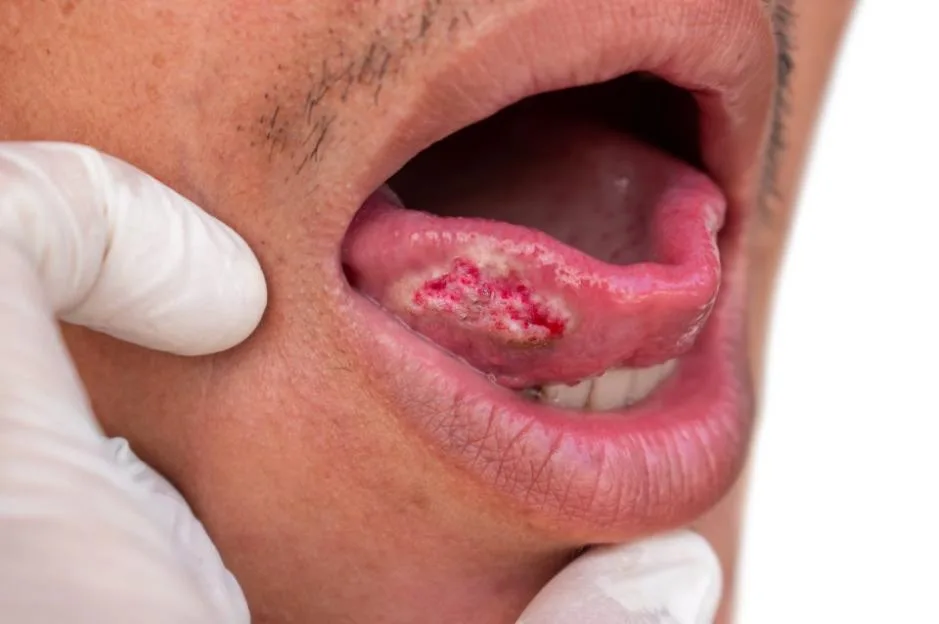
, also called oral cancer, can affect any part of the mouth, including the gums, tongue, cheeks or lips.
include an ulcer, a red or white patch inside the mouth, or an unusual lump or swelling in the mouth, lip or neck.
With Action Month starting today, dentist Cathie Brady, president-elect of the Oral Health Foundation, said: “It’s easy to explain away an ulcer, patch or a lump, especially if it doesn’t hurt.
“Most changes won’t be cancer but you need a professional diagnosis to know for sure.”
Persistent difficulty swallowing or speaking should also be assessed.
Former nursery worker Karen Liesching-Schroder’s diagnosis was a shock as she had never smoked and drank little alcohol.
The first sign for Karen, from Rochford, Essex, was a tongue ulcer.
Karen, 54, who now gives talks on the subject, said: “It didn’t heal and it turned into a hole in my tongue.
“But I still didn’t realise that was cancer.”