AT least two Brits have died and more than 400 have now been sickened by the deadly salmonella outbreak.
chiefs say three separate clusters of one specific salmonella strain are behind the surge in cases.
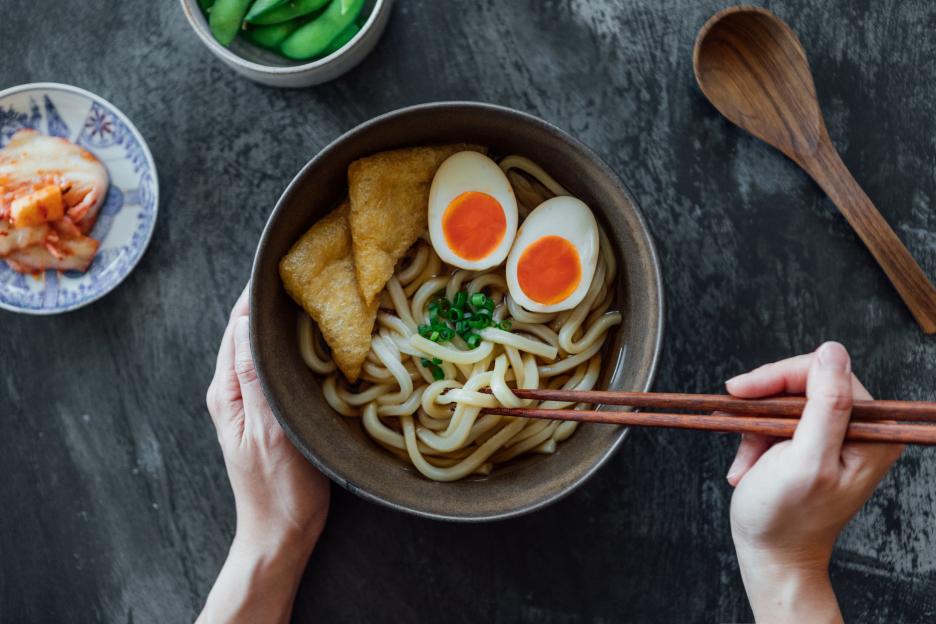 The salmonella outbreak has reportedly been traced back to eggs served in Asian restaurants and small, independent cafes Credit: Getty
The outbreak small, independent cafes, Asian and takeaway businesses.
Officials have reiterated that babies, young children, pregnant women and older people in restaurants and cafés.
Experts also advise people only buy eggs that carry the British Lion mark or are produced under the Laid in Britain assurance scheme as domestic eggs are not affected by the outbreak.
There is no evidence that eggs produced in the UK are affected and the risk to the public remains low, officials say.
asty bug salmonella that clears up in days.
However, it can be fatal among those who are more vulnerable.
According to latest data from the UK Health Security Agency (UKHSA), the strain enteritidis is behind the outbreak and involves three specific genetic clusters called t5.9411, t0.24068 and t5.9765.
There have been:
- 259 confirmed cases and one death linked to t5.9411
- 38 confirmed cases and one death linked to t5.9765
- 177 confirmed cases linked to the t0.24068
Cases across all three clusters have increased since June and their genetics suggest they may all be linked to imported eggs.
Figures show that of cluster t5.9411, which accounts for more than half of all cases, the North East, London and Yorkshire and Humber are worst affected.
The North East has reported a rate of 1.42 cases per 100,000 people in the region.
London and Yorkshire and Humber, meanwhile, have both recorded a rate of 0.79 cases.
The South West has seen the least impact from the outbreak, with just 0.02 cases per 100,000 people.
Of the t0.24068 cluster, London has been worst impacted with 1.03 cases per 100,000 people, with East of following with a rate of 0.61.
Among cases of the t5.9765 cluster, the North East and London are again the hotspots with rates of 0.26 and 0.14 respectively.
It comes as European health chiefs earlier this week said there had also been more than 130 salmonella cases linked to the outbreak in the Netherlands, , Germany, France, Austria and Denmark.
Most eggs sold in the UK are British, but 11 per cent are imported from overseas.

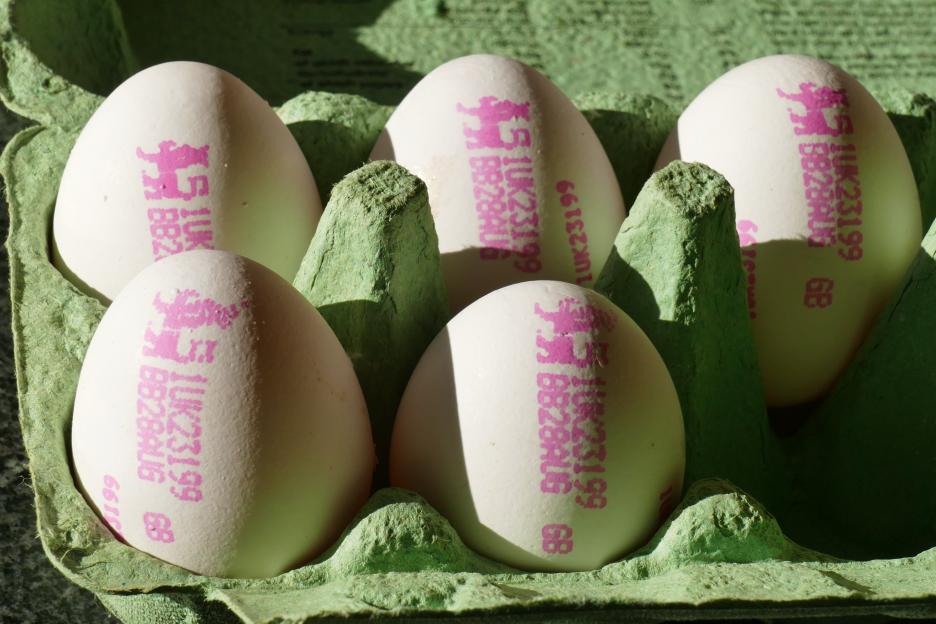 Experts advise people to buy eggs that carry the British Lion mark as they are not affected by the outbreak Credit: Shutterstock Editorial
The biggest single exporter of eggs to the UK is Ukraine, which accounts for almost a third of imports alone.
It is where a separate Salmonella outbreak involving a strain known as ST2045 was found to have emerged from earlier this year.
A senior figure investigating a connected outbreak of Salmonella in the Netherlands told The Telegraph that the “working hypothesis” among British health officials is that the contaminated products have come from Ukraine.
Nick Allen, Chief Executive, British Egg Industry Council, said: “We have repeatedly raised concerns about the risks associated with imported eggs and egg products with Government.
“British Lion egg producers have invested heavily in world-leading food safety controls, including mandatory Salmonella vaccination, traceability and independent auditing, yet increasing volumes of imports produced under less stringent regulations continue to arrive.”
are typically caught by eating contaminated food, including poultry, meat, eggs, raw fruit and vegetables, as well as unpasteurised milk products.
Infection can also occur through close contact with infected people and by cross-contamination in the kitchen, for example when utensils are used for both cooked and uncooked foods.
They usually last for four to seven days and most people recover without treatment.
But if you become seriously ill, you may need hospital care because the dehydration caused by the illness can be life-threatening.