
SCIENTISTS have estimated that there will be almost 25 million new dementia cases each year by 2050.
Current figures indicate that there are around 11.4 million new cases of globally each year, meaning figures could more than double in just 25 years.
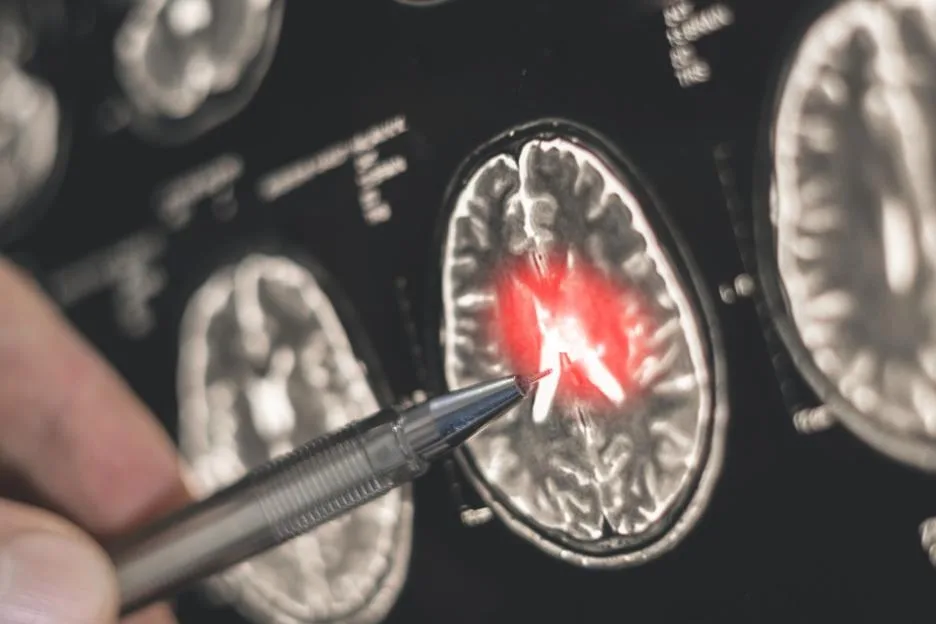

According to the new research – published in the JAMA Neurology journal today – higher rates of dementia have also been observed in women than men.
Authors, however, said this finding couldn’t be fully explained by the fact women tend to live longer.
They suggested that other factors are likely contributing to this.
The scientists estimated that by 2050, there will be 24.7 million new dementia cases globally each year.
And they found that the risk of developing dementia was higher in low-and-middle-income countries, compared to high-income countries.
The research team concluded that these findings highlight the need for an expanded capacity for diagnostics and care, particularly for women.
It is estimated that there are currently around 982,000 people with in the UK, although a third do not have a formal diagnosis.
Lifestyle habits that are known to increase the risk of developing dementia include high blood pressure, , , lack of exercise and drinking too much , along with conditions such as hearing loss, and type 2 .
The Society, however, warned in August that around a quarter of Brits over 40 can’t name a single habit or health condition that .
A poll of 1,393 people in the UK, conducted on behalf of the , found that 26 per cent could not name a single one of these risk factors.
Michelle Dyson, chief executive at the Alzheimer’s Society, said at the time: “Millions of people are missing the chance to take simple today that could help protect their brain tomorrow, from getting their hearing checked to managing their blood pressure.”
And Professor Ian Maidment, a professor in clinical pharmacy at Aston University, said: “Many people understandably live in fear of dementia.
The early stages of dementia
DEMENTIA is not a single condition. It is caused by different physical diseases of the brain – like Alzheimer’s, vascular dementia and DLB.
More than 944,000 people in the UK currently have it. And no matter the type, it affects everyone differently.
The first signs of it are often mild and easy to brush off, but can include:
- Memory problems (e.g. being unable to recall recent events or losing keys)
- Planning and thinking difficulties (e.g. finding complex decisions about finances hard)
- Language and communication trouble (e.g. struggling to find the right word)
- Poor orientation (e.g. getting lost easily in familiar areas)
- Visual-perceptual difficulties (e.g. problems judging distances)
- Changes in mood or emotion (e.g. feeling anxious or frightened or getting easily upset)
“Many people at the early stage of dementia stay largely independent and only need a bit of assistance with daily living,” Alzheimer’s UK says.
“It is important to focus on what the person can do and not to take over and do things for them.
“Instead, try doing things with them, for example helping the person develop a routine, reminder lists and prompts, and use technology.”
Because dementia is progressive, it gets worse over time, usually over several years. Experts generally think of it in three stages:
- Early stage (mild)
- Middle stage (moderate)
- Late stage (severe)
“These stages can be used to understand how dementia is likely to change over time, and to help people prepare for the future,” the charity adds.
“The stages also act as a guide to when certain treatments, such as medicines for Alzheimer’s disease, are likely to work best.”
Most people who develop dementia are over the age of 65. Anyone diagnosed before this is considered to have young-onset dementia, which affects about 70,800 people in the UK.
“But there are many things that we can do to reduce the risk of dementia including , not , alcohol in moderation and managing diseases such as high blood pressure and a raised cholesterol.
“The key message is: what is good for the heart is good for the head. This message needs to be communicated in accessible ways to a diverse audience; social media has a key role.”
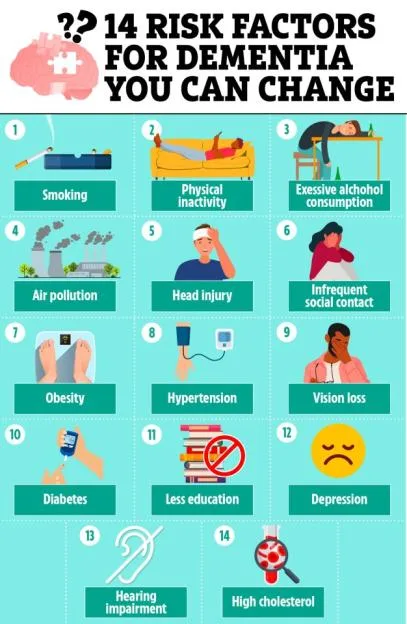
With these figures in mind, here are 14 risk factors for dementia that you can change.
- Smoking
- Physical inactivity
- Excessive alcohol consumption
- Air pollution
- Head injury
- Infrequent social contact
- Obesity
- Hypertension
- Vision loss
- Diabetes
- Less education
- Depression
- Hearing impairment
- High cholesterol
People who live a healthy lifestyle, especially from the age of 40 to 65, are less likely to develop Alzheimer’s, the Alzheimer’s Society says.
This includes not smoking, not drinking too much , eating a healthy, balanced diet and keeping both physically and active.
Protecting your head from injuries may also potentially reduce the risk of dementia.
Unfortunately, there are lots of health conditions that increase a person’s risk of developing Alzheimer’s.
These include , heart problems and , high blood pressure or cholesterol, obesity, age-related hearing loss and depression.
But managing these conditions and getting support from health professionals as early as possible may help you to reduce your risk.
David Thomas, head of policy and public affairs at Alzheimer’s Research UK, said the charity was now calling on the government to “introduce a national dementia risk reduction campaign delivered through the “.
This is so “people can access clear, evidence-based information about protecting their brain health”, he added.