
Britain must prepare for Russian drones to swarm skies – ‘attempted strike on Boris’ was just warning shot, experts fear
BRITAIN must prepare for Russian drones to swarm our skies as Vladimir Putin turns his crosshairs to European nations supporting Ukraine, experts warn. The alle...
 Written byEze Chidiebere Paul
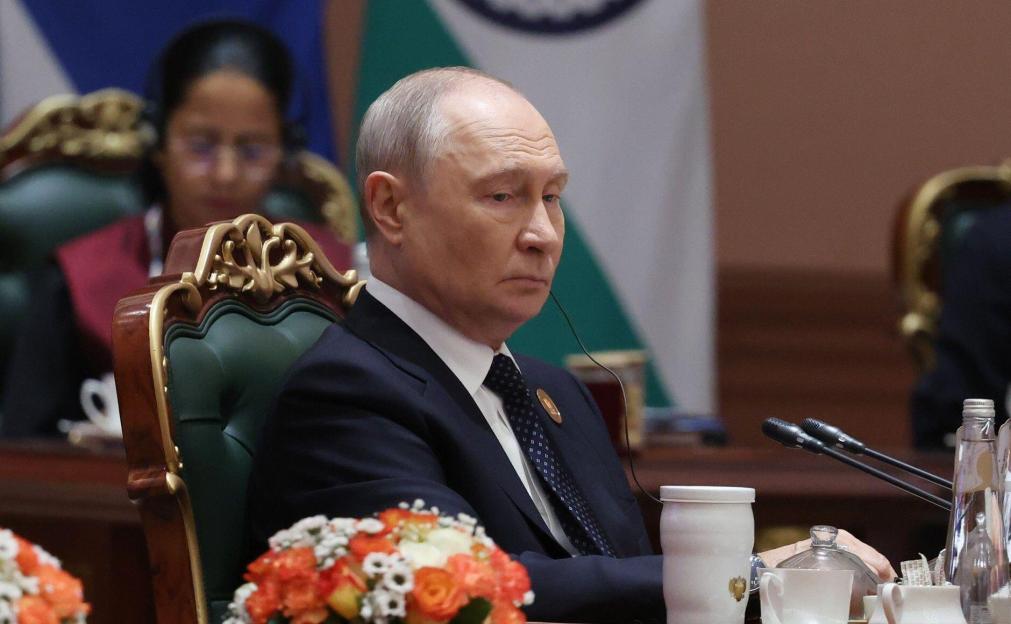
BRITAIN must prepare for Russian drones to swarm our skies as Vladimir Putin turns his crosshairs to European nations supporting Ukraine, experts warn.
The alleged attempted strike on Boris Johnson’s train was just a warning shot as Moscow draws the UK into a direct “militarised confrontation” that could erupt at any moment.
Russian President Vladimir Putin has become enraged by Britain’s support of Ukraine Credit: Alamy
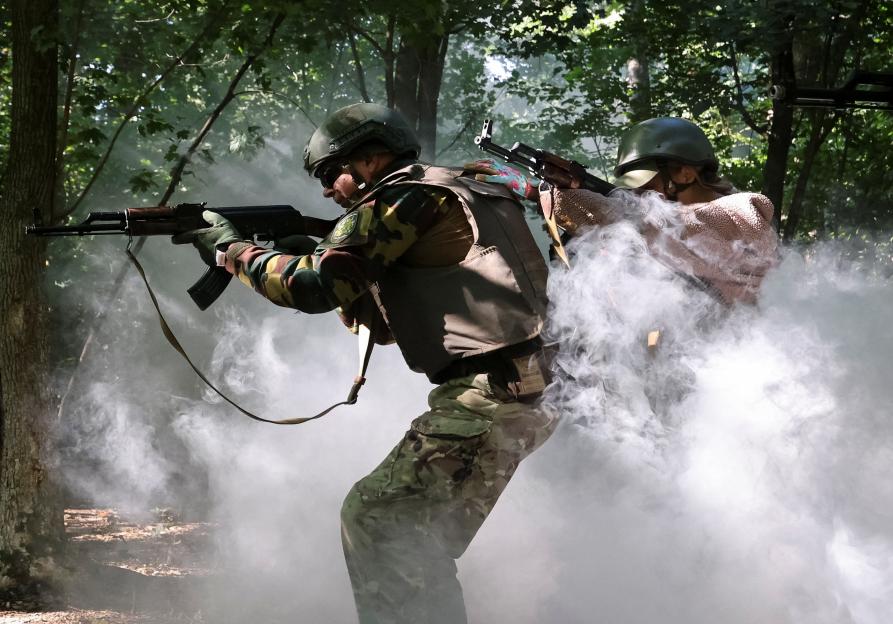 Military training for civilians in Ukraine’s Kharkiv region amid Russian attacks Credit: Reuters
Speaking to Sam Homewood in The Sun’s new studio in the heart of the newsroom, military analyst Michael Clarke told The Sun: “Russia is getting very, very close to committing real violence against the rest of us, not just the Ukrainians.
“What they’re trying to say is, ‘you’re playing with fire. We’re on the road to war’.”
was travelling close to the Polish border in Ukraine when the service behind his was blown up by forces on Sunday.
Ukraine’s railway operator later revealed Johnson’s train had left ahead of schedule amid fears of Russian strikes.
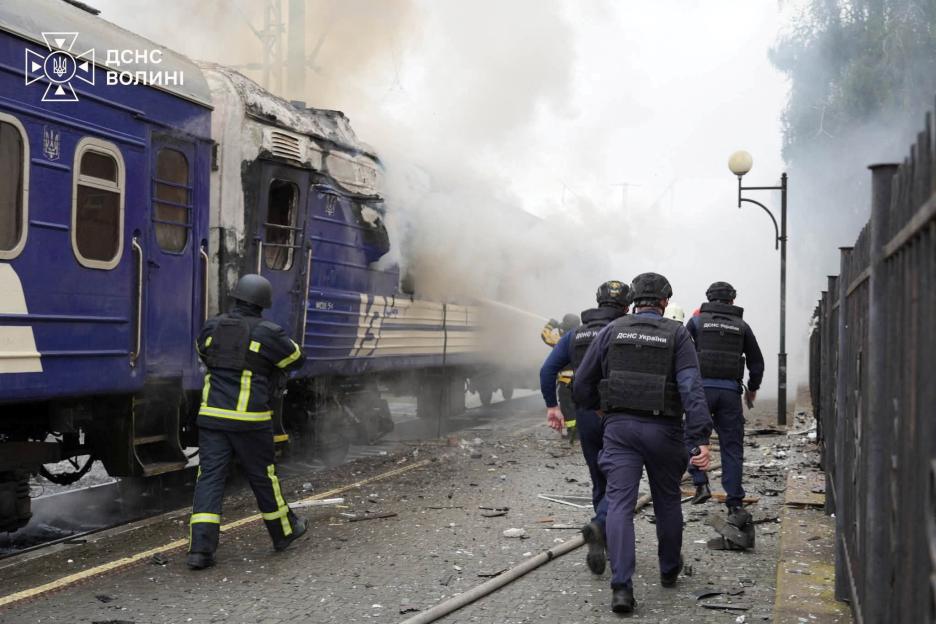 A Ukrainian passenger train was struck by a Russian drone on Sunday Credit: Reuters

Ukrzaliznytsia said in a post on Telegram it was “quite possible” that the drone had been aimed at Johnson’s train.
Clarke said: “The operation to attack this particular train will have been approved at the highest level.
“This would not have happened unless the Kremlin intended it to happen.”
Putin’s Security Council deputy Dmitry Medvedev had hinted about Moscow targeting such trains in a sinister threat just days earlier.
The former Russian President branded European leaders “terrorist sponsors” for their support of Ukrainian leader Volodymyr Zelensky and vowed “retribution”.
Medvedev tied up his warning with the chilling message: “And they often travel to Kyiv by train…”
No casualties were reported in the attack, but the strike has sparked fears about Putin’s spiralling aggression towards Europe.
Ukrainian foreign minister Andrii Sybiha said that Russian strikes were hitting closer to NATO and EU member Poland.
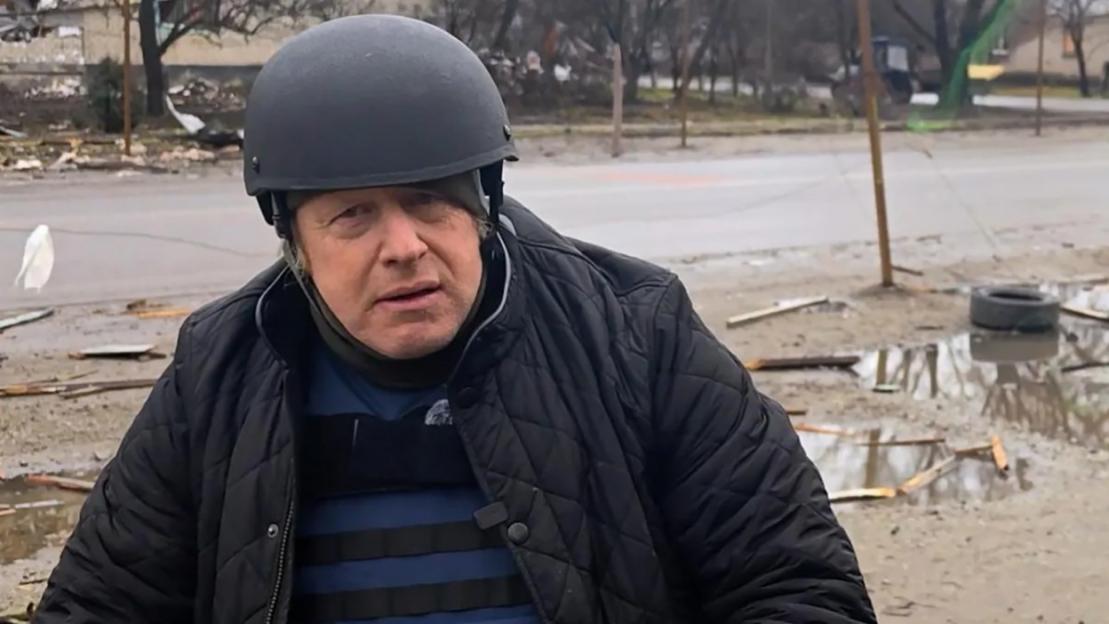 Ukraine’s railway operator said the strike was likely an attempted hit on Boris Johnson’s train Credit: Unknown
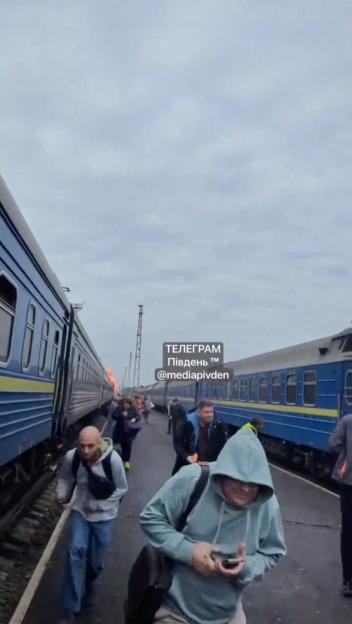 Terrified passengers run for their life during the attack Credit: Reuters
“Putin’s terror is literally knocking on the doors of the European Union and NATO,” he said.
Putin is desperately trying to thwart European support of Ukraine as he prepares to strike Ukraine in the deadliest winter blitz yet.
and the UK are at loggerheads after ‘s agreed to give blueprints for long-range Storm Shadow missiles, angering the Kremlin.
Asked how Russia will respond – and whether it is weighing up strikes on British territory – the Russian president said: “That’s a secret, a military secret”.
He added that “any military facilities in Ukraine are our legitimate target, British or otherwise”.
Clarke said: “We are certainly heading for a militarised confrontation with Russia either this year or next year for sure.
“That confrontation may well come at sea. It might come in the air shooting Russian drones down, maybe even Russian aircraft who are moving into our airspace.
“We are going to have to be prepared to bring down drones.”
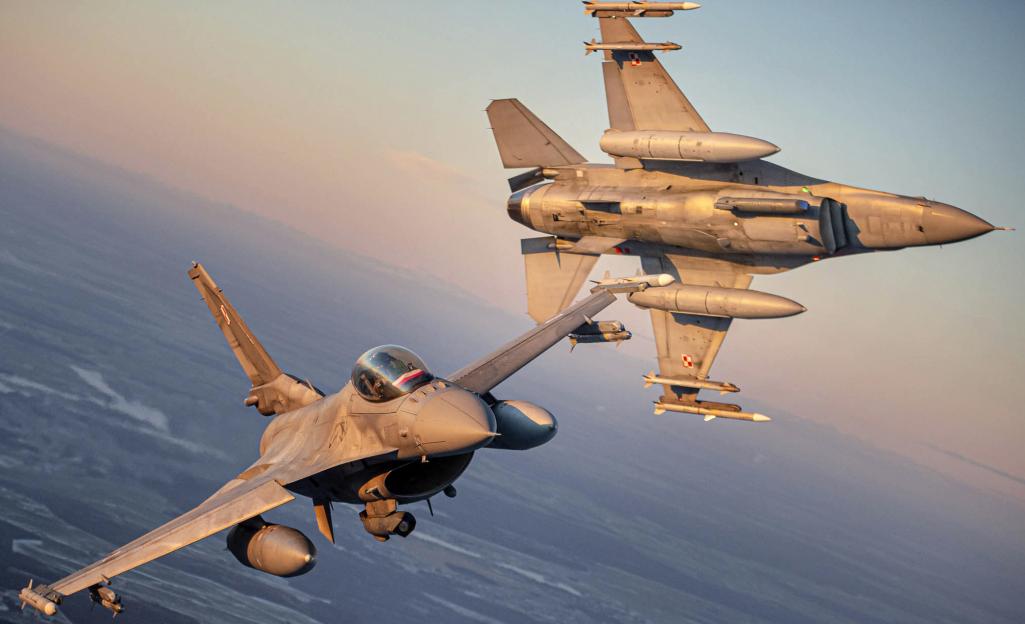 Polish Air Force F-16 fighter jets during NATO’s Baltic Air Policing Mission operate in Lithuanian airspace Credit: AP
 A drone entering Latvian airspace on May 17 Credit: Reuters
Following the rail attack, the EU’s foreign policy chief Kaja Kallas accused Russia of attempting to scare Western countries with the attack.
Both Ukrainian and Polish authorities said the Russian drone struck 2km (1.2 miles) from the Polish border when it struck the passenger train on Sunday.
In Poland, Prime Minister Donald Tusk held an emergency meeting to discuss the Russian “escalation” creeping “closer and closer to our border”.
US intelligence officials have been warning of an imminent Russian incursion
Moscow has been widely accused of waging hybrid attacks across Europe.
This includes explosive-filled found at Leipzig Airport, an arson attack on a Ukrainian-owned drone manufacturer in Slovakia, and a huge blaze at a defence firm warehouse in Bulgaria, all in the past month.
Clarke said: “In the next couple of weeks, we will see whether Russia is prepared to take some sort of action in the Baltic states or against Poland.
“They are building up to something, whether to frighten everybody or whether to really do it. We don’t know.
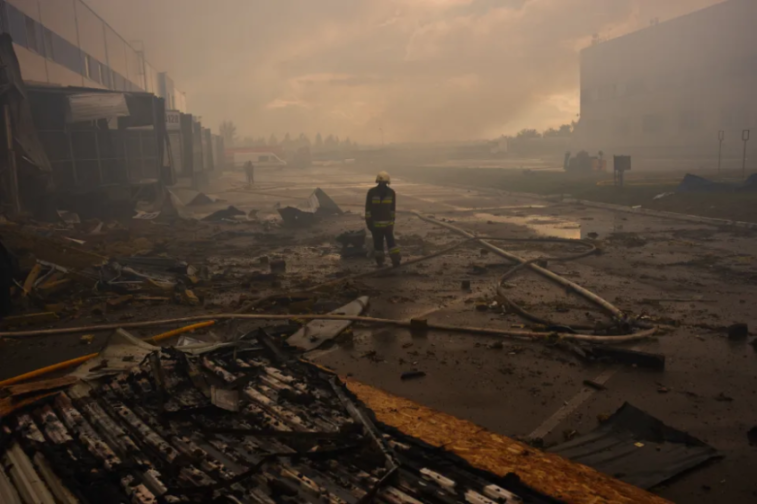 A firefighter walks among debris at a destroyed pharmaceutical warehouse following Russian drone attacks on the outskirts of Kyiv, Ukraine
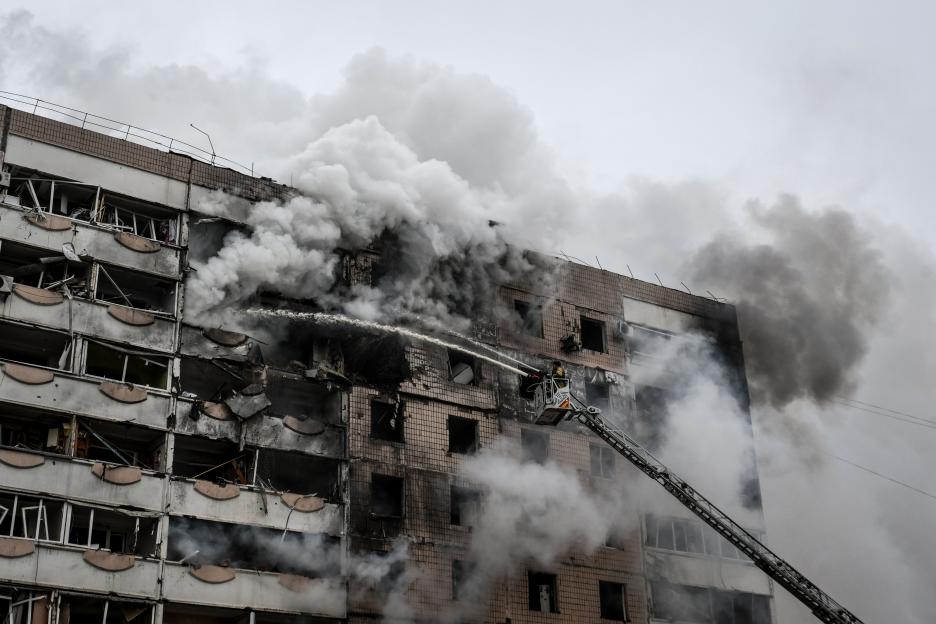 A firefighter uses an aerial ladder to suppress a fire in an apartment block hit by a Russian guided aerial bomb Credit: Shutterstock Editorial
“But there are a lot of indicators that the Russians are preparing some sort of military initiative.”
Just last week Nato fighter jets were scrambled over Estonia after several drones were spotted in the Baltic nation’s airspace.
The UK stations a rapid response force of more than 1,000 troops equipped with high-tech military gear in Estonia.
In July the Ministry of Defence announced a new UK-Estonia defence roadmap to deepen military cooperation and strengthen NATO’s eastern flank.
Clarke said: “Estonia is the most vulnerable of all of the three Baltic states.
“An attack on Estonia in the next couple of months is entirely plausible and the forces there are on full alert for it.
“So we’re building up to some sort of military confrontation, and how that confrontation is handled will determine the bigger question as to whether we find ourselves sliding into a war with Russia.”
For years, NATO countries have watched Russian drones breach their airspace, reluctant to shoot them down for fear of escalation.
But Ukraine’s allies must now respond with force to deter Putin before a direct attack on Europe, Clarke said.
He warned: “In the past it’s been a series of condemnations and increasing sanctions.
“But we are reaching the point where we’re going to have to be more muscular.
“Unless we’re prepared to keep backing down this war is going to get more dangerous before it is over.”
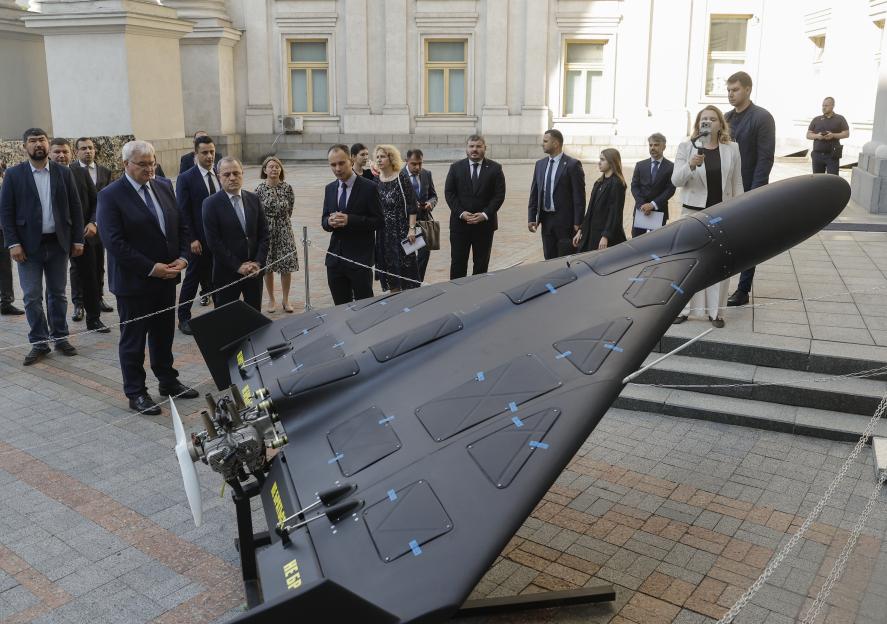 Ukrainian Minister of Foreign Affairs Andrii Sybiha inspects a Russian ‘Geran-2’ drone Credit: EPA
It comes as Putin prepares for his deadliest winter blitz yet against Ukraine.
Last month the Russian despot said Russia’s military had been “ordered to prepare and carry out mass strikes” on Ukraine’s energy facilities.
And as Russia steps up its production of ballistic missiles – now at a rate of more than 100 a month – Kyiv’s supplies of interceptors have tumbled.
Ukraine is trying to get an additional 300 Patriot missiles from its partners this winter, but there is no guarantee.
Clarke said: “The Ukrainians desperately need air defences because they’re now up against a much more sophisticated Russian drone threats.
“They’ve got a long, hard winter coming where with the best will in the world, the technologies don’t exist in in enough form.
“There aren’t enough of them to actually give Ukraine the sort of air defense they’re going to need.
“And Putin is about to throw the kitchen sink at Ukraine for the next six months or so over the winter.”
Desperate Putin is expanding his drone network as he prepares to take on the West to deter support reaching Ukraine.
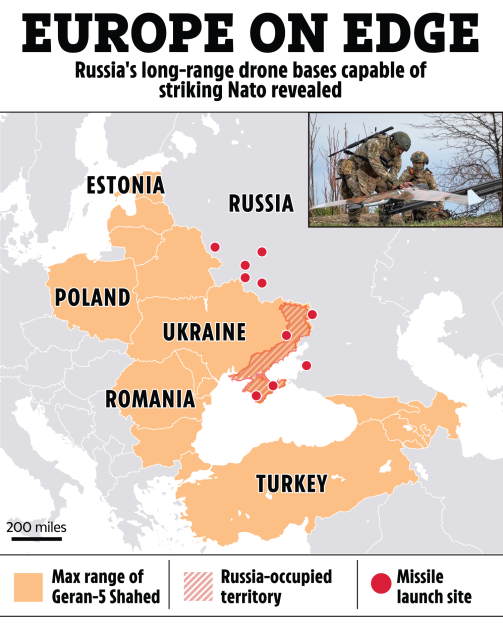
Moscow has started to deploy a high-speed jet variant of its Iranian Shahed drone model – capable of reaching targets almost 620 miles away.
Named Geran-4 and Geran-5, the UAVs can evade air defence systems while carrying a 90kg payload, according to Ukrainian government documents leaked online.
These will be launched alongside another 10,000 cheap Banderol cruise missiles during 2027.
– placing Nato allies well within reach of the dictator’s war machine.
Images showed enough storage at one base for more than 1,000 drones to be kept on site at one time.
Missiles launched from the secret sites could reach Nato territory with “the greatest of ease”, European affairs expert, Professor Anthony Glees previously told The Sun.
Continue reading
Dad finds son, 3, ‘in pool of blood’ after plunging 65ft from Cyprus apartment as post mortem reveals horror injuries
A DISTRAUGHT dad has told how he found his three-year-old son in a “pool of blood” after he plunged 65ft from a Cyprus apartment. The child’s post-mortem has r...

Alia rejects allegations of silence over Benue killings
Benue State Governor, Rev. Fr Hyacinth Alia, has rejected allegations that he remained silent over the killings in Ayilamo community in Logo Local Government Ar...

Appeal Court affirms N85m fine against bank over freezing of customer’s account
The Court of Appeal in Abuja on Monday affirmed the judgment of a HIgh Court of the Federal Capital Territory, FCT, which imposed a fine of N85 million on a Com...

NAFDAC alerts Nigerians over suspected counterfeit toothpaste
The National Agency for Food and Drug Administration and Control, NAFDAC, has alerted Nigerians to the circulation of a suspected counterfeit toothpaste, ORACIR...