A mum who was strangled, punched and whipped with a dog leash by her ex has been told he will leave prison after serving a third of his sentence – due to the early release scheme.
Hayleigh Allsopp, 29, first met Mark Hunt on , where they spent two years messaging before meeting up in person in 2021.

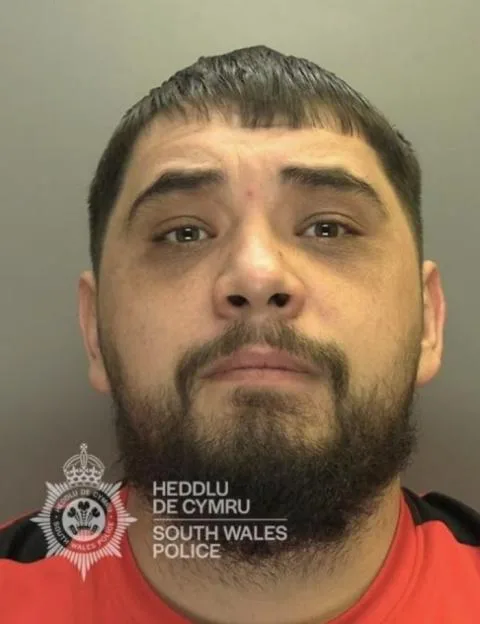
The mum-of-three said she fell head over heels for Hunt, asking that he would travel to her home in Barry, , every weekend just to spent time with her and her son, who she has from a previous relationship.
But soon the mask soon slipped and she found herself on the receiving end of his.
Hayleigh was repeatedly assaulted between 2024 and 2026, with some leaving her with injuries to her face, head and neck.
After each attack, she said that Hunt would ply her with gifts, including perfume, and beg her to not leave him.
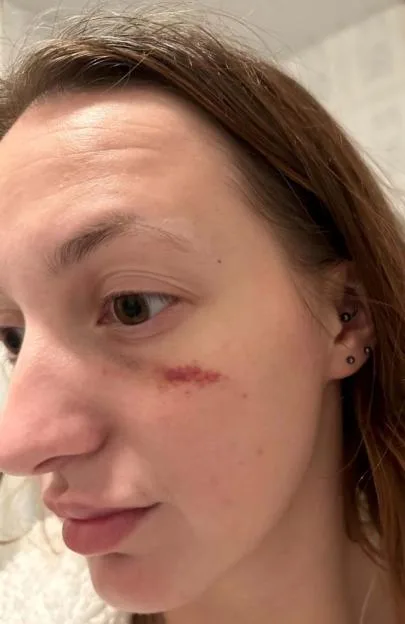
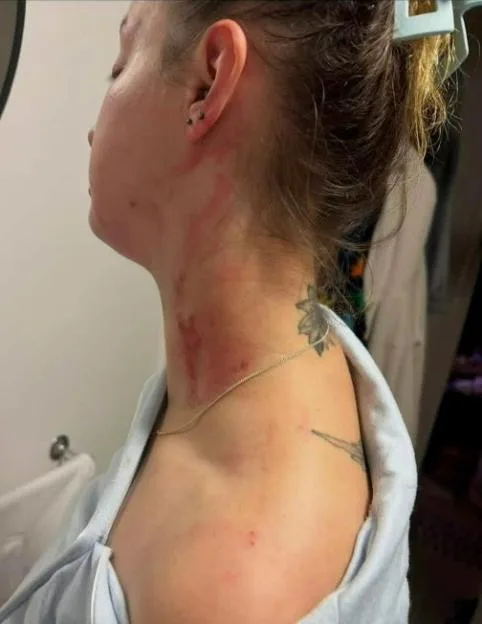
But in April 2026, Hunt was arrested after punching Hayleigh six times in the mouth.
Hunt was convicted on 7 August 2026, of one count of strangulation, three counts of and three counts of assault by beating at Cardiff Crown Court.
He was sentenced to 34 months in prison and made the subject of a lifetime restraining order preventing him from contacting Hayleigh.
But on 30 September 2026, Hayleigh was told by her liaison officer that Hunt is eligible for early release and will be leaving prison in March 2027.

Hayleigh, a stay-at-home mum, from Barry, said: “When he comes out, he will be on a warpath.
“He knows where I live. I live on a cul-de-sac; he could just stand at the end of my street and intimidate me.
“I will be at risk from March; my babies will be at risk. They are not protecting me; they are not protecting my children either.
“One of us is going to die at the hands of this man; when he sees me he is going to see red.”
Recalling their whirlwind romance, Hayleigh said Hunt came to visit her in 2021, but never left.
“When I met him, he stayed with me for two weeks,” she said. “He was lovely, and would travel up to Barry every day to come see me.
“He swept me off my feet; he was charming and told me everything I wanted to hear.”
Hayleigh said theoccurred just weeks after she got back with Hunt in early 2024.
Hayleigh said that she had confronted Hunt about adding girls on Facebook, and the pair had been arguing about it for hours.
She took herself up to bed at 12am, and around 4am, Hayleigh said she told Hunt, “ok go and get her then” – and said he saw red.
“He grabbed a hairbrush and had me over the bed, and pushed the brush into my neck,” Hayleigh said.
“I got up and went downstairs to get away from him, but he was following me. Screaming, shouting, I was telling him to get away from me.
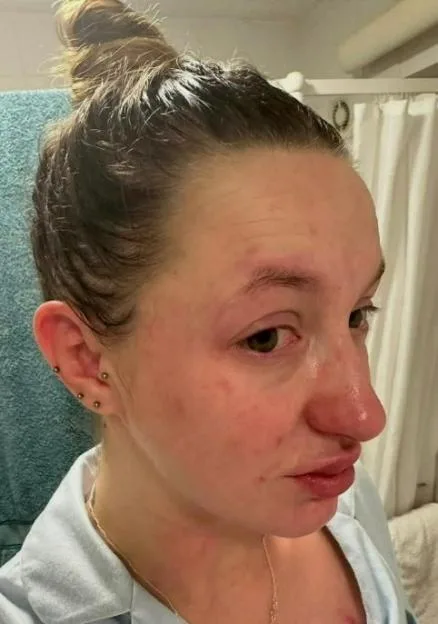
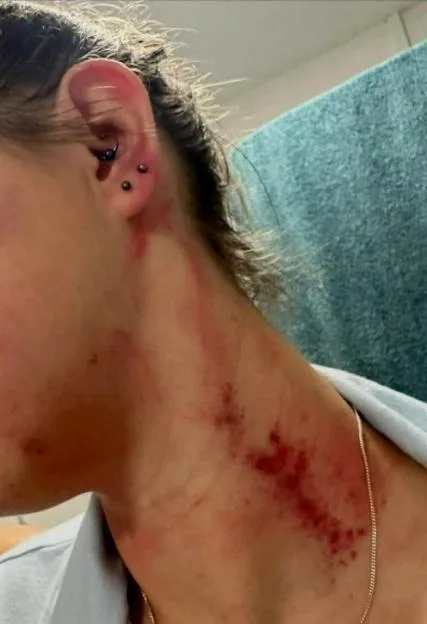
“He pushed me onto the floor. I shouted at him to get off me; he told me to shut the f*ck up and grabbed a tea towel, which he used to shove down my throat.”
During that time, Hayleigh said that Hunt had his knee on her neck and a hand over her mouth and nose to stop her breathing before he eventually let go.
After the brutal attack, Hayleigh took her children and went to her mum’s house.
She said that Hunt called her constantly that morning and left a voicemail saying, “I don’t want to leave you, I want to be with you.”
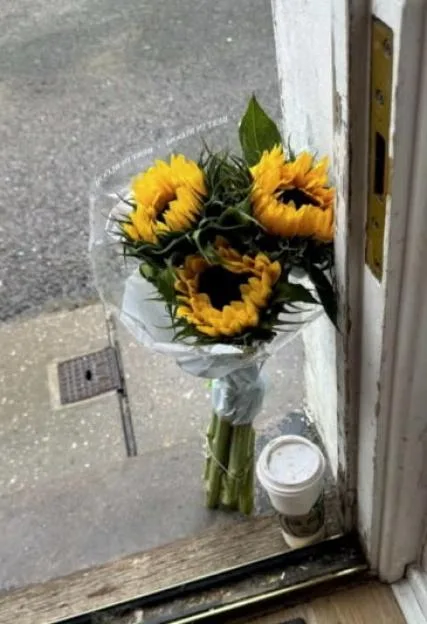
When she arrived home, Hunt had left flowers and a hot chocolate on her doorstep before handing her Chanel perfume.
“I felt stuck with him,” Hayleigh said. “I didn’t like him, but I stayed with him.”
In 2025, Hayleigh moved to , where Hunt was living at the time.
In April that year, Hayleigh had an argument with Hunt but left the house to de-escalate the situation.
When she returned, she said Hunt was demanding that she make him something to eat.
Hayleigh said she sarcastically told him she would make him a sandwich before he flew into a fit of rage.
“He then swung at me three times, and slammed my face onto the tiles in the wall of the kitchen,” she said. “I was holding my son at the time.”
Another attack took place after Hunt had a housing appointment, where he used a dog leash to whip her across her neck.
Domestic abuse - how to get help
DOMESTIC abuse can affect anyone - including men - and does not always involve physical violence.
Here are some signs that you could be in an abusive relationship:
- Emotional abuse – Including being belittled, blamed for the abuse – gaslighting – being isolated from family and friends, having no control over your finances, what you where and who you speak to
- Threats and intimidation – Some partners might threaten to kill or hurt you, destroy your belongings, stalk or harass you
- Physical abuse – This can range from slapping or hitting to being shoved over, choked or bitten.
- Sexual abuse – Being touched in a way you do not want to be touched, hurt during sex, pressured into sex or forced to have sex when you do not consent.
If any of the above apply to you or a friend, you can call these numbers:
- The Freephone National Domestic Abuse Helpline, run by Refuge on 0808 2000 247 for free at any time, day or night
- Men who are being abused can call Respect Men’s Advice Line on 0808 8010 327 or ManKind on 0182 3334 244
- Those who identify as LGBT+ can ring Galop on 0800 999 5428
- If you are in immediate danger or fear for your life, always ring 999
Remember, you are not alone.
1 in 4 women and 1 in 7 men will experience domestic abuse over the course of their lifetime.
Every 30 seconds the police receive a call for help relating to domestic abuse.
In October 2025, Hayleigh said Hunt was trying to make her jealous by showing her a fake Facebook account that had added him.
She said he was suggesting that it was an account of a woman he had previously cheated on her with in an attempt to “rile her up.”
Hayleigh said: “He continued to try and rile me up the morning after. He grabbed my hair, dragged me to the floor and started punching me.
“As I walked away, he pulled me again to the floor, put me between his kneecaps, put his kneecaps on my temples – and then I felt pressure on my head.
“Then I was upside down on the floor as he was punching me in the mouth, and I lost my tooth. I told him to hurry up and get it over and done with. I stood, and I was bleeding from my nose, ears and mouth.”
The final attack happened in April 2026, after she alleged that Hunt’s dogs damaged a window in her rental property.
Hayleigh said that she had to pay £600 for a new window, but Hunt had told her, “it’s minor, shut up about it”.
“He then went off on one after I told him he needed to get the dogs out of the house,” Hayleigh said.
“He punched me six times in the mouth, and slapped me. He bounced my head back into the glass door and punched me so I smashed into the chest of drawers and broke them.”
Hunt then ran upstairs, but locked the front door. In the meantime, Hayleigh called the police, and Hunt was arrested later that day.
Hunt was convicted on 7 August 2026, of one count of strangulation, three counts of actual bodily harm and three counts of assault by beating.
He was sentenced to 34 months in prison and made the subject of a lifetime restraining order preventing him from contacting Hayleigh or the children.
But Hayleigh doesn’t believe that she has got justice. She said she has had to spend £2,500 on a security system, including motion sensors and a guard dog.
She is also suffering from PTSD and said she is living in fight-or-flight mode, which has been made even worse after she found out he will be released in March 2027.
Hayleigh said: “I am constantly in fight-or-flight mode where if someone turns up at the house I feel like I need to defend my kids.
“I can’t sleep, and if I do, I am drenched in sweat. I had a nightmare that he was back from jail, and we got back together, and I could never escape him.
“I am grateful that I have some breathing space where he is behind bars, but I constantly fear the day he is released.
“I am fearful of the fact that he is getting out in March; I fear that I might walk into him. Now I will be living in constant fear, which is very unfair.”
Lord Chancellor and Secretary of State for Justice, Alex Norris, said: “Today we are introducing the toughest ever range of tools to control prison leavers and better protect the public.
“We understand the anxiety victims face ahead of offenders release dates, but the greatest danger to victims would be prisons running out of cells for dangerous criminals which was the crisis this government inherited.
“Our plan will make sure this never happens again by building 14,000 prison places while subjecting offenders to the toughest ever controls – leaving them nowhere to hide and under no doubt that we are watching them.”