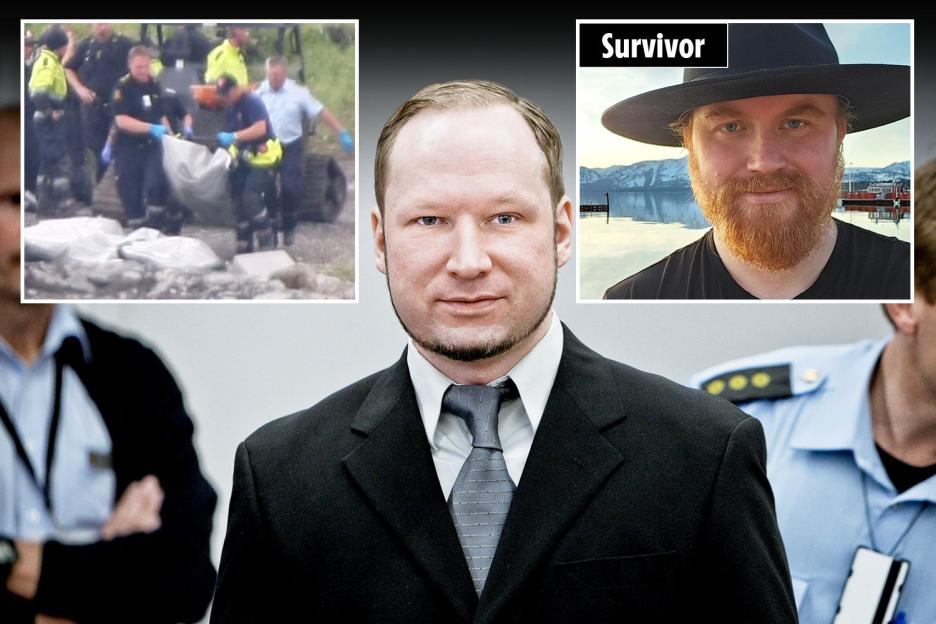
FLOATING in water turned red by the blood of his friends, Bjorn Ihler saw their killer raise his gun and take aim at him.
He was certain he was going to die. Twisted Anders Breivik , who was armed and dressed as a policeman, had driven to an idyllic island in Norway and opened fire on innocent members of a youth summer camp – in one of the deadliest massacres ever seen in Europe.
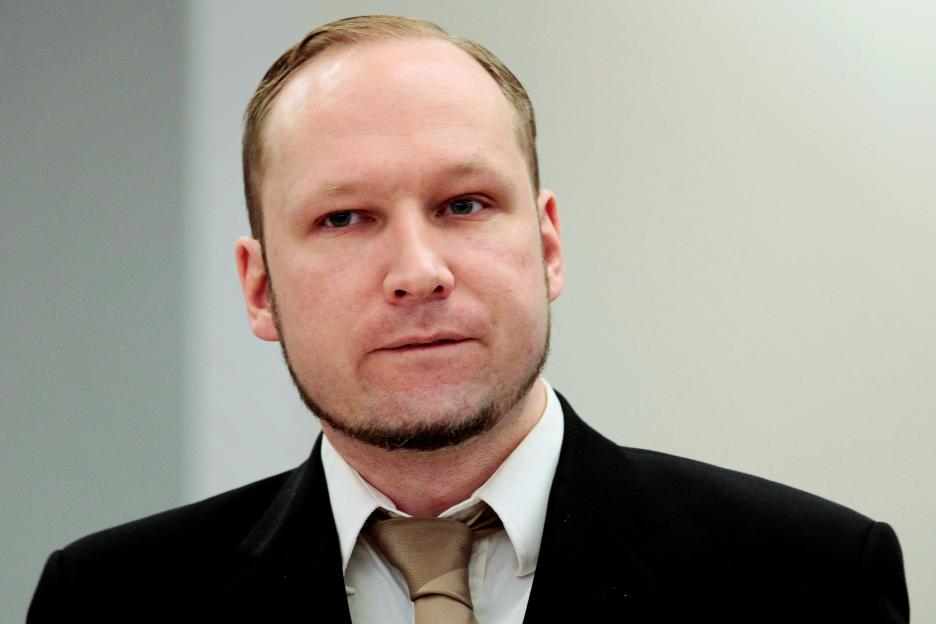 Anders Breivik, pictured in court in 2012, was sentenced to 21 years in jail after carrying out one of the worst massacres seen in Europe since WWII Credit: Reuters
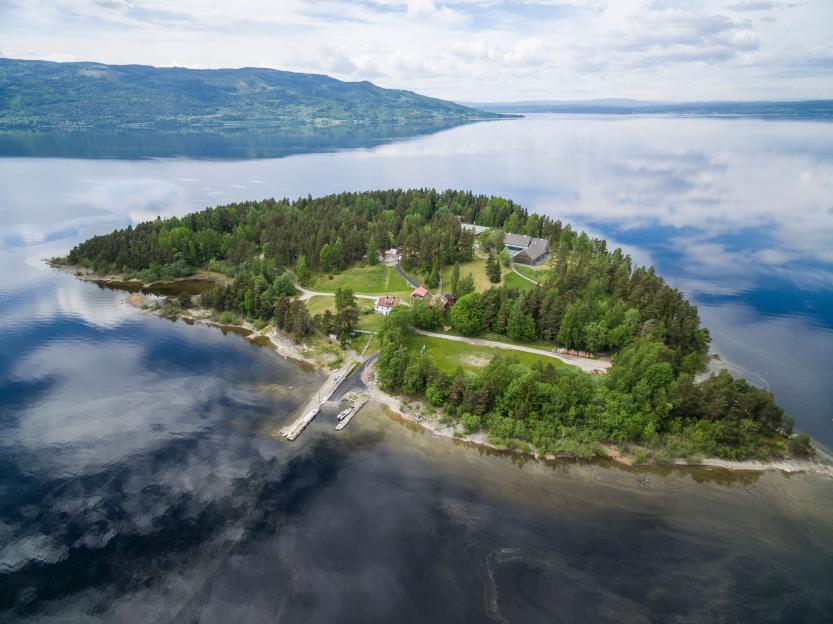 The idyllic island of Utoya where Breivik killed 77 people on July 22 2011 Credit: AFP
In a moving interview to mark 15 years since Breivik’s slaughter on the island of Utoya, Bjorn, has told how he remarkably escaped the killer, helped save two eight-year-old boys on the island and came face-to-face in court with the warped shooter.
Now activist Bjorn has dedicated his life to fighting extremism through filmmaking and theatre productions and has founded a project to help prevent others like Breivik become radicalised.
Speaking exclusively to The Sun, he said: “For a long time it was so hard to come to terms with the awful things that happened on Utoya.
“I saw a lot of people die and had to try to get away by swimming off the island and I was shot at in the water by him but thankfully survived.
“I remember being in the water and looking back at the island, saw Breivik take aim at me. I was certain I would die.
“It was an extraordinary moment which is hard to describe. I felt this peace inside me but also this overwhelming emptiness; it was a feeling of my soul leaving my body.
“Thankfully Breivik missed and I threw myself back into the water. It was red with the blood of my friends.”
Bjorn, then just 20, originally from Oslo, , had been studying in Liverpool in July 2011 when he decided to return to a summer camp on the idyllic island of Utoya – just outside his hometown – for a summer camp organised by the AUF, the youth division of the ruling Norwegian Labour Party.
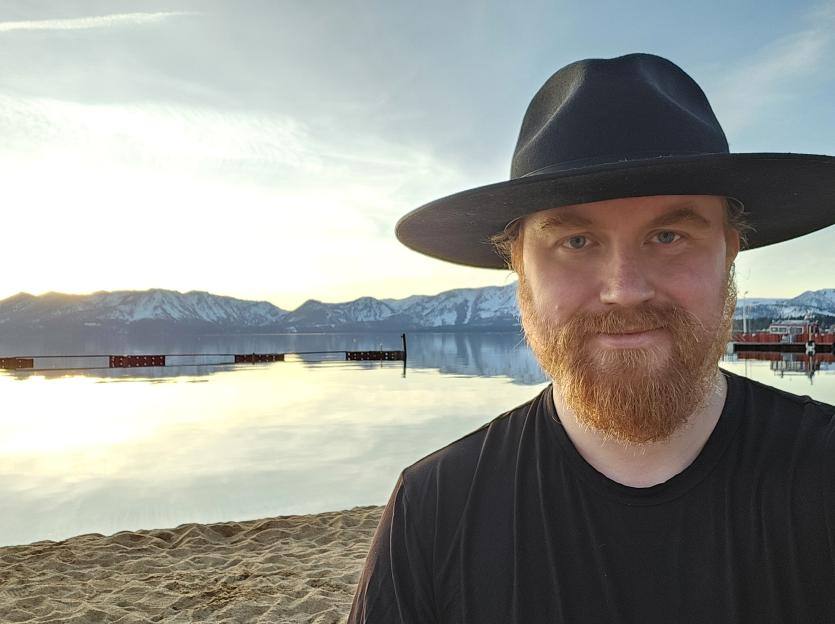 Bjorn Ihler, now 35, escaped the killer and helped save two eight-year-old boys on the island Credit: First Story Media
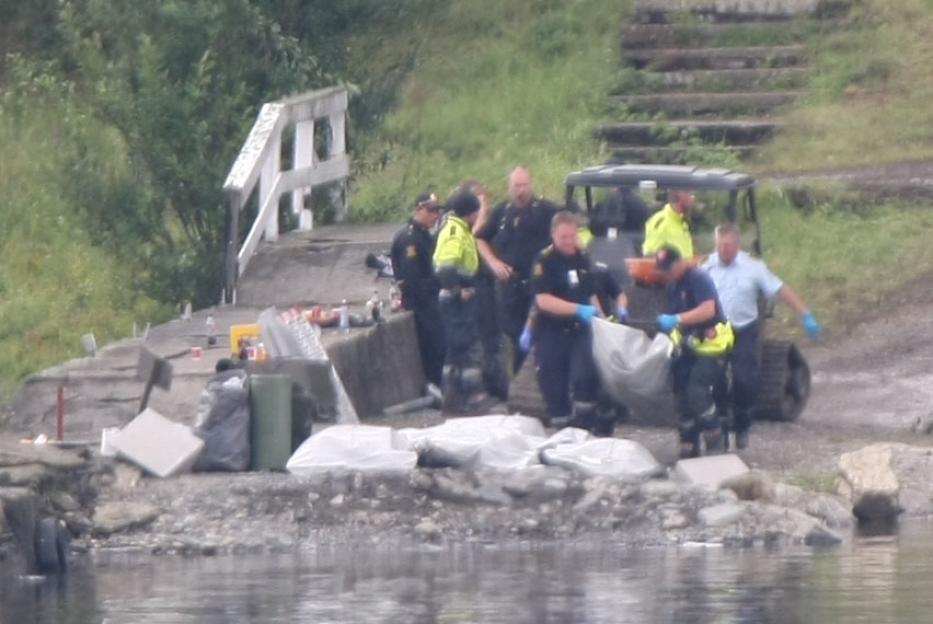 Police move body bags near the water at the youth summer camp following Breivik’s massacre Credit: Darren Fletcher – The Sun
On the afternoon of July 22, far-right Anders Breivik detonated a bomb at government buildings in Oslo – killing eight and injuring 209.
With police attending the bomb blast, armed Breivik – dressed as a policeman – made his way to the island to carry out one of the worst massacres seen in Europe since the second world war.
Bjorn, now 35, said: “We heard what we thought was fire crackers or fireworks going off on the island.
“The first time I saw Breivik, people started to run up to him, maybe because he was wearing police attire. They wanted to know what was happening. He shot them.
“I ran into the woods. In the woods I noticed two eight-year-old boys. They were stunned so we found a hiding spot. There were about 600 people on this tiny island battling for a few hiding places.
“But then, as we ran along, we came across a most terrible sight – a pile of dead bodies blocking the track.
“We ran to the southern tip of the island and I gave the kids my phone and had them call their mothers and I called my own father to tell him I was safe.
“At that moment an armed policeman came out of the woods from behind us, saying, ‘The bad guy had been caught and we were all safe now’. It was Breivik.
“He raised his gun, pointed it towards us and started shooting. I jumped in the water and the kids followed me. Thankfully we survived.”
Bjorn and the boys managed to swim round the island to safety and hid until Breivik was eventually apprehended and they were rescued by real police officers.
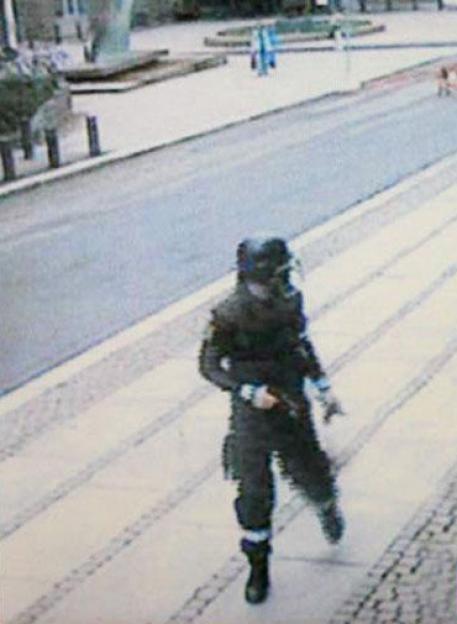 Breivik caught on CCTV walking away after setting a car bomb in Oslo which killed eight and injured 209 Credit: Reuters
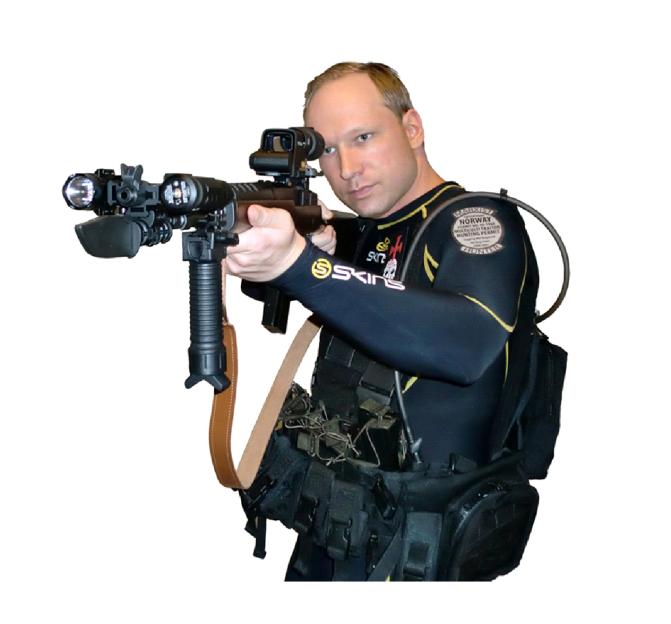 Breivik seen in an image from his 1,500-page manifesto in which he attacked multiculturalism Credit: AP:Associated Press
In 72 minutes, Breivik killed 69 on the island. 77 died in total.
In the days after Bjorn tried to come to terms with what had happened and read the killer’s 1518-page, rambling manifesto on why he carried out the killing.
He argued his actions were “necessary” to prevent the eradication of the ethnic Norwegian population and cultural heritage.
Bjorn said: “I realised after a while I had to do something to understand Breivik’s reasons for doing it.
“In Norway, Breivik was almost treated like Lord Voldermort from the Harry Potter books.
“People were frightened to say his name and wanted to dehumanise so they could qualify what happened as one single madman.
“I realised we had to get to the bottom of why he did it to try to prevent anything like it happening again.
“Like with attacks that have been carried out by individuals in the UK, like the , it’s important not to dismiss them with the phrase ‘lone wolf’.
“We have to look at what the cause was, what community – often online – helped inspire any such attack.
“As someone who was involved in a terror attack like this, I would encourage people in the UK to look at the same root issues, to help find a solution to prevent similar attacks.”
The following year, Bjorn attended Breivik’s court hearing in Oslo.
He said: “I wanted to see him again. It made me realise he could no longer point a gun at me. I saw him as just another human being with no power to hurt me anymore.
“This was significant in rebuilding my life, and realising that the core issue when dealing with violent extremism is recognising that we all dehumanise each other.”
Breivik was sentenced to 21 years’ imprisonment – the maximum fixed penalty under Norwegian law – and is currently in the high-security in Norway.
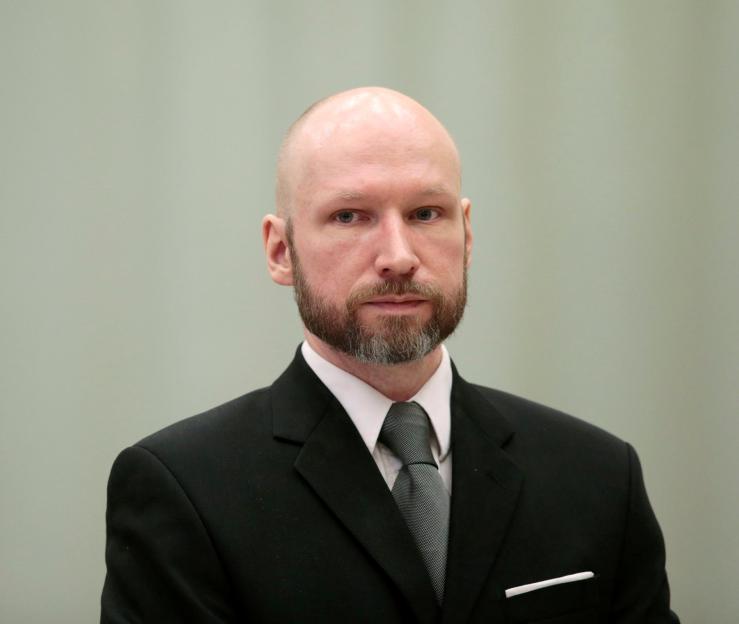 Twisted Breivik, pictured during an appeal hearing in 2017, argued his actions were ‘necessary’ to prevent the eradication of the ethnic Norwegian population Credit: Reuters
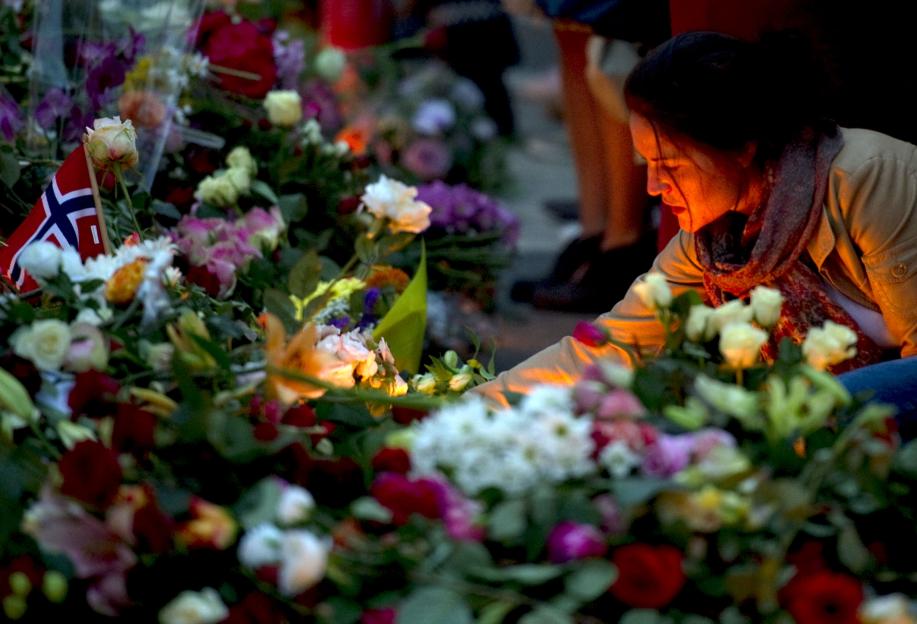 Vigil remembering the victims of the massacre in Oslo Credit: Scott Hornby – The Sun
In the year after the attack, Bjorn visited the boys he helped save during the attack – who would be in their twenties now – but has not seen them since.
He said: “It felt very important to go and see them after what happened. It was nice to meet their mothers too. But I haven’t seen them since.
“If they wanted to get in touch, I would of course be here for them.”
His experiences inspired him to co-found the Khalifa Ihler Institute – a peace-building organisation – and he was a founding member of the Extremely Together project through the UN-funded Foundation.
It is dedicated to prevent and countering violent extremism.
He said: “My work has led me to meeting many survivors from other terror attacks, many from the UK, from the London Bridge attacks to survivors from the . It’s been incredibly moving.
“People sometimes find it strange that I consider Breivik so unimportant but I prefer to try to stop people harming others than thinking about Breivik.
“I feel I was given the gift of life and if I dedicate my time to making sure that one single person doesn’t have to go through what my friends and I went through then this work will be worthwhile.”
To learn more about Extremely Together go www.extremelytogether-theguide.org