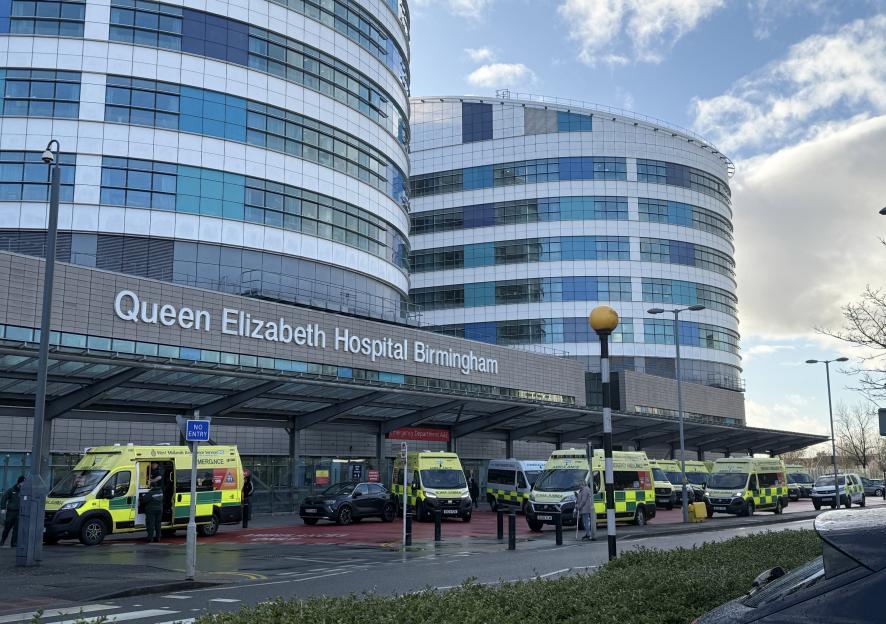
MORE than 1,600 people were forced to wait more than 12 hours in A&E every day last month, damning figures have revealed.
A total of 50,582 patients in England endured the half a day wait before being admitted, transferred or discharged in September, figures show.

It marks a 13 per cent rise on the previous month (44,951) and is equivalent to 1,686 people every day.
Leading casualty experts said the “ominous” rise “should set alarm bells ringing” as approaches and that medical staff were already treating swathes of Covid and flu patients.
According to the NHS England monthly A&E performance data, emergency departments and ambulance services faced their busiest September yet, with more than 2.44 million attendances.
Under three quarters of emergency department attendees (74.4 per cent) were seen within four hours in September, down from 75 per cent in August.
The number waiting at least four hours from the decision to admit to admission also rose, standing at 129,199 in September.
This was up from 118,550 in August.
Under NHS guidelines, 95 per cent of patients of arriving in A&E, but this target hasn’t been met since 2015.
Figures also showed that the number of because no beds are available remained above 3,000 a day.
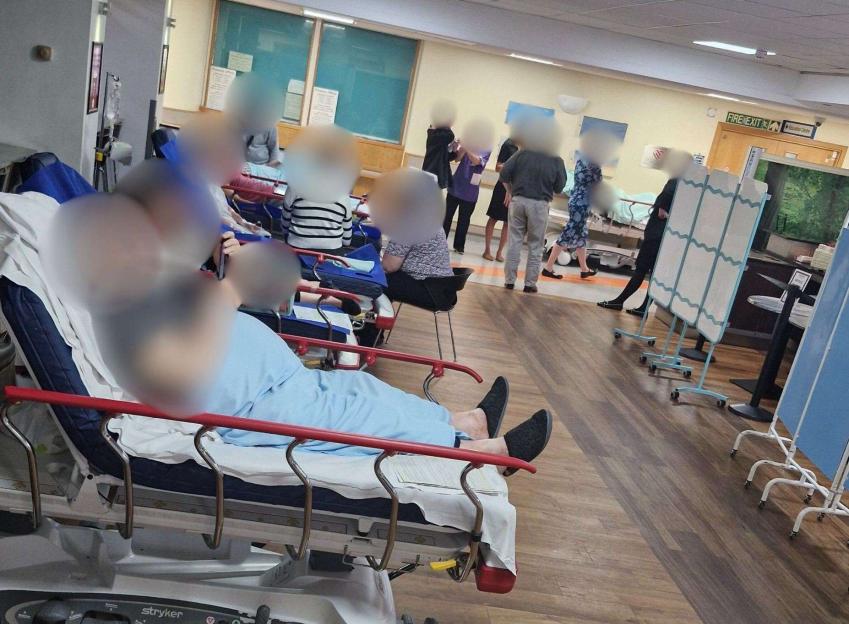
An average of 2,549 patients received “corridor care” for more than 45 minutes in emergency departments in last month.
A further 761 patients received care within a ward but not within a designated bed space on average each day, taking the total to 3,310.
Responding to the latest NHS England figures, Dr Vicky Price, president of the Society for Acute Medicine, said: “A 13 per cent rise in 12-hour emergency department waits as winter approaches should set alarm bells ringing.
“More than 50,000 patients waited over 12 hours from the decision to admit to admission in September – 1,686 people every day.
“There is still no breathing space for urgent and emergency care.
“These are not just numbers. They represent vulnerable people who are waiting far too long for a bed and staff trying to deliver safe care in overcrowded emergency departments and acute medical units under relentless pressure.
“Long waits are a symptom of poor flow across the whole hospital and wider and care system.
“With winter approaching, there can be no reliance on marginal improvements or short-term fixes.”
She added: “What is now needed is sustained action to ensure patients can move safely through and out of hospital, rather than another winter in which unacceptable waits are normalised.”
NHS national medical director, Professor Frankie Swords, also warned that there were now “ominous” signs of winter pressure building on the health service.
TIMELINE OF THE NHS WAITING LIST
THE NHS waiting list in England has become a political flashpoint as it has ballooned in recent years, more than doubling in a decade.
The statistics for England count the number of procedures, such as operations and non-surgical treatments, that are due to patients.
The procedures are known as elective treatment because they are planned and not emergencies. Many are routine ops such as for hip or knee replacements, cataracts or kidney stones, but the numbers also include some cancer treatments.
This is how the wait list has changed over time:
August 2007: 4.19million – The first entry in current records.
December 2009: 2.32million – The smallest waiting list on modern record.
April 2013: 2.75million – The Conservative and Liberal Democrat coalition restructures the NHS. Jeremy Hunt was Health Secretary.
April 2016: 3.79million – Junior doctors go on strike for the first time in 40 years. Theresa May is elected Prime Minister.
February 2020: 4.57million – The final month before the UK’s first Covid lockdown in March 2020.
July 2021: 5.61million – The end of all legal Covid restrictions in the UK.
January 2023: 7.21million – Prime Minister Rishi Sunak pledges to reduce waiting lists within a year, by April 2024.
September 2023: 7.77million – The highest figure on record comes during a year hit with strikes by junior doctors, consultants, nurses and ambulance workers.
February 2024: 7.54million – Ministers admit Rishi Sunak’s pledge to cut the backlog has failed.
August 2024: 7.64million – List continues to rise under Keir Starmer’s new Labour Government.
December 2024: 7.46million – The list has fallen for four consecutive months – a glimmer of hope.
May 2025: 7.36m – The lowest for two years, since 7.33m in March 2023.
October 2025: 7.4m – Increased in June, July, August and October.
November 2025: 7.31m – A decline of 86,000 compared to October.
February 2026: 7.22m – Continues to fall, now the lowest since February 2023.
March 2026: 7.11m – now the lowest level since November 2022
April 2026: 7.22m – The first rise in six months
August 2026: 7.37m – Rises up from 7.33 million treatments at the end of July, meaning it is the highest since October 2025
She said: “NHS staff have done fantastic work to deliver record levels of elective care this and now supporting the busiest September on record for A&E attendances and ambulance incidents.
“But now the focus is on the looming winter months ahead.
“Staff are already seeing the ominous early signs of pressure, with more patients coming to A&E with flu and other respiratory viruses than usual for this time of year, and unfortunately many people are still waiting longer than we would like them to.
“This is why it’s absolutely crucial to take up the offer of flu, RSV, Covid and other vaccinations if you’re eligible, to protect yourself, your family and the public.
“We all have our part to play, so please don’t wait for winter – come forward to your or pharmacy now and get protected.”
According to the figures, by area, University Hospitals Birmingham NHS Foundation Trust had the highest number of patients waiting at least 12 hours, with 2,085 last month.
This was followed by Royal Free London NHS Foundation Trust (2,031) and The And Telford Hospital NHS Trust (1,373).
Mid And South Essex NHS Foundation Trust, meanwhile, reported 1,371 patients waiting for this length of time.
By comparison, Royal Berkshire NHS Foundation Trust recorded no waits of more than 12 hours, while Harrogate And District NHS Foundation Trust recorded just one.
Separate NHS data released today also showed that an estimated 7.37 million treatments were waiting to be carried out at the end of August, relating to 6.24 million patients.
This is up from 7.33 million treatments and 6.21 million patients at the end of July.
The numbers are the highest since October 2025, when the list stood at 7.40 million treatments and 6.24 million patients.
Long waits for NHS hospital treatment in England have also increased, according to the data.
An estimated 113,339 people had been waiting more than a year to start routine treatment at the end of August, up from 111,379 people at the end of July.
The Government has pledged that 92 per cent of patients in England will begin treatment within 18 weeks by the end of the current in 2029.
Currently, around 65 per cent are treated within this timeframe.
But, NHS England said that a record 4.7 million (4,738,824) planned treatments, procedures and appointments occurred across June, July and August – more than in any previous summer.