DUSK falls on the Grangetown estate near Middlesbrough, and a boy aged around eight whizzes past on a push bike, flicking the middle finger at anyone he does not like the look of.
He has already learned to act tough in a town where the brutality of gang warfare last week burst out into the open like a festering wound.
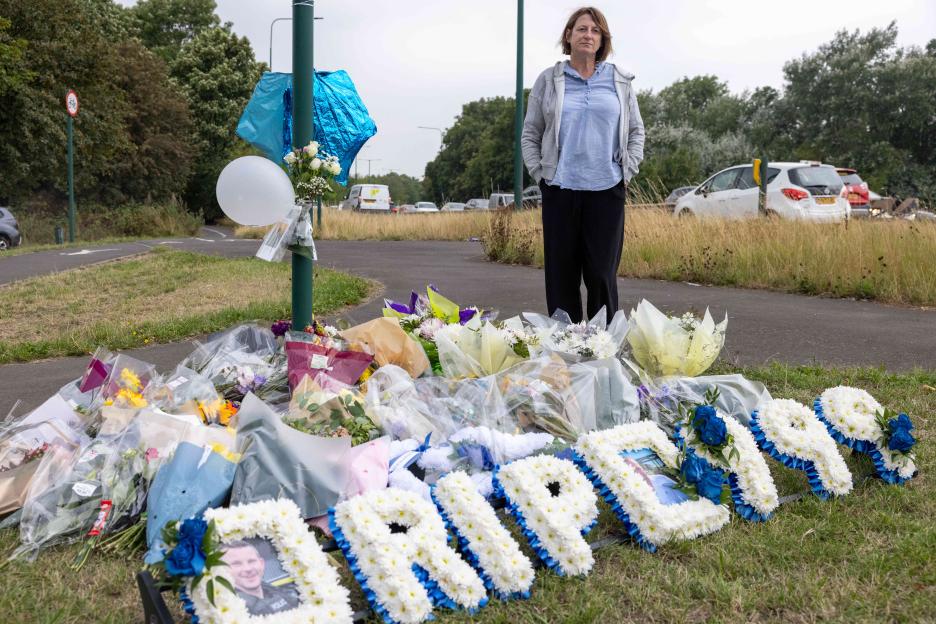 Sun reporter Grace Macaskill with floral tributes to PC Tom Clough and PC Matthew Blades, laid near the scene of the crash on the A66 Credit: Andy Commins
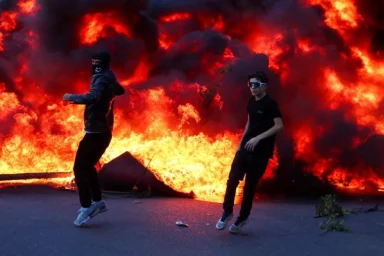
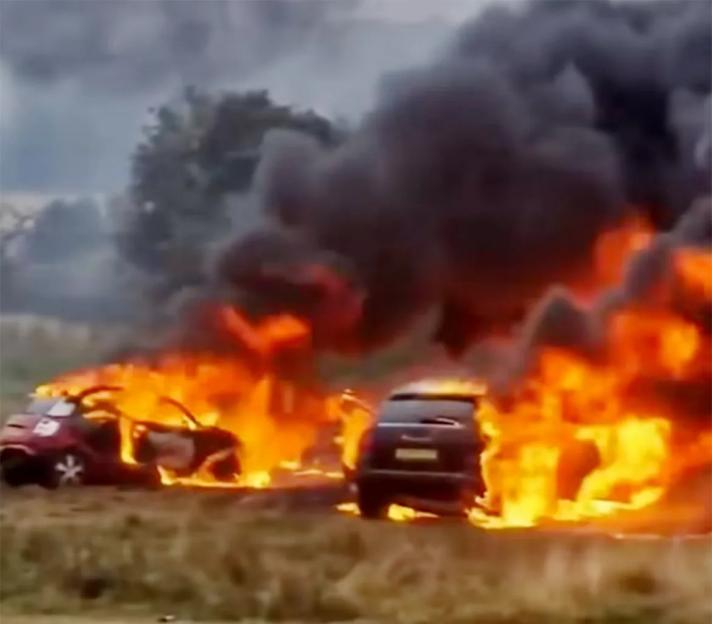 Cars set alight in a field in Haswell, Co Durham, in a so-called ‘tribute’ after the A66 deaths
It began with tit-for-tat house rammings and ended in the and five young men, whose car was speeding the wrong way down a dual carriageway, and a
At the putrid heart of it all lies a war in an area where are scarce and all hope is lost — with locals now looking to Prime Minister , the so-called “King of the North”, for a lifeline.
For many in the affected areas, community is all that is left to cling to, so they have turned a blind eye to the , which included setting vehicles alight and
They were in stark contrast to the quiet church service for PC Matthew Blades, 37, a former teacher, and PC Tom Clough, 38, a former soldier who had served in Iraq and Afghanistan.
when their armed response car was hit by the men’s Volkswagen Passat as it fled a high-speed police chase on the A66 on August 22.
The five occupants were Michael Cahill, 23, Theo Rae, 17, Jakub Matusiak, 23, Makai Saddington, 18, and 17-year-old Cole Worthy.
The estates at the centre of the crisis — Grangetown, South Bank and Eaton — serve as symbols of , and it is clear to see why.
There has been no proper investment in the Redcar and Cleveland communities for years.
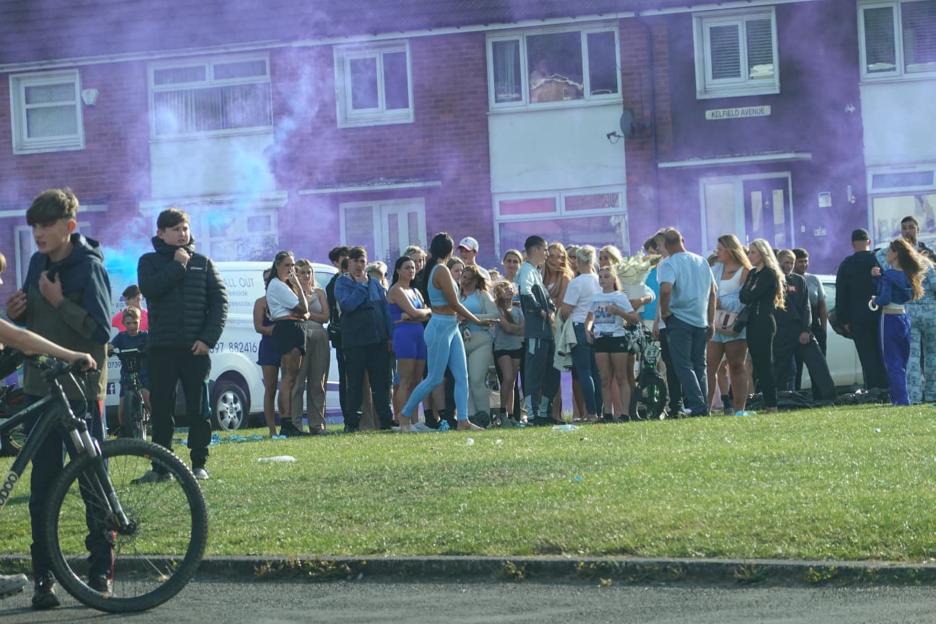 Balloon release near South Bank in memory of three of the men who died in the VW Passat
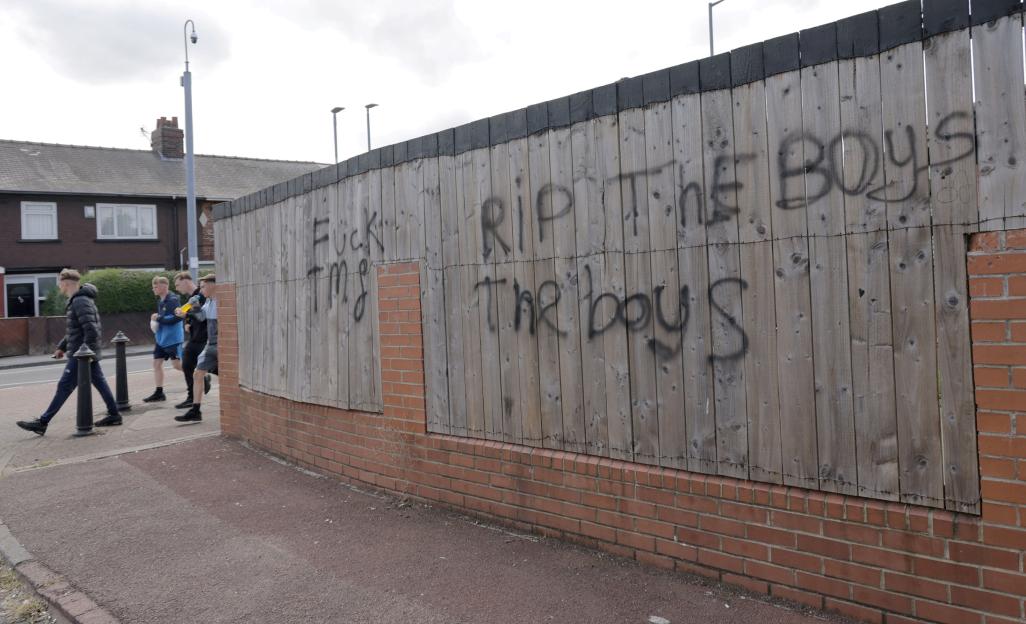 Graffiti on a fence in Brambles Farm glorifies the deaths of the five young men in the A66 crash
Green spaces where kids should be able to play are scorched earth where while old sofas, furniture and piles of clothes form rubbish heaps behind shops and along verges.
Bins are overflowing, graffiti is daubed across walls, and houses are boarded up with steel plates.
Hooded teenagers ride around on and residents are acutely aware, and suspicious, of strangers who set foot in their neighbourhood.
Those who spoke to me begged not to be named for fear of reprisals.
Within hours of our arrival, cops were scrambled to a house amid reports of a man’s fingers having been chopped off in a savage attack.
When we asked one local if he thought it was related to the crash, he laughed and told us: “That happens just about every day here.
“There are loads of people walking about without fingers, or fingers with nerve damage, ’cos they’ve been smashed in. It’s just a form of punishment for something or other.”
There is a shocking level of deprivation, but there are decent people here too — families who make ends meet without turning to .
The area’s increased notoriety sits uncomfortably with them.
As one woman pointed out: “Being poor doesn’t mean you have to be a scrote. There are plenty struggling who don’t rob or deal drugs to put food on the table.”
You cannot help but admire her sense of pride in an area that has seen better days.
Having grown up on a council estate, it is a notion I understand.
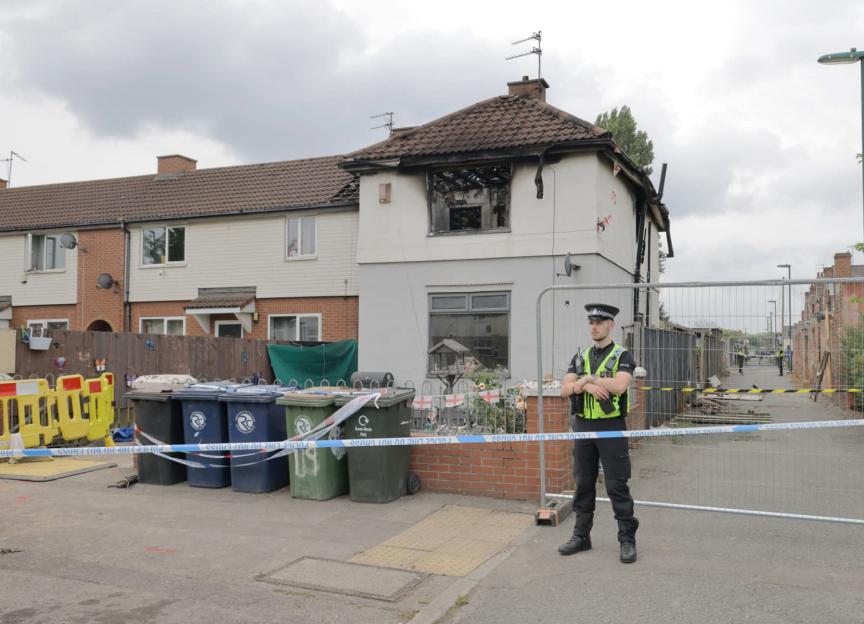 Police at the scene of a house fire in Grangetown that killed a woman and girl, seven
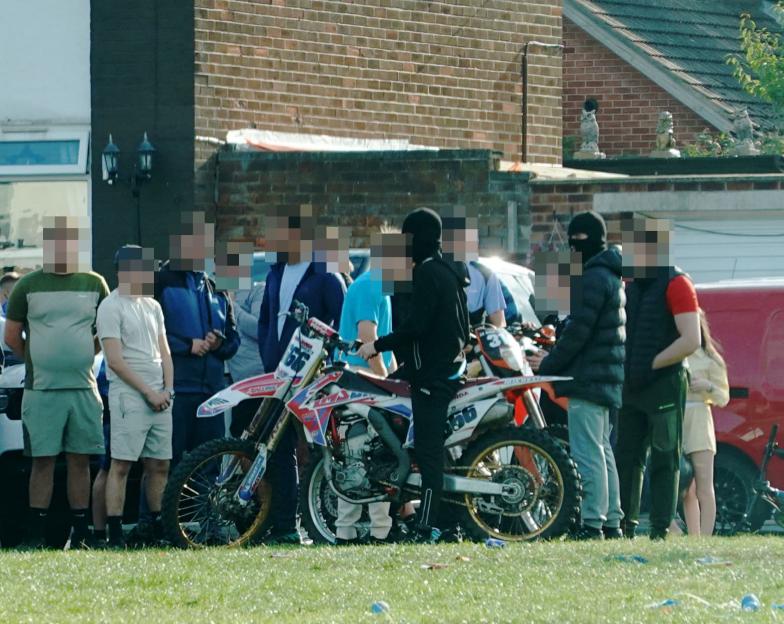 People gathered at the balloon release in memory of the A66 crash victims Credit: NNP
I wear my estate “badge” with honour, proud of the fact it taught me the values of looking out for others in need, never looking down on anyone and knowing that not everyone is as tough as they look.
But something has gone terribly wrong in Grangetown and its surrounding estates beyond the lack of work prospects and money. The small minority who have been making life a misery for everyone else have taken control of the streets.
One woman told me: “I’ve lived here for 32 years and it’s been getting worse and worse.
“It was once a nice place, where people kept their gardens nice, their houses tidy and their kids in school.
“Now it feels alien with rubbish dumped everywhere, people wandering about in dressing gowns in the middle of the day and loads of kids who stopped going to school through and never managed to return full-time.
“There’s addicts everywhere and, if it’s not drugs, it’s drink. It’s an embarrassment.” Drugs are the main issue, with turf wars raging. There is talk of postcode gang divisions, but it is not quite that clear cut.
In January, Cleveland Police officers found a “significant firearms haul” after an eight-day targeted search in Grangetown.
The guns and ammunition were seized as part of Operation Galvanise, a multi-agency initiative tackling organised crime.
A source told us that what followed were months of cars ramming into various homes.
Four of the five dead men in the Passat had criminal records, and it is alleged they were being “groomed” by criminals with links to the travelling community. Our source said: “This is about drugs, family warfare and long-time grudges, not stolen cars and joyriding.
“The lads who were killed were being influenced by people who are known to them, older and more experienced in crime.
“They didn’t go off on some solo venture to get cops to chase them. They were sharks for bigger players.”
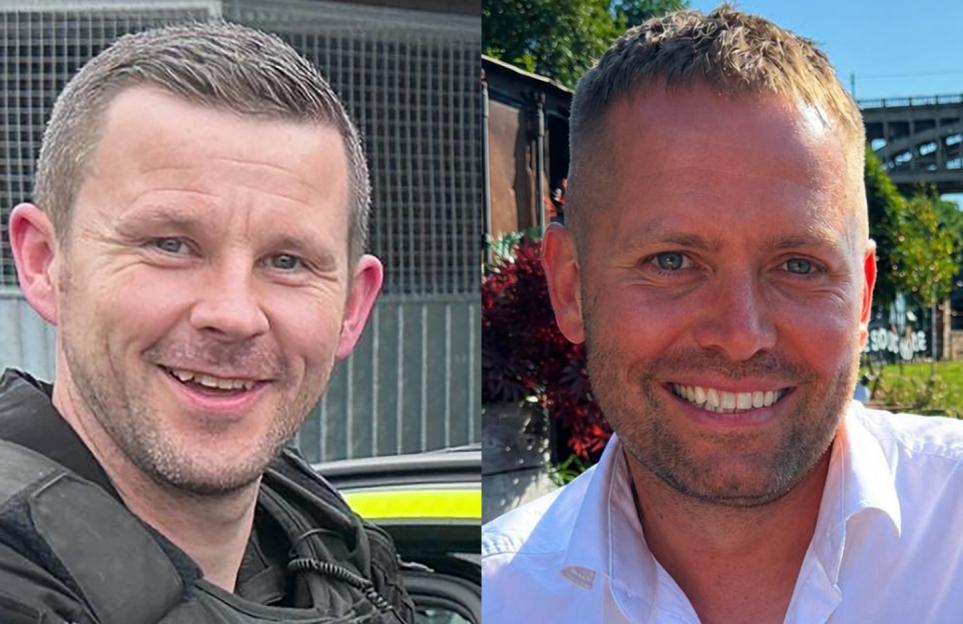 PC Tom Clough and PC Matthew Blades Credit: PA
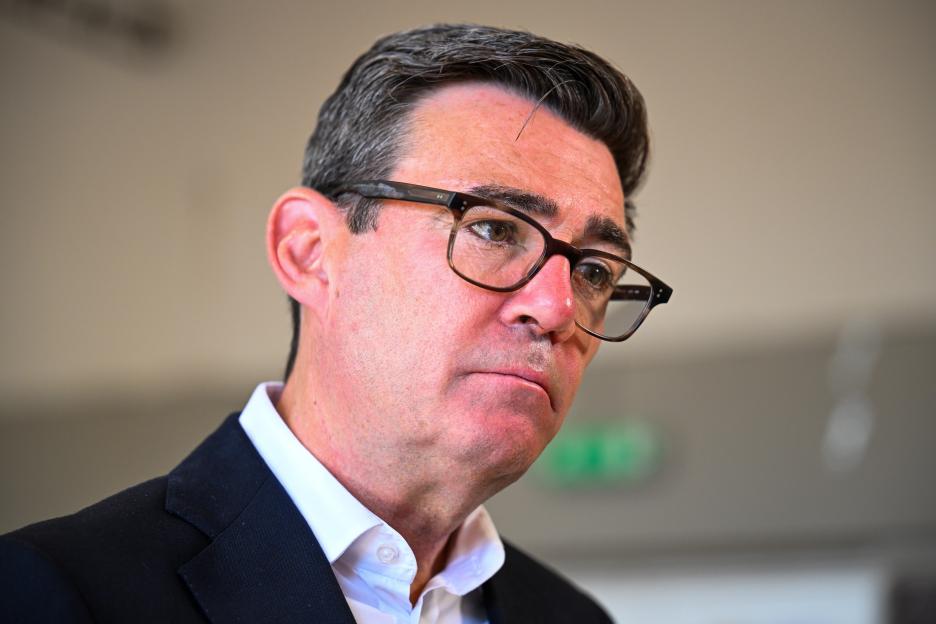 Locals are now looking to Prime Minister Andy Burnham for a lifeline Credit: Getty
Police have encouraged people in the area to keep reporting crime, but there is a deep sense of mistrust — and the feeling that locals just are not listened to.
One man told us: “People just don’t trust the police, and why would they? Had they got on top of the problems at the start we wouldn’t be here.
“They don’t listen either. Everyone knows that there’s no point reporting the small stuff because they just open an incident report, close it and you never hear from them. It’s a waste of time.”
Hundreds of extra police from neighbouring regions have been sent to to deal with the gang warfare, but some residents fear it will make things worse.
One said: “It’s totally lawless. The police have ignored the problems in the area for years and now they want to come in heavy-handed. It won’t go down well.”
Residents in Middlesbrough say it is more like Beirut than the ’Boro, the once-proud port town at the heart of industrialised Britain.
It has been ranked the most dangerous town in England and Wales, with 150 crimes per 1,000 residents, compared with the national average of 72.
People living in Teesside are more likely to be murdered than anywhere else, with a homicide rate of 21.7 per million people. The average is 8.1.
Stockton-on-Tees, ten miles from Grangetown, was the location for Channel 4’s , which focused on economically deprived areas.
But Middlesbrough is just one of countless towns across the North that have been left behind. Grimsby, in Lincolnshire, was rated one of the worst for benefit scroungers, while has been left scarred by the demise of , and Oldham is now infamous for its grooming scandal.
But they are just the tip of the iceberg.
People in Grangetown feel abandoned by successive governments, and one local businessman told me how most do not even bother voting.
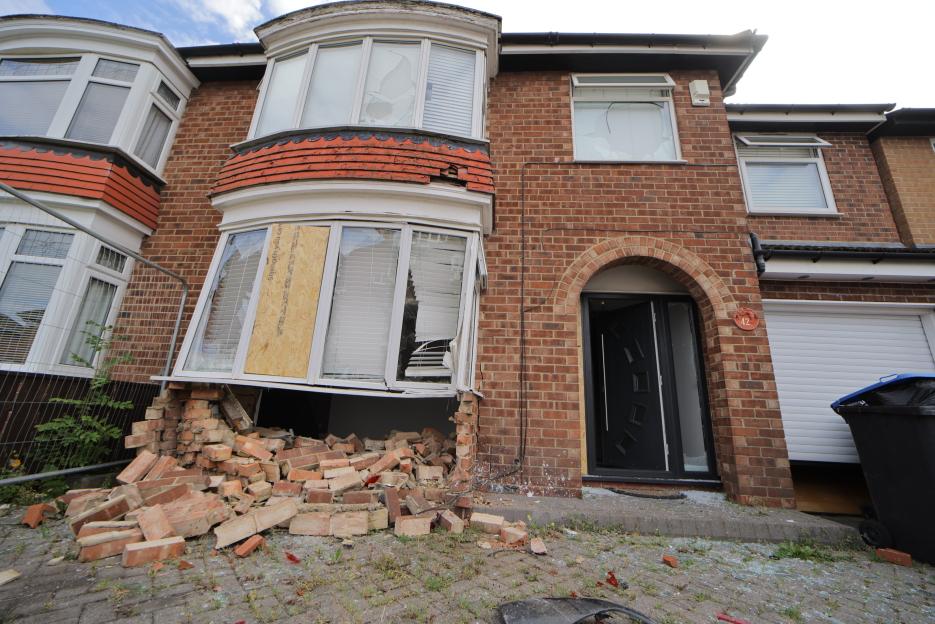 The crisis began with tit-for-tat house rammings and ended in the tragic deaths of two Cleveland Police officers
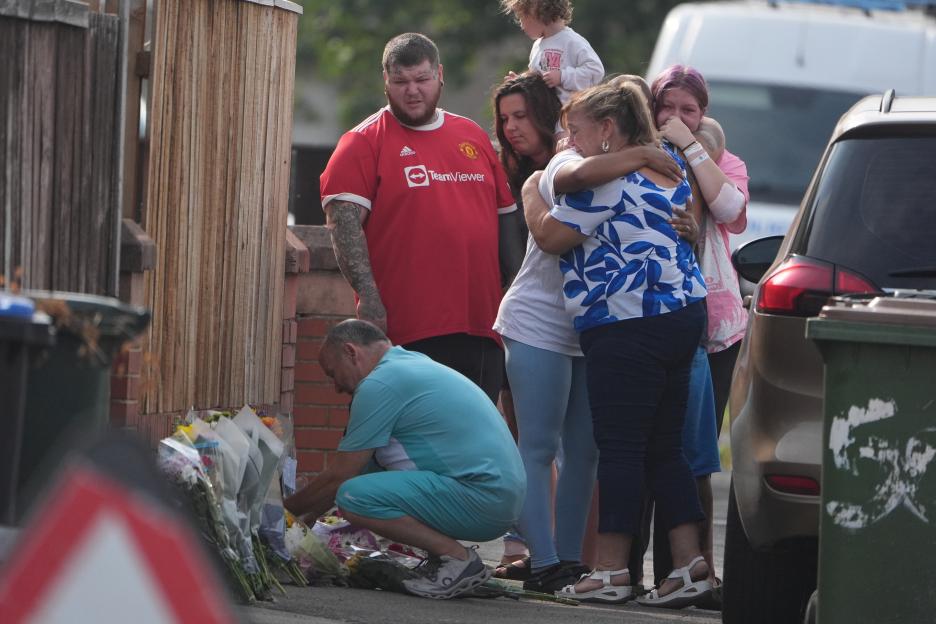 People lay flowers at the scene on a house fire on Birchington Avenue, Grangetown, near Middlesbrough Credit: PA
“Westminster means nothing to people here. Most are just trying to get by, day-to-day. Covid made things much worse.
“Kids used to at least have school, but most don’t bother going now. So they barely get a good education, never mind know about what’s going on in .”
It is a tragedy that Middlesbrough was once a booming town known as Ironopolis thanks to its iron and steel production.
The area suffered its last wave of devastating economic decline in the 1970s and 80s when automation and global competition led to mass closures in heavy manufacturing, shipbuilding and steel.
The final nail in the coffin came with the closure of the mighty Redcar steel works in October 2015, with the loss of around 2,200 jobs at the plant and nearly 1,000 additional jobs across the local supply chain.
Today, the main road to the docks is mostly used by kids to race cars and e-bikes.
One Grangetown takeaway worker summed it up when he said: “There’s no money and there’s no hope.
“The estates are full of kids having kids and they’ve no idea how to bring them up.
“There’s no work to be had, no money and nothing to do but try and make it in other ways.
“There are decent people around and we’ve got used to the area’s bad reputation, but it’s not great, is it?
“Where’s the so-called King of the North, Andy Burnham?
“The whole area has been failed and forgotten by politicians and it just feels like there’s no going back.”