IT’S hard to forget your first job. Your nerves going in on the first day.
The embarrassing mistakes you might have made. The excitement of your first payslip.

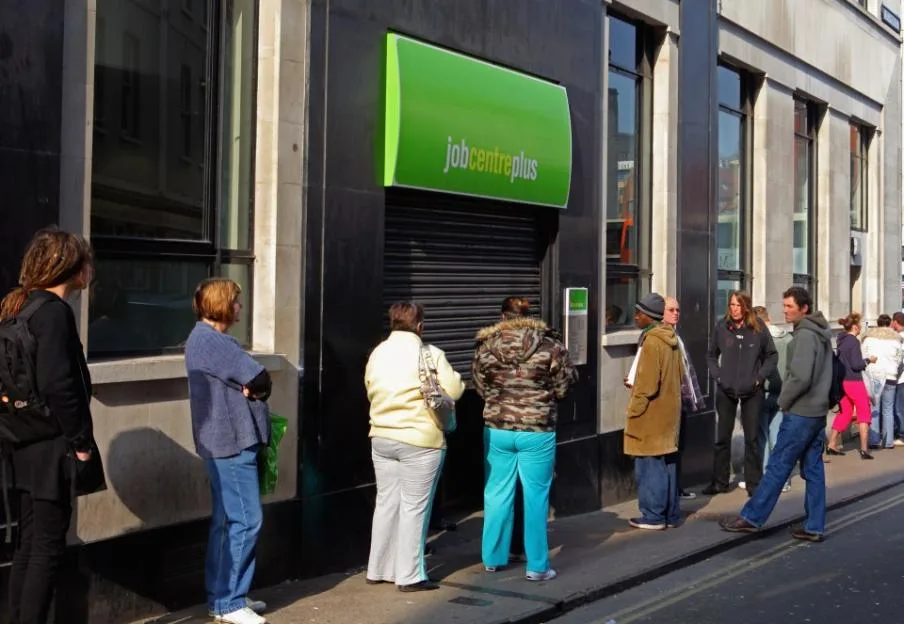
Mine was waitressing in a local . That first job teaches what no classroom can: how to turn up on time, how to handle a difficult customer and how it feels to spend money you earned yourself.
You cannot get on in life if you do not get a start in life. Sadly, too many young people today are being denied that start.
Alan Milburn, the former minister who led the Government- commissioned , deserves credit for saying what too many in the Labour Party have ignored.
A whole generation is being written off by this government.
Almost a million young people aged 16 to 24 — roughly one in eight — are
Youth has reached 15.6 per cent, a worse rate than seen in Bulgaria, Slovenia, or Hungary.
Behind those figures are young people who send off application after application and hear nothing back.
Parents are left to watch a bright son or daughter lose a little more confidence every month.
Milburn’s earlier report even recognised a truth many Labour MPs are in denial about; it has become too expensive for many to hire young people.
, and their Employment Rights Act has made companies think twice before taking someone on.
Young people have been hit hardest.
The agree with Alan Milburn on the problem, and we want his review to succeed.
Where we disagree is on the cure, which is why we have set five tests to judge whether Labour’s approach is up to the challenge of the moment.
The proposals trailed so far could mean £6billion of extra government spending.
One big-ticket item looks likely to be subsidised work placements to make up for the Labour has destroyed.
Killing jobs then spending billions to recreate them is the epitome of Labour’s “government knows best” approach.


Retail and hospitality have always been where young people get their first start, as I did.
But right now, those businesses are closing their doors.
In the first nine months of this year,
Restaurants and hotels will tell you how badly they are feeling the squeeze too.
And each closure knocks another rung off the bottom of the ladder.
Our first test is, therefore, whether the review cuts the costs on businesses so they can create real
The second half of the problem is that our welfare system makes it too easy for people to stay out of work.
If welfare is too attractive, those who can work may choose not to.
Too many young people are now beginning adult life on benefits.
That gives us our second and third tests: Will a young person who refuses to work have their benefits cut, and will the review reduce the number of
Over a year ago, we set out our plans to stop giving cash benefits for mild health conditions and move to treatment and support instead.
Financial help should be targeted for those with serious illnesses and disabilities.
It looks like Alan Milburn will copy that policy.
If so, good.
This approach should apply to people already claiming, irrespective of their age. That’s our fourth test.
We have identified £36billion in welfare savings. If the Government is not willing to reduce spending on welfare, then I am afraid it is not serious.
Our final test is the simplest of all: will it get the working-age welfare bill down overall? If you can work, you should work.
But bringing down the welfare bill is a big stumbling block for Labour MPs.
As we know from the Welfare Secretary’s messages, all Labour MPs want to do is put up taxes to spend more on benefits.
U-turned on welfare reforms. Does have the backbone to stay the course?
Conservatives have plans to help young people. We know businesses — not government — create jobs.

Our plan would halve the jobs tax for under-25s, saving an employer around £1,500 a year for every young person they take on.
We would cut business rates for 250,000 High Street shops, pubs and hospitality businesses — the places most likely to give a teenager their first shift.
We would create 100,000 new apprenticeships every year, with firms paid up to £5,000 for each young apprentice they take on and train.
Our Get To Work programme would end the drift from education to welfare.
No young person will be able to leave school or college, sign on to , then sit at home while the money goes into their bank account.
We will also cut away the red tape that has strangled summer and Saturday jobs.
Government must get out of the way.
Alan Milburn is barking up the right tree with his diagnosis, and on welfare he has borrowed a good deal of Conservative medicine.
If Labour wants to help this generation, it should stop taxing the jobs they need and start backing businesses to employ them.
It should stop paying them to stay at home, too.
What young people want is a real job and the chance to prove themselves — not subsidised placements that leave them sitting back at home when the placement ends.
If you can work, you should work, and the job of the Government is to clear the way for the businesses that make that possible.