
Jet Financiers Say Fuel and Borrowing Costs Now Eclipse Aircraft Shortages
Jet financiers say soaring fuel and borrowing costs have overtaken aircraft shortages as aviation’s biggest concern, reshaping airline and leasing risks.
 Written byEze Chidiebere Paul
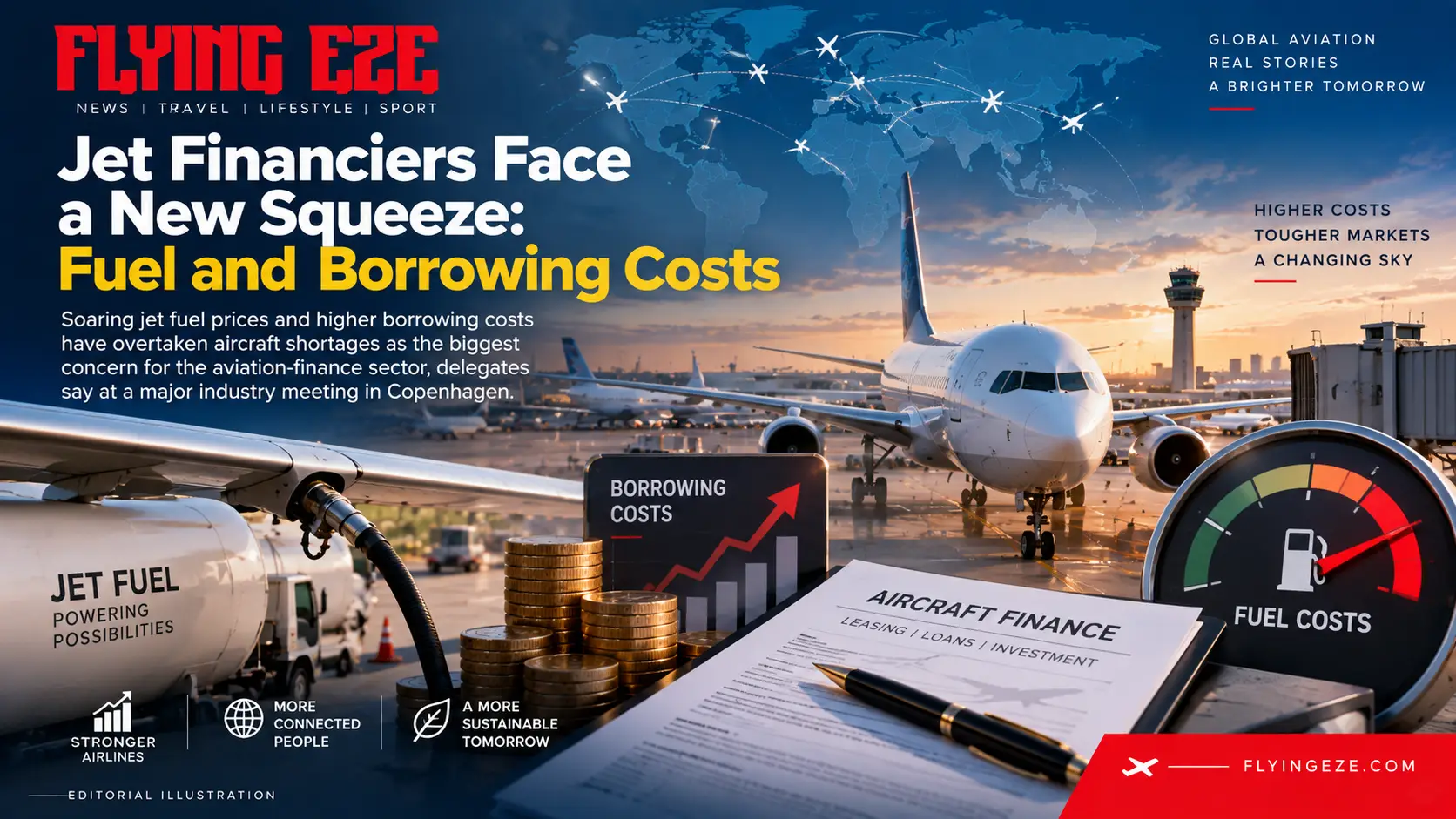
Soaring fuel and borrowing costs have overtaken aircraft shortages as the biggest concern for aviation financiers, signalling a sharp change in industry sentiment after years in which scarce jets and supply-chain delays dominated the agenda.
Delegates at a major aviation-finance gathering in Copenhagen said this week that the pressure created by higher energy prices and more expensive capital is increasingly shaping decisions about airlines, aircraft leasing and investment, Reuters reported on 18 September.
Why the industry’s biggest worry has changed
Aircraft availability has been one of commercial aviation’s defining constraints in recent years. Manufacturers and suppliers have struggled with production bottlenecks, while airlines have competed for scarce new aircraft and kept older jets flying for longer.
That shortage benefited many lessors because demand for available aircraft remained strong. But financiers now say a different set of risks is moving to the foreground.
Fuel is typically one of an airline’s largest operating costs. A sustained increase can quickly erode margins, particularly for carriers that cannot fully pass the increase to passengers through higher fares or that have limited fuel hedging.
At the same time, higher borrowing costs affect airlines and lessors that rely heavily on debt to finance aircraft purchases. The combination can put pressure on both operating cash flow and the cost of acquiring or refinancing fleets.
Market turmoil is testing airline balance sheets
Reuters reported that recent market turmoil has reinforced the shift in sentiment among aviation financiers. Delegates pointed to higher oil prices linked to the Middle East conflict, rising US Treasury yields and financial distress at some airlines as evidence that the sector’s risk profile is changing.
The concern is not that demand for air travel has disappeared. Rather, airlines must absorb substantially higher costs while continuing to fund aircraft, maintenance, labour and network expansion.
Carriers with strong cash reserves, manageable debt and pricing power are better positioned to absorb those pressures. Airlines with weaker balance sheets or large refinancing needs could face more difficult choices.
What higher borrowing costs mean for aircraft finance
Commercial aircraft are expensive long-lived assets, and much of the global fleet is financed through loans, bonds, leasing structures and other forms of institutional capital.
When benchmark interest rates and bond yields rise, the cost of that capital generally increases. Lessors may seek higher lease rates to preserve returns, while airlines financing aircraft directly can face larger interest bills.
That matters especially when older debt matures and must be refinanced at current market rates. A carrier that secured funding during a cheaper-credit period may discover that replacing the same debt now costs considerably more.
The effect can spread through fleet planning. Airlines may delay purchases, return older aircraft, renegotiate leases or concentrate capacity on routes where fares and demand provide the strongest economics.
Fuel prices add a second pressure point
Jet fuel can move rapidly with crude-oil and refining markets. Airlines use hedging programmes to reduce some volatility, but strategies differ widely and do not eliminate exposure.
A sharp fuel-price increase therefore affects carriers unevenly. An airline with substantial hedges may initially be protected, while another buying more fuel at prevailing market prices can feel the impact sooner.
Over time, persistent fuel inflation can influence ticket prices, route economics and capacity. Airlines may reduce marginal services or seek operational efficiencies if they cannot recover higher costs from passengers.
Aircraft shortages have not disappeared
The change in emphasis does not mean supply-chain problems are solved. Aircraft manufacturers and engine suppliers still face production and maintenance constraints, and delivery delays remain important for airline planning.
Instead, the Copenhagen discussions suggest that financiers increasingly see macroeconomic and geopolitical pressures as the more immediate threat to airline financial health.
That distinction matters. A shortage of aircraft can support the value and lease rates of existing jets. High fuel and financing costs, by contrast, can weaken the customers responsible for paying those leases.
What travellers should watch
For passengers, the financial debate can eventually translate into changes in fares and schedules. Airlines under sustained cost pressure may try to raise ticket prices, trim weaker routes or slow capacity growth.
The outcome will depend heavily on demand. Strong bookings can give airlines more room to pass on costs. In more competitive or price-sensitive markets, carriers may have to absorb a larger share themselves.
Travellers should therefore expect the effects to vary by airline and route rather than assuming that higher fuel prices automatically produce the same fare increase everywhere.
Why this matters for aviation in 2026
The shift identified by financiers is an important signal about where the next phase of aviation risk may come from. The industry has spent years adapting to aircraft scarcity. It now has to manage that continuing constraint while also dealing with a more expensive operating and financing environment.
If fuel prices and borrowing costs remain elevated, balance-sheet strength could become an increasingly important competitive advantage. Airlines with liquidity and flexible fleets may be able to keep investing, while weaker operators could be forced to retrench.
For aircraft lessors and lenders, that means assessing not only the value and availability of jets but also the ability of airline customers to withstand a prolonged period of expensive fuel and capital.
Source
Continue reading
AirAsia Says Strong Liquidity Can Weather Jet Fuel Cost Spike
AirAsia says strong liquidity and resilient demand can help it withstand soaring jet fuel costs as the airline refinances debt and adjusts capacity and fares.
Nigerian Airlines Challenge NCAA’s August Flight Delay Data
Air Peace, United Nigeria and ValueJet are challenging NCAA’s August 2026 flight-delay data, raising questions about flight counts, delay causes and passenger rights.
British Airways reveals new flights to bucket-list beach & safari spots – 14 years after they first launched
LOOKING for your next big holiday? Look no further as British Airways has revealed a major update to its summer 2027 schedule with flights to TWO East African d...

Dollar to Naira exchange rate today, September 17, 2026: Naira records three straight depreciations against USD
The naira depreciated against the dollar at the official foreign exchange market for the third consecutive time. Central Bank of Nigeria data showed that the na...