ISRAEL is facing another “catastrophic” terror attack three years after the October 7 massacres – and the Flydubai jet hijack is proof, an ex-British Army officer has warned.
On the third anniversary of the horrific Hamas attacks, Tel Aviv remains on high alert as its enemies and their network of terror proxies plot further atrocities.


Richard Kemp, former infantry battalion commanding officer, told The Sun: “Israel’s enemies want to attack Israel in whatever way they can.
“And those who have the capability of potentially carrying out a really massive, catastrophic attack will try and do that.”
Israeli Prime Minister Benjamin Netanyahu has seen Iran as Israel’s most dangerous adversary for decades.
This threat has only escalated in the midst of the US-Iran war – which remains deadlocked since initial US-Israeli strikes in February.
Kemp said: “Iran has been very badly mauled by US, Israeli and other allied assaults on its military forces.
“But it still has some capability to attack, and that includes direct attacks against Israel and also using proxies, which has been a favourite Iranian tactic.”
Tehran has relied on militias like Hezbollah in Lebanon and the Houthis in Yemen to attack Israeli and US targets in recent months.
Kemp said: “And then we have the broader jihadist threat against Israel – which has come into focus after the FlyDubai incident.”
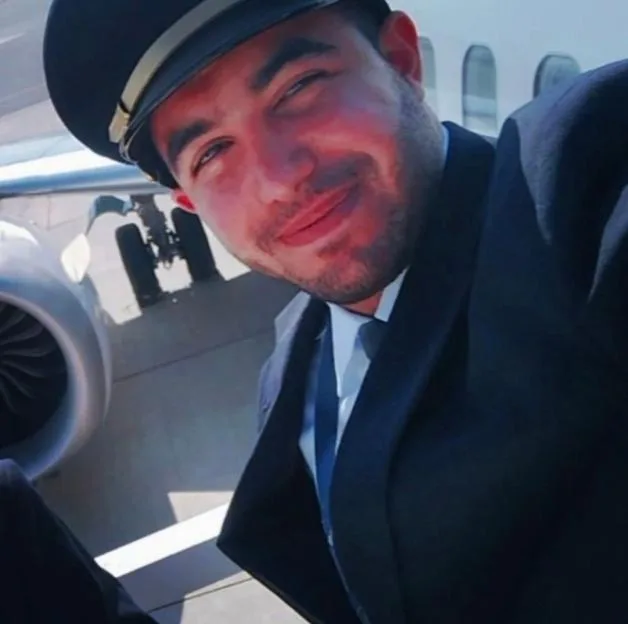

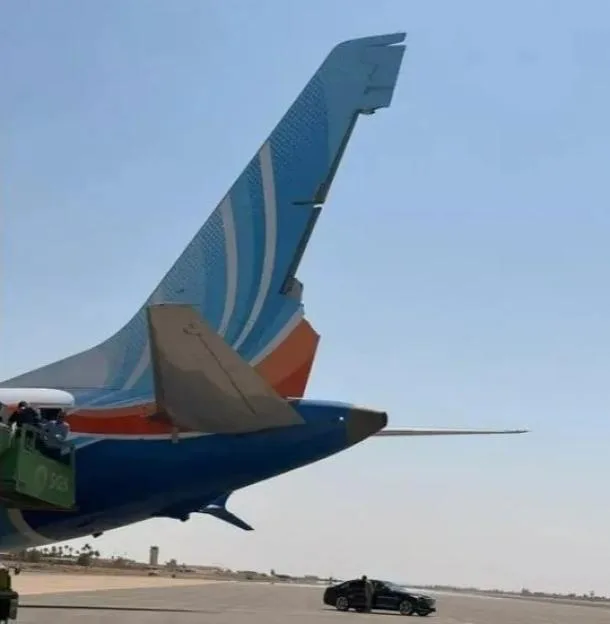
Last week Omani co-pilot, Hamam al Hammami, 29, allegedly tried to hijack an Israel-bound flight in a suspected terror plot.
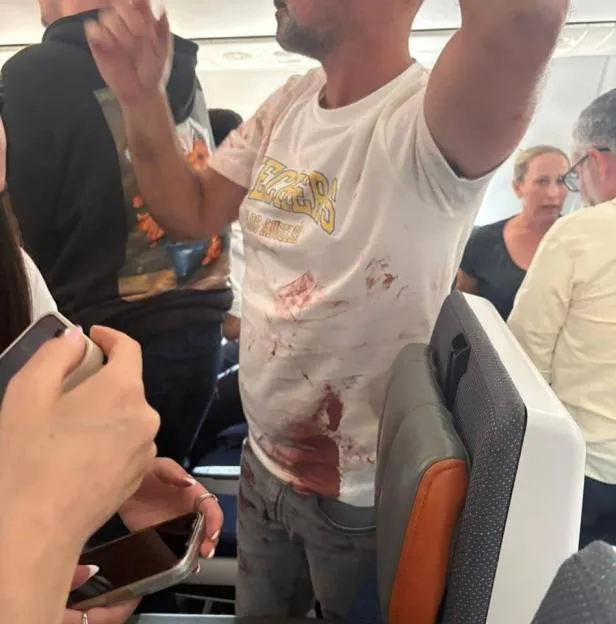
Al Hammami is accused of attacking with an onboard crash axe as he tried to take control of a packed flydubai passenger jet.
Heroic passengers and crew to regain control of the plane after it dropped a terrifying 14,000ft in just 29 seconds.
On Thursday, Netanyahu said the suspect was believed to have undergone “Islamist radical indoctrination”.
Israeli sources claim was plotting to crash into Ben-Gurion Airport in Tel Aviv, the country’s main international gateway, The Jerusalem Post reports.
Kemp said: “We don’t have all the details yet but this could have been Israel’s 9/11.
“The plane wasn’t that far from Israel when the alerts went off.
“If it had continued to track towards Tel Aviv that would have put the Israelis in a very difficult position.
“Do you shoot down a plane full of Israelis over Israel? Or what else do you do?
“That would have been one of the worst dilemmas any armed forces could be faced with.”
A Gulf diplomat said investigations are working to establish whether he acted as a “lone wolf or has any connection with any extremist groups”.
Two posts made to a LinkedIn profile bearing the name Hamam al-Hammami were published in quick succession nine hours after the incident.
The history of Israel and Iran's relationship
THERE'S been an ongoing conflict between Israel (left) and Iran (right).
In 1947, Iran was among 13 countries that voted against the United Nations Partition Plan for the British Mandate of Palestine.
Two years later, Iran also voted against Israel’s admission to the United Nations.
After the 1979 Islamic Revolution, Iran severed all diplomatic and commercial ties with Israel, and its theocratic government does not recognise the legitimacy of Israel as a state.
The turn from cold peace to open hostility began in the early 1990s, shortly after the collapse of the Soviet Union and the defeat of Iraq in the Gulf War, after which relative power in the Middle East shifted to Iran and Israel.
CONFLICT ‘HEATS UP’
The conflict escalated in the early 1990s, as Yitzhak Rabin’s government adopted a more aggressive posture on Iran.
Rhetorical conflict heated up during the presidency of Mahmoud Ahmadinejad, who made inflammatory statements against Israel.
Other factors that have contributed to the escalation of bilateral tensions include Iran’s development of nuclear technology relative to Israel’s long-stated Begin Doctrine, Iran’s funding of Islamist groups such as Hezbollah, Palestinian Islamic Jihad and Hamas, as well as alleged involvement in terrorist attacks such as the 1992 attack on Israeli embassy in Buenos Aires and the 1994 AMIA bombing, and Israel’s alleged support for militant groups such as the People’s Mujahedin of Iran and Jundallah as well as alleged covert Israeli operations in Iran including multiple assassinations and bombings.
‘COMPLEX AND ONGOING’
Since 1985, Iran and Israel have been engaged in an ongoing proxy conflict that has greatly affected the geopolitics of the Middle East, and has included direct military confrontations between Iranian and Israeli organisations, such as in the 2006 Lebanon War.
The conflict has played out in various ways, including through support for opposing factions in conflicts in Syria and Yemen.
Iran has provided support to the Syrian government, while Israel has supported opposition groups.
In Yemen, Iran has provided support to the Houthi rebels, while Israel has provided support to the Saudi-led coalition fighting the rebels.
The conflict has also involved cyber attacks and sabotage against each other’s infrastructure, including attacks on nuclear facilities and oil tankers.
Overall, the Iran-Israel proxy conflict is a complex and ongoing conflict that has had a significant impact on the political and security dynamics of the Middle East.
INSIDE THE WAR
In the Israeli–Lebanese conflict, Iran has supported Lebanese Shia militias, most notably Hezbollah. In the Israeli-Palestinian conflict, Iran has backed Palestinian groups such as Hamas.
Israel has supported Iranian rebels, such as the People’s Mujahedin of Iran, conducted airstrikes against Iranian allies in Syria and assassinated Iranian nuclear scientists. In 2018, Israeli forces directly attacked Iranian forces in Syria.
Iranian Islamists have long championed the Palestinian people, whom they perceive as “oppressed”.
Scholars believe that by supporting the Palestinians, Iran seeks greater acceptance among Sunnis and Arabs, both of whom dominate the Middle East.
Ideologically, Iran seeks to replace Israel with a one-state solution and has predicted Israel’s demise. Israel sees Iran as an existential threat, and accuses its regime of harbouring genocidal intentions.
Consequently, Israel has sought sanctions and military action against Iran to stop it from acquiring nuclear weapons.

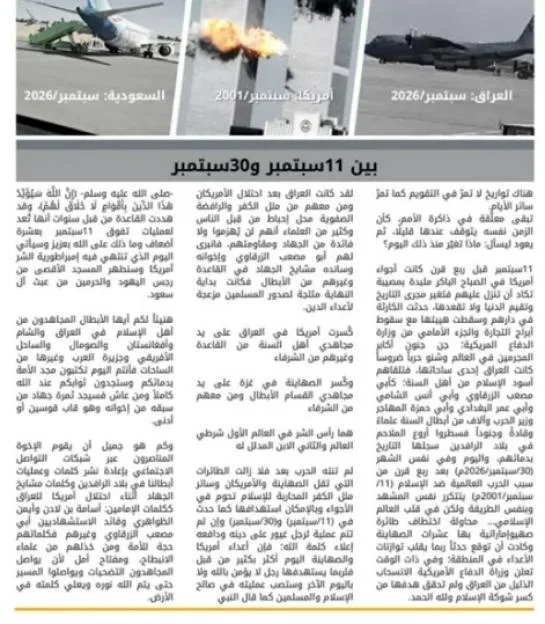
It is unclear who published the posts or whether they were scheduled in advance.
One included a video featuring a photo of Ayman al-Zawahiri, who led al Qaeda after the death of Osama Bin Laden.
This was followed with an image of Humam Khalil Abu-Mulal al-Balawi, who killed nine people, including seven American CIA officers, in a 2009 suicide bombing.
Al Qaeda has airliners.
Pro-Al Qaeda publication, al-Bayan, wrote on Friday: “The war isn’t over yet — planes carrying Zionists, Americans and all the other infidels fighting against Islam are still hovering in the skies and can be targeted, as happened on September 11th and 30th.”
The article included an image of a plane crashing into the Twin Towers on September 11, 2001, alongside an image referencing Wednesday’s attack on the Dubai-to-Tel Aviv flight.
Kemp warned there “could be another similar attack” after the hijack attempt was foiled.
But next time authorities will not be able to rely on the “extraordinary” responses from the flydubai passengers and crew, he added.
Kemp said: “Islamic jihadists have got a track record of of hijacking planes and of killing airline passengers. It’s a very strong attraction for them.
“The fact that we haven’t seen anything quite like that unfold in recent years doesn’t mean to say it’s gone out of their minds.
“The Israeli authorities are very well aware of these threats.”
Weeks before the alleged attack, Netanyahu announced there were “indications” Israel’s enemies were plotting an assault ahead of upcoming elections on October 27.

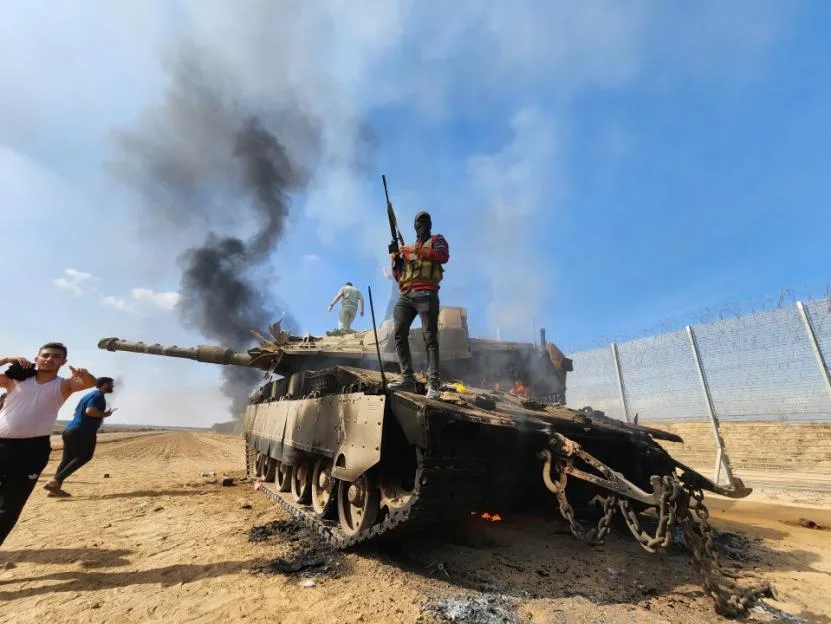
Kemp said: “The kind of attack that I think Netanyahu fears in advance of the election is the sort of thing we see very frequently here in Israel.
“Jihadist attacks, car rammings and knife attacks on Israeli citizens.
“And I think those those could potentially rise up again in the next few weeks.”
But a major attack would likely strike after Israelis head to the polls, Kemp said.
He added: “The Iranians and jihadists in the region want to see Netanyahu lose the election.
“They know Netanyahu would retaliate and this could benefit him, so they probably wouldn’t want to carry out any form of attack.”
In early September, Israel’s National Security Council said Iran, its proxies, Palestinian terror groups, and global jihadi groups remain highly motivated to target Israel.
Israel’s recent conflicts have led “to a steep increase in terrorist factions’ motivation to attack Israeli and Jewish targets around the world,” the NSC said.
Just last month Tel Aviv intelligence claimed on Israel using its sprawling network of terror proxies.
The Islamic Republic has allegedly held meetings and training exercises with terrorist groups to prepare for a repeat of in 2023.
Hezbollah, Hamas, the Houthis and regional militias will join forces with Iran’s army under the plans, the Jerusalem Post reported.
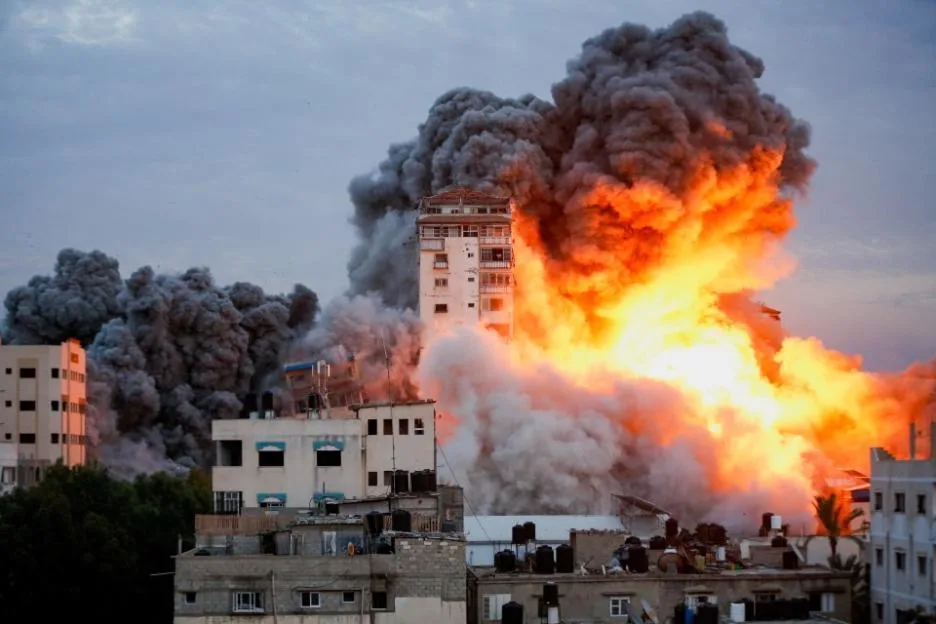
Bombshell Hamas documents seized in the Gaza Strip after the attack on October 7, 2023, reportedly mapped out plans to expand the confrontation after the initial assault.
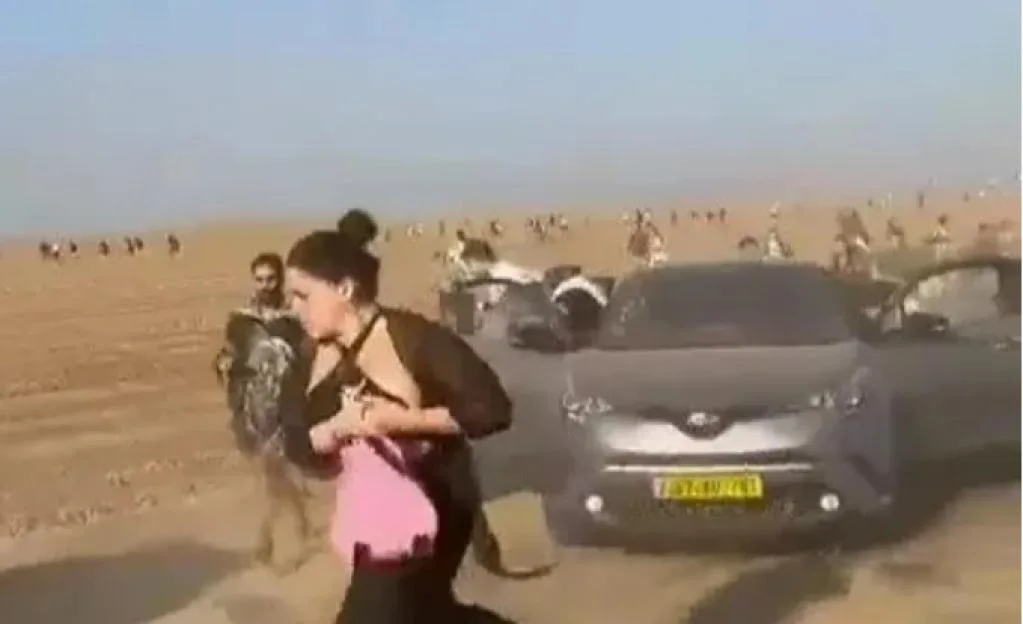
But Hamas launched its murderous rampage without the other fronts opening, the outlet reports.
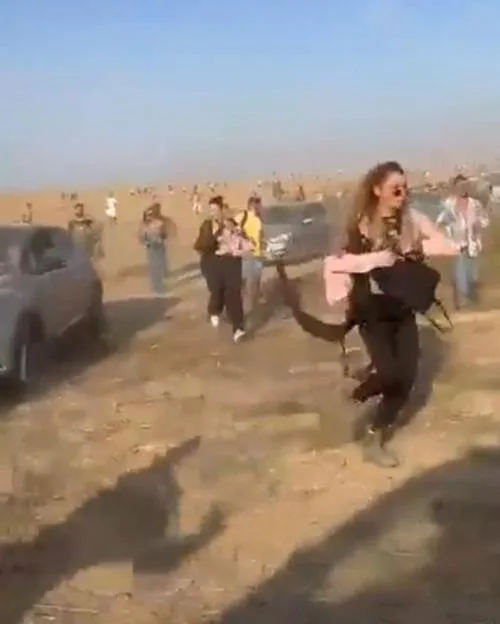
The attacks killed 1,200 Israelis, kidnapped 250, and left thousands of others wounded, sparking the ongoing Israeli-Palestinian war.
Other chilling documents recovered by the Israeli Defense Forces (IDF)
Harrowing terror blueprints included an attack on the Azrieli Towers complex – three towering skyscrapers hosting a large shopping mall, a train station and a cinema inside.
The trio of towers also have underground car parks beneath them which the document said would be booby-trapped with explosives, the document said.
Plans were sat alongside the chilling statement: “If this tower is destroyed in one way or another, an unprecedented crisis will occur for the enemy.
“Similar to the crisis of the World Trade Center towers in New York.”
Since the October 7 massacres, Israel has “significantly strengthened” its intelligence and defences against terror threats.
Kemp said: “Israel is absolutely taking no chances now. The slightest glimmer of offensive operations against them, they will be all over it.
“Israel’s whole position against potential threats from Jihadists in the region has been significantly strengthened.
“And that includes the security zones in Gaza, in Lebanon, and in Syria. And it also includes Israel’s air defence capabilities.
“But none of that is to say that attacks are not going to be possible. No defence is perfect. No intelligence is perfect.”
The threat to Israel is “very broad”, Kemp said, but the same threat “applies to all of us”.
It comes after five men were arrested over a suspected terror attack on RAF Fairford in Gloucestershire .
A sixth suspect—a dual British-Iranian national—was later arrested in London.
British PM Andy Burnham stated there are “strong indications” that Iran played a part in the security incident.
Tehran and the Iranian embassy in London have strongly rejected the accusations.
RAF Fairford had recently been used by US long-range bombers following permissions granted for defensive operations relating to Middle East tensions.
Kemp said: “Many of these jihadists and countries like Iran that are vehemently opposed to Israel, are also vehemently opposed to the West as a whole – the US and its allies.
“We’ve seen those attacks take place in the UK and we’ve seen many, many more attack plans which have been prevented and disrupted by our intelligence services and police and security service.
“The threat will continue and it will develop and we will undoubtedly see efforts to attack Israel and Israel’s allies in a range of different ways.”