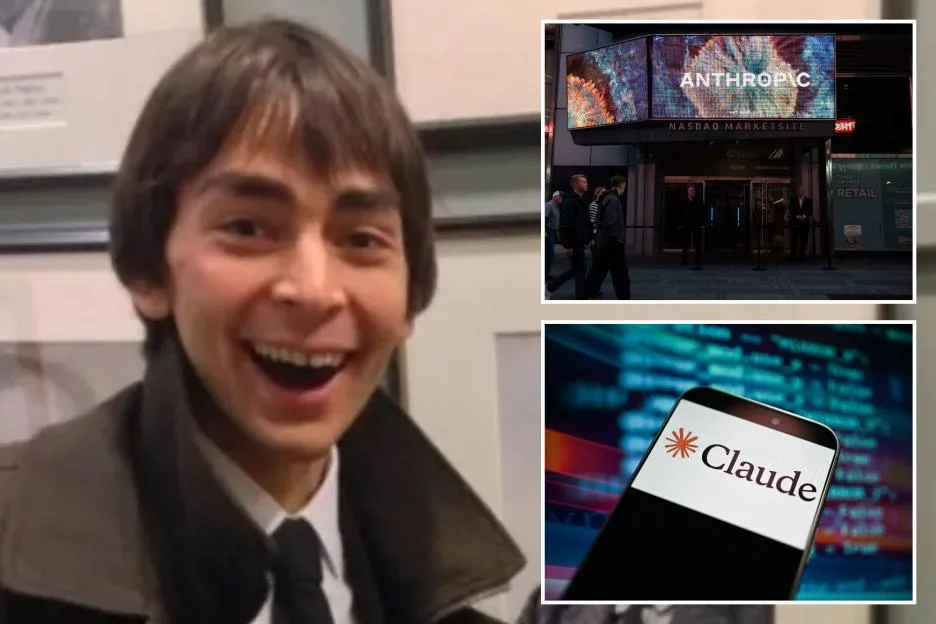
THE world’s most famous unsolved maths riddle Riemann Hypothesis has reportedly been solved by Anthropic’s AI chatbot.
A researcher claims he and the company’s Claude chatbot cracked the equation that has left mathematicians stumped for 167 years.
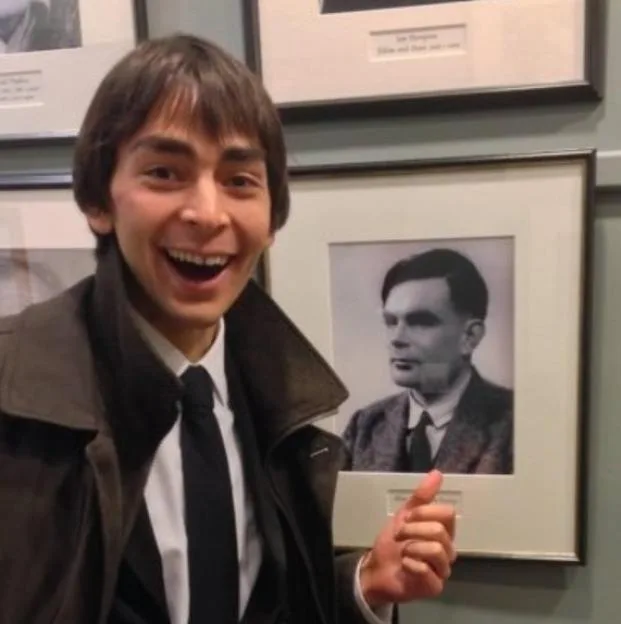
“I believe I have, working with Claude, discovered a proof of the Riemann Hypothesis,” Dr Levent Alpöge wrote in a statement.
The Turkish-American math prodigy said the AI bot had made critical breakthroughs that surpassed his own expertise.
“It is natural to feel that this is an end, in my case a loss of a principal guiding light,” the 34-year-old said.
“But what I saw during the course of progress so amazed me that I believe it is one dawn across science of something far greater.”

The Riemann Hypothesis was named after German mathematician Bernhard Riemann who introduced the riddle in 1859.
It theorises that the sequence of prime numbers is not random – but is determined in a meaningful order.
Prime numbers are the bedrock of higher maths, which means any breakthroughs related to them will have an enormous impact.
Alpöge said he used the Claude chatbot to create a detailed proof of the maths problem over the course of six weeks.
He submitted his proof of more than 250,000 pages in Lean, a computer language used for confirming maths problems on Friday.
If found to be correct, the proof would be among the most significant in history.
In 1900 German mathematician David Hilbert branded the equation one of the largest mathematical challenges of the 20th century.
And by 2000, US-based non-profit Clay Mathematics offered a $1million (£763,000) reward to anyone who could solve the challenge.
Verification of the claimed breakthrough is still some way off for now, prominent mathematician Terrance Tao said.
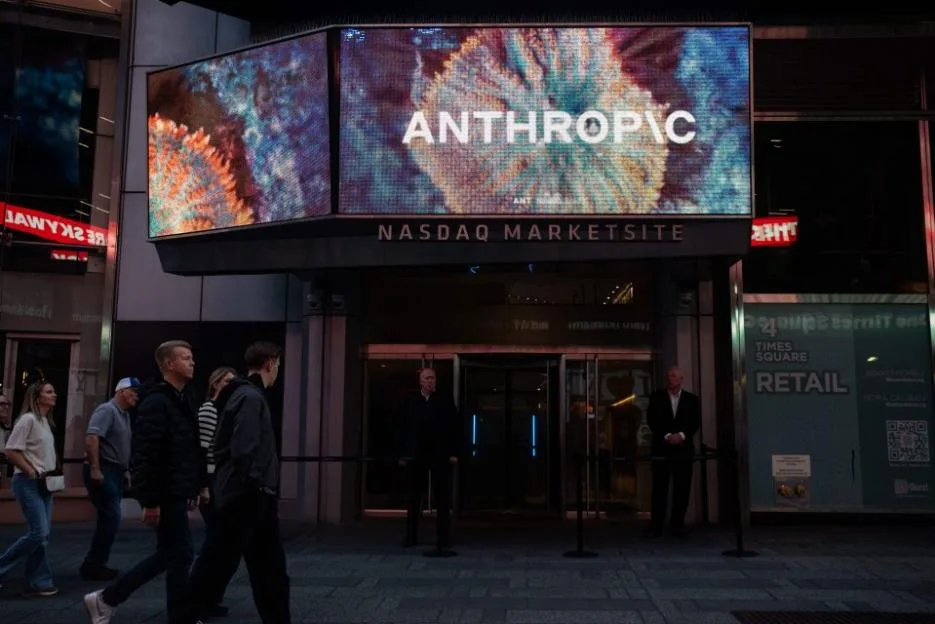
Alpöge submitted his findings the day after Anthropic made its US stock market debut – a timing he described as “horrible”.
He said: “If I could have, I’d have finished this all much earlier.
“I am clearly unilaterally responsible for feeling I just could not live if I waited even longer.
“There is an obvious cynical view, to do with the timing, but it is false.”
In recent months AI firms like OpenAI have announced a string of solutions to major higher maths problems that have eluded scholars for decades.
Anthropic has also claimed to have made other progress and solutions in maths and physics.