Ema has raised $77 million in a Series B funding round as the enterprise AI startup expands systems designed to automate multi-step work across human resources, IT and finance.
The round was led by Creaegis, with existing investors Accel, Section 32 and Prosus increasing their investments. It brings Ema's total funding to $140 million, according to the company and reporting by TechCrunch. Ema did not disclose its latest valuation, although it said the figure had increased by more than four times since its previous funding round.
The financing matters beyond the size of the round. Ema is positioning its product against some of the work that businesses have traditionally handled through separate software subscriptions, integrations and IT-services engagements. That makes the company part of a wider contest over whether AI agents can move from assisting employees to executing complete business processes.
Key takeaways
- Ema raised $77 million in a Series B led by Creaegis, taking total funding to $140 million.
- The startup coordinates multiple AI agents to carry out multi-step workflows across HR, IT and finance applications.
- Ema plans to use the capital to expand its go-to-market operation and enter additional international markets.
- The company uses task- and outcome-oriented pricing rather than relying solely on conventional per-seat software pricing.
- Claims about customer scale, revenue growth, retention and operational results come from Ema and should not be treated as independently audited performance figures.
What Ema's AI agents are designed to do
Ema describes its systems as “AI Employees”, but the underlying idea is orchestration: multiple specialised AI agents can work together across applications instead of answering a single question or completing one isolated action.
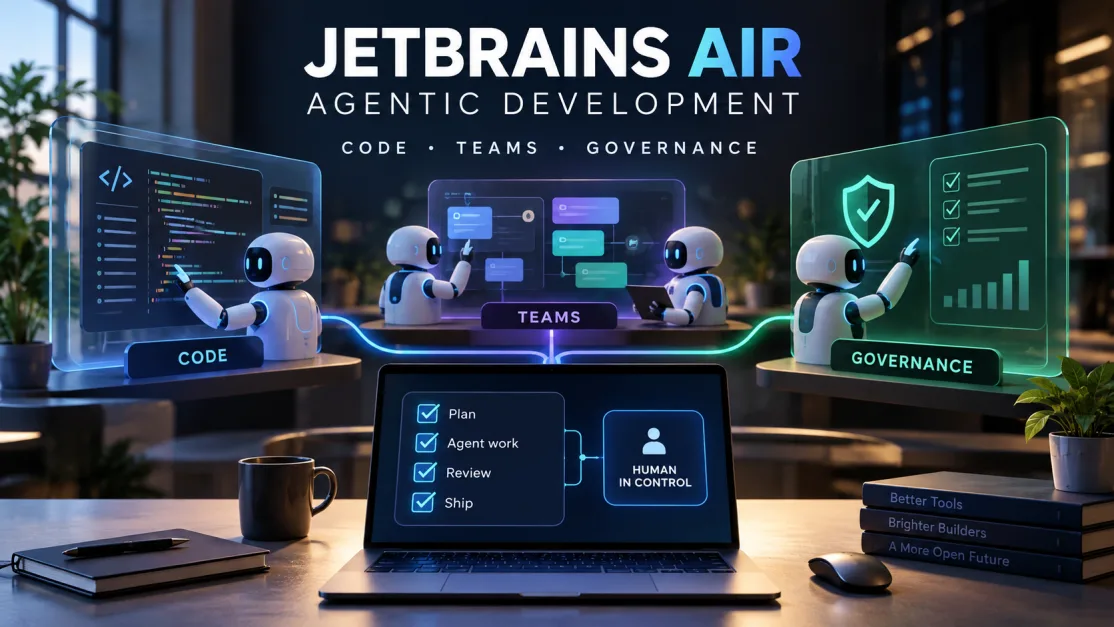
For an enterprise, that could mean an AI system receiving a request, planning the steps required, retrieving relevant organisational context, interacting with authorised business applications, checking its work and routing sensitive actions for human approval. Ema says it applies this model to functions including HR, IT support and finance.
That distinction is important. A chatbot embedded in an application can help a worker draft text, search information or summarise a record. An agentic workflow aims to go further by moving a process through several systems and stages. The potential value is therefore tied not just to model quality but also to integrations, permissions, governance, reliability and the ability to recover safely when something goes wrong.
Why the $77 million round matters for enterprise software
Enterprise software has traditionally been sold around applications and user seats. Companies buy systems for functions such as HR, finance, customer management and IT, then employ staff or consultants to configure those products and move work between them.
That does not mean AI agents have already replaced conventional software. Existing systems remain important stores of data, controls and business logic, and Ema itself initially works across the applications customers already use. The competitive question is whether agent layers can eventually reduce the number of interfaces, licences or service engagements organisations need for some workflows.
Ema co-founder and chief executive Surojit Chatterjee has argued that customers may ultimately reduce their dependence on large SaaS applications. That is the company's strategic position rather than proof that enterprise SaaS broadly is being displaced.
Funding will support sales and international expansion
Ema says much of the new capital will support go-to-market expansion after its earlier emphasis on product development. The company is headquartered in Mountain View and also has offices in Bengaluru, London and Vancouver.
TechCrunch reported that Ema plans to expand beyond its current focus on the United States and Europe, with additional attention to Asia-Pacific, South America and parts of the Middle East over the coming year.
The company was founded in 2023 by Surojit Chatterjee, previously an executive at Google and Coinbase, and Souvik Sen, a former Okta executive.
Ema reports growing enterprise adoption
Ema says it has more than 50 active enterprise deals and more than one million active enterprise users. It also says its systems have processed more than five million actions and queries. Reported customers include organisations such as NTT DATA, Hitachi, ADP, PwC, Wipro, Google and Microsoft.
The startup also says revenue has grown 50-fold over two years and that bookings have exceeded $150 million. Chatterjee told TechCrunch that the bookings figure includes the total value of multi-year contracts and is not the same as annual recurring revenue. The company did not disclose its current annualised revenue run rate.
Those numbers provide useful context for Ema's growth story, but they are company-supplied metrics rather than independently audited figures. The same caution applies to Ema's reported customer-expansion, retention and margin figures.
AI agents still face difficult enterprise requirements
Automating a multi-step process creates a different risk profile from generating a draft or answering a question. An agent that can modify records, trigger workflows or interact with financial and HR systems needs tightly controlled permissions and clear approval boundaries.
Enterprises evaluating agentic systems therefore need to look beyond demonstrations. Important questions include which actions an agent is authorised to perform, how credentials are isolated, what audit logs are retained, when a human must approve an action, how errors are detected and reversed, and how sensitive organisational data is handled.
Model choice is another consideration. Ema says its platform can use a large range of frontier and open-source models rather than depending on one provider. That can give an orchestration platform flexibility, but customers still need to understand which models process particular data and what governance policies apply.
What businesses should watch next
The next phase of enterprise AI competition will be measured less by impressive demonstrations and more by reliable production deployments. Businesses will want evidence that agents can complete useful work repeatedly, integrate with existing systems and remain controllable when a process reaches an exception.
Pricing will also be closely watched. If outcome-based models become more common, buyers may compare AI automation not only with software licence costs but also with implementation, integration and outsourced service spending.
Ema's $77 million Series B gives it additional resources to pursue that market, but the larger shift is still developing. For now, the clearest signal is that investors and vendors are increasingly treating AI agents as an execution layer for enterprise work rather than simply another conversational interface.
Sources
Ema's 23 September 2026 Series B announcement and TechCrunch's reporting on the financing, product strategy, pricing and expansion plans were used as principal sources. Company-reported operating metrics are identified as such in this article.