
"Deadly Ebola Outbreak Went Undetected for Five Months as 44% of Infected Face Fatality in Surge of Intense Transmission"
THE current Ebola outbreak, which is the fastest growing in history, took at least five months to be spotted, a report has shown. The highly contagious virus h...
 Written byEze Chidiebere Paul
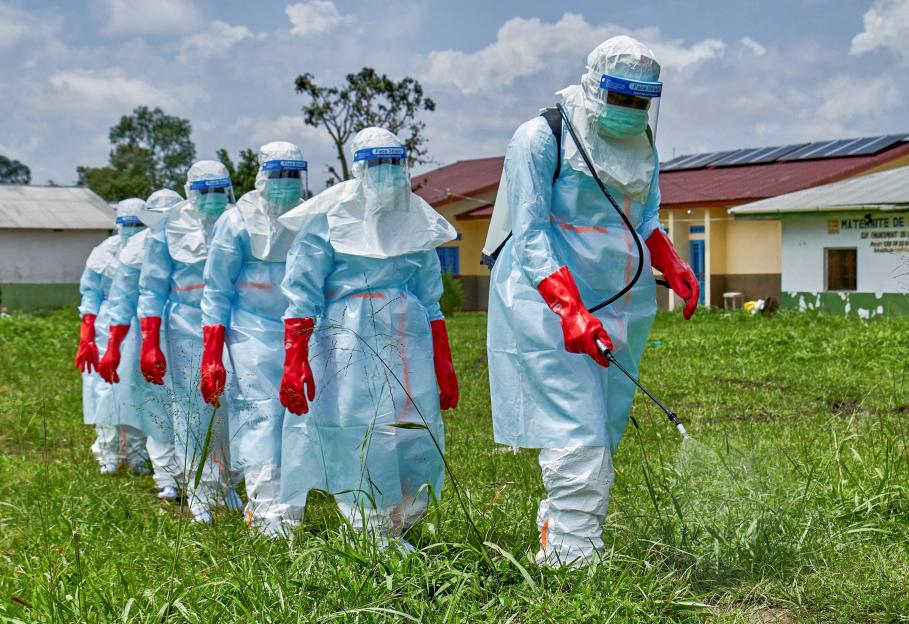
THE current Ebola outbreak, which is the fastest growing in history, took at least five months to be spotted, a report has shown.
The highly contagious virus has caused 44 per cent of those infected in the Democratic Republic of Congo (DRC) to have died.
More than 1,600 people have now died from an Ebola outbreak in the Democratic Republic of Congo Credit: Reuters
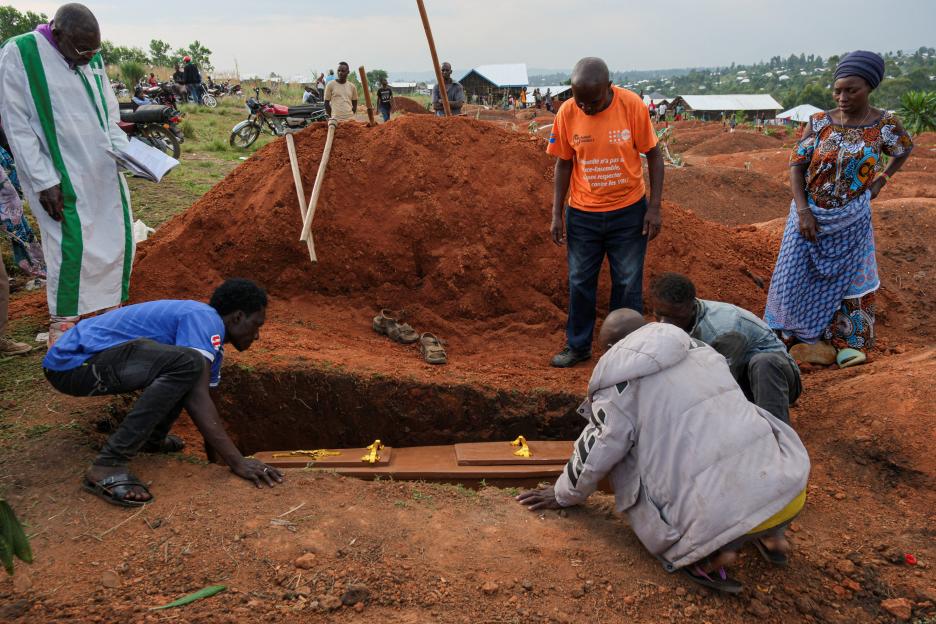 A report has shown that the outbreak actually began in January, not May, and possibly even before this Credit: Reuters
A report published in Science journal showed that the fast-spreading Ebola outbreak started in January, or possibly even earlier – months before it was officially declared on May 15.
Scientists interviewed 97 people, including doctors and community leaders, and learnt that the outbreak began much earlier than previously assumed, on the outskirts of the town of Mongbwalu, in the Ituri Province.
The outbreak has infected more than 3,600 people and sadly killed 1,600, with cases expected to continue increasing, according to figures from the Associated Press.
Speaking on 4 today, Maria Van Kerkhove, the World Organisation (WHO) director of threat management, said that there is still an “intense transmission” of cases.
The outbreak is centred in the eastern province of Ituri and has spread to 49 out of some 516 health zones.
Ms Van Kerkhove said that “the scale of the response is not where we need it to be”.
She stressed that the response to the outbreak now needs to be scaled up.
“We have 900 beds right now and we are scaling up to 3000, at least,” she said.
“We are looking at a massive scale-up of clinical care. Having Ebola treatment centres in areas where we know there is active transmission, but also where there are new cases,” she added.
While the Ebola outbreak was officially declared in May, researchers have now identified more than 500 suspected cases between mid-January and mid-May, Reuters reported.
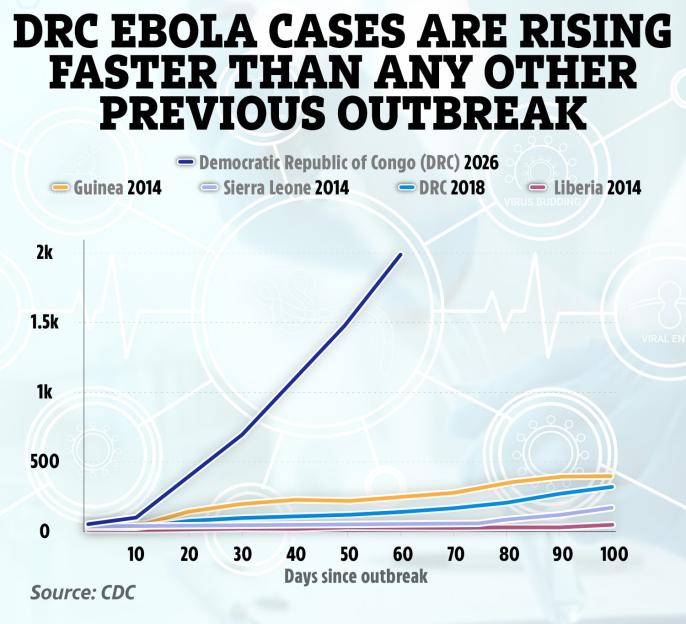
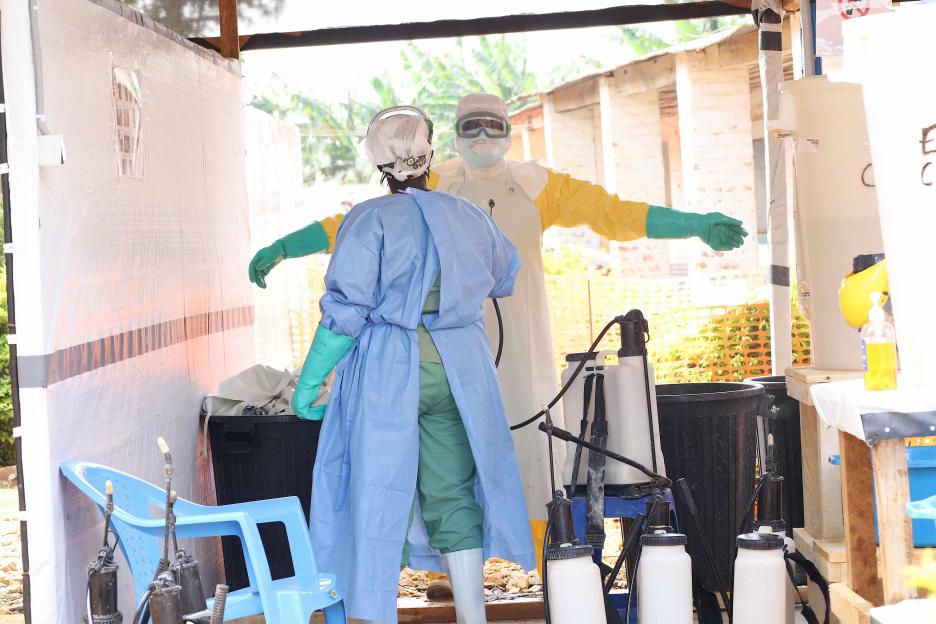 This outbreak is now the fastest growing outbreak of the disease in history Credit: Alamy
This discovery came from scientists interviewing nurses and doctors, community leaders, survivors, grieving family members, coffin-makers and cemetery caretakers.
They also reviewed photos, messages, doctors’ notes, and even biographies read at funerals that mentioned the deceased’s symptoms.
Authorities said last week that the Ebola outbreak was the.
And now, it is also the world’s second-largest outbreak on record, according to government data.
Only West Africa’s 2014-16 outbreak was bigger, with 28,616 cases recorded across Guinea, Liberia and Sierra Leone, the WHO says.
is passed on through direct contact with bodily fluids from infected animals or people.
The virus is very contagious, so patients need to be isolated.
Ebola first appears as a high fever, intense muscle and joint pain, headaches and a sore throat.
This is often followed by vomiting and diarrhoea, rashes on the skin, kidney and liver failure and sometimes internal and external bleeding.
The outbreak has been caused by the, which has a mortality rate of 30 to 50 per cent.
At the moment, it has no approved vaccine or treatment.
Ms Van Kerkhove said that community engagement is now “absolutely critical” to understand the “complex situation we are seeing on the ground”.
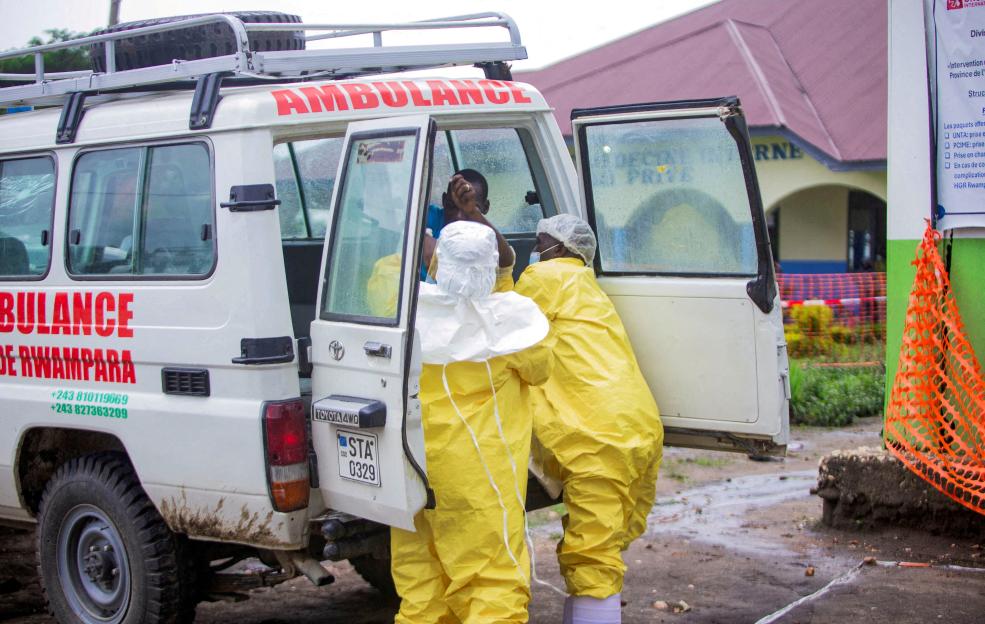 The DRC’s Ebola outbreak is now the second-largest on record, according to the WHO Credit: Reuters
 How does Ebola spread and what are the symptoms?
The virus is transmitted through direct contact with blood and body fluids and objects that have been contaminated by someone with Ebola.
It also spreads through contact with sick or dead wild animals.
It can take symptoms two to 21 days to appear following infection – this is known as an incubation period.
Ebola first appears as a high fever, intense muscle and joint pain, headaches and a sore throat.
Initial symptoms are often followed by vomiting and diarrhoea, rashes on the skin, kidney and liver failure, and sometimes internal and external bleeding.
People who survive the virus can suffer from arthritis as well as vision and hearing problems.
Some types of Ebola can be prevented with vaccines and treated with medicines.
Source:
On top of the current outbreak, parts of the DRC are facing a “massive humanitarian challenge” with insecurity and other circulating, she added.
But she said: “With our partners, we have mapped the risk of the provinces in the DRC and neighbouring countries.
“So there are a number of activities we are working on with countries bordering DRC in terms of readiness – we are changing this word readiness to ‘actively alert’, because we want them to be alert to cases.”
Ms Van Kerkhove noted, however, that while the situation in the DRC is intensifying, “the risk to people globally is low”.
It comes as around 100 health workers at an treatment centre in eastern DRC .
This risks significantly disrupting the care of patients at the epicentre of the rapidly growing outbreak.
Meanwhile, health experts warned last month that Ebola could be .
The of victims’ bodies between different areas of the DRC for funerals or burial risks the virus spreading further, the International Organisation for Migration (IOM) said.
The virus remains highly contagious after death, making practice a critical component of outbreak control.
Continue reading
I sold my parents’ home to pay the man I loved £500k to save his life – then I found out the horrifying truth
When Gaby received a LinkedIn message from a handsome stranger in 2019, she thought she had found the man of her dreams. Handsome, green eyed and in his forties...

Parasitic bugs that inject and EAT human skin cells are thriving in UK this autumn – 3 signs you’ve been bitten
AS the summer’s hot temperatures have finally dropped and the autumn season begins, many Brits will welcome the cooler weather. But with this comes the threat...

Popular supermarket hand wash is urgently recalled over microbiological risk with users warned ‘stop using immediately’
A POPULAR UK supermarket hand wash has been urgently recalled over a microbiological risk. Customers who have bought the item have been urged to “stop using imm...

GBBO finalist Ruby Bhogal’s bakes are our fave showstoppers right now
Credit: Matt Russell WITH a new series of about to begin, what better way to celebrate than with a selection of recipes from 2018 finalist Ruby Bhogal? Around T...