A TOWN can survive wars, disasters and centuries of change. But in one forgotten corner of the world, an entire community is now just one death away from extinction.
Once a thriving community where generations of families built their lives, the forgotten settlement of Monowi has been slowly erased from the map of rural America, leaving behind one solitary woman who refuses to leave.
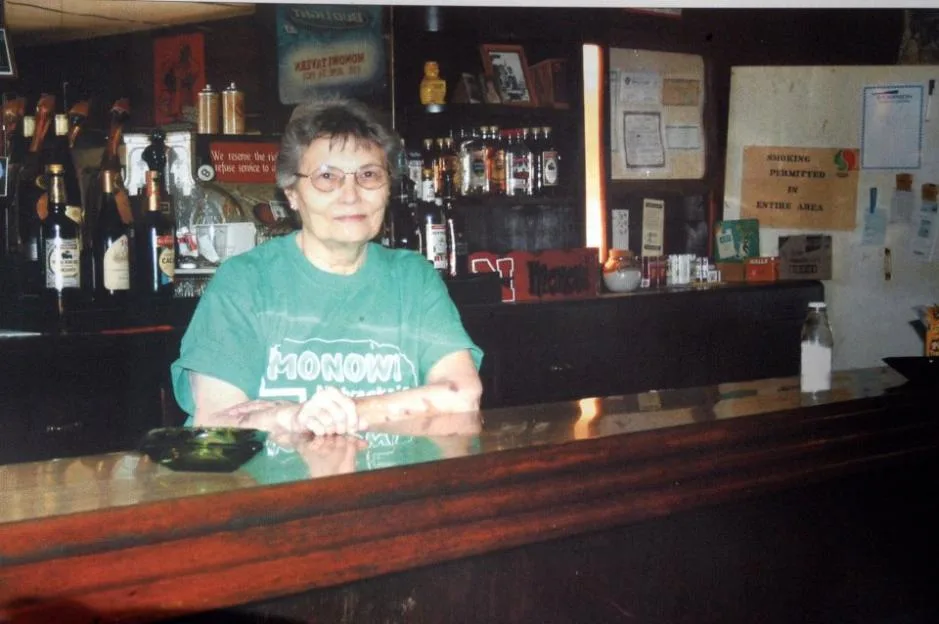
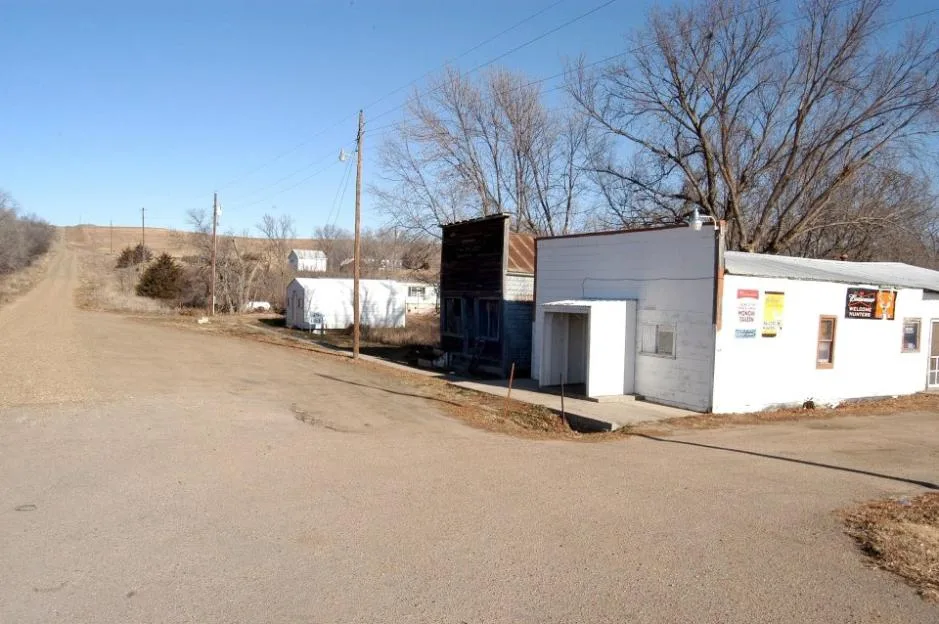
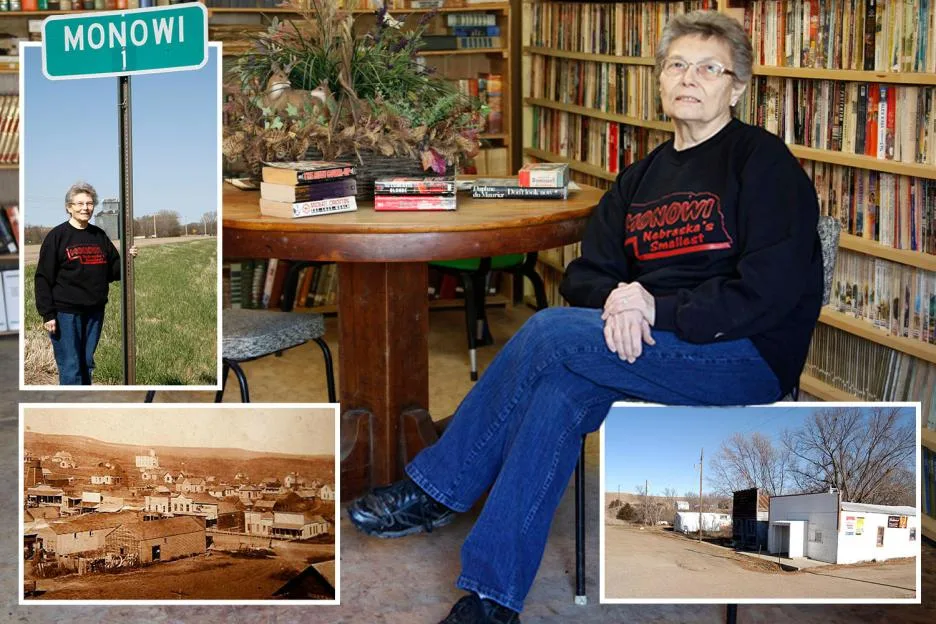
At 93, Elsie Eiler is the sole inhabitant of the Nebraska village.
She told the BBC: “I’m happy here. I grew up here, I’m used to this and I know what I want. It’s just hard to change after so many years.”
Elsie is the mayor of a town with nobody left to govern, the only voter in elections she cannot lose and the owner of its last surviving business – a roadside tavern.
For more than 20 years, Elsie has been the only custodian of a town that once counted more than a hundred residents.
Nestled among the sprawling farmland of Nebraska’s Great Plains, Monowi is the only incorporated municipality in the United States widely recognised as having a population of one.
Its peculiar distinction has turned Elsie into an unlikely international celebrity, attracting travellers from across the world to a place that might otherwise have faded into complete obscurity.
Monowi’s decline is written across its landscape with abandoned buildings that once formed the heart of village life left to deteriorate and remains of old stand exposed to the unforgiving Nebraska .
A disused grain elevator still towers over the settlement, its weather-beaten structure a reminder of the agricultural trade that once sustained the community.


Nearby, the former church has long since fallen silent, its pews reportedly used to store tractor tyres after the congregation disappeared.
There are no bustling shopping streets or neighbourhoods filled with families.
The local school closed decades ago, and the railway that once connected Monowi to the wider world has stopped running.
Instead, the village has become a strange patchwork of deserted buildings scattered across a lonely stretch of Highway 12.
But among the ruins, one building stubbornly refuses to surrender.
The Monowi Tavern is the last surviving business in town, a modest roadside bar where the lights still burn and customers continue to gather.
A sign outside promises the coldest beer in town – a claim made all the more amusing by the fact that there is nowhere else in Monowi to buy one.
And the prices are a rare glimpse into a time before the cost-of-living crisis – priced at $2 for a pint and $3.50 for a burger.
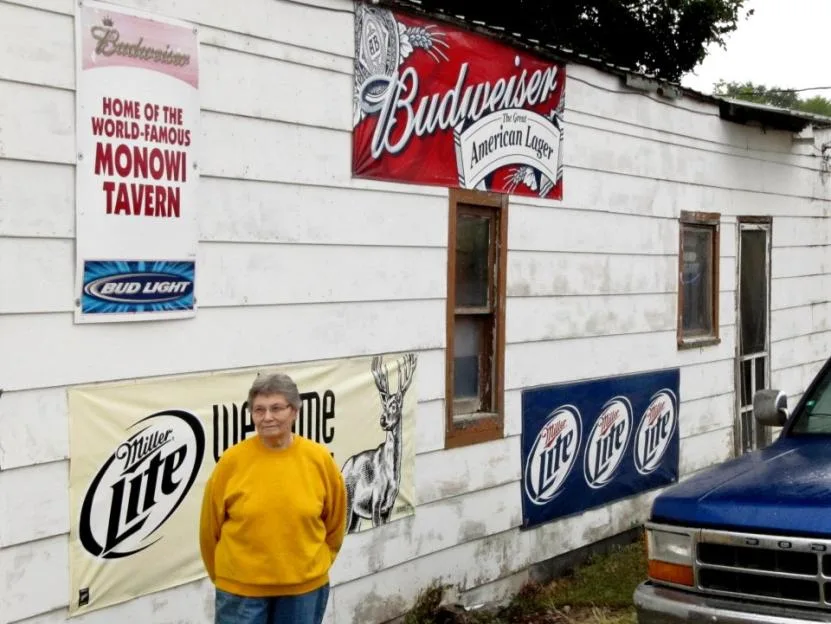

Behind the counter is Elsie, who has spent more than five decades serving drinks to travellers and locals, many of whom have known her for most of their lives.
Monowi was established in 1902, when the arrival of the railway brought new life to the remote Nebraska countryside and offered families the prospect of building a future on the American frontier.
Its name is believed to derive from a Native American word associated with flowers, an almost poetic beginning for a settlement that would eventually find itself struggling to survive.
She told the New York Times: “The bar is the town, and I’m the town. We’re all so intermeshed, you can’t quite imagine one without the other.
“This is my home. All my friends are around. Why would I want to leave?”
During the early decades of the twentieth century, the village grew into a modest but functioning community – home to 150 people – with grocery stores, a restaurant, and even a .
It was during this period that Elsie grew up in the surrounding countryside, attending school alongside many other children – including a boy named Rudy Eiler.
Their paths would eventually lead them away from Nebraska before bringing them back to the dissolving town.
The agricultural revolution that transformed rural America in the decades following the Second World War brought greater efficiency to farming, but it also reduced the need for the workers who had once supported small communities.
As machinery replaced manual labour, families began seeking opportunities elsewhere, and the younger generation increasingly turned towards larger towns and cities.
By 1950, the population had fallen to 67. A decade later, just 40 residents remained.
The church held its final funeral in 1960, when Elsie’s father was laid to rest, while the eventually closed and the local school followed in 1974.

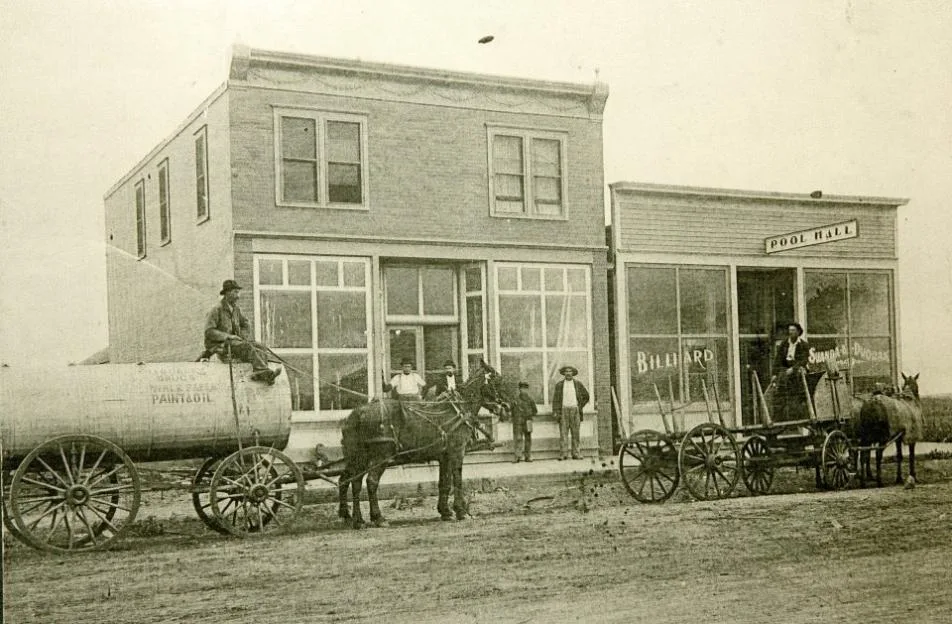
Yet amid the exodus, Elsie and Rudy were preparing to put down roots.
The pair married in 1954 and went on to raise two children, building a life together as the community around them continued to shrink.
In 1971, they took over the Monowi Tavern and the modest establishment became a gathering place for farmers and travellers passing through the surrounding countryside.
By 1990, Monowi had just six residents. And ten years later, only two remained.
Elsie and Rudy had become an entire municipality between them.
But in January 2004, the population halved when Rudy died from , leaving Elsie alone.
Being the only person in an entire town comes with a rather unusual set of responsibilities.
Elsie is not simply Monowi’s last resident. She is also its mayor, clerk and treasurer, effectively running a local government in which every official position leads back to the same person.
Each year, she hangs up a notice in Monowi’s only business (her bar) advertising mayoral elections, and then votes for herself.
With no political rivals to threaten her reign, Elsie casts the only ballot at election time, securing a staggering 100 per cent of the vote without so much as knocking on a door.
Elsie is responsible for keeping Monowi’s finances afloat and its official status intact, while navigating the peculiar business of approving the paperwork needed to run her own tavern.
She said: “When I apply to the state for my liquor and tobacco licenses each year, they send them to the secretary of the village, which is me.
“So, I get them as the secretary, sign them as the clerk and give them to myself as the bar owner.”
The lone lady effectively sits on both sides of the licensing process – applying as the bar owner while handling the municipal responsibilities as mayor.
She has also previously explained that she raises around £380 ($500) annually in local taxes to help cover essential services, including the maintenance of three flickering lampposts and water maintenance.
Even with a population of one, the village must still meet administrative requirements to receive certain forms of state funding.


Even Nebraska’s state authorities have not let the world’s loneliest local government off the hook.
In March 2026, officials formally approved an audit waiver addressed to Elsie as village chairperson, proving that Monowi’s one-woman administration remains very much in business.
Tucked among Monowi’s deserted buildings is a library housing around 5,000 – a touching monument to the husband whose death slashed the town’s population in half.
Rudy Eiler had spent years amassing the collection, dreaming of opening a public library before his death in 2004 left Elsie as Monowi’s sole resident.
Determined not to let his final ambition die with him, she rallied family and friends to establish Rudy’s Library, filling its shelves with the books he left behind.
The tiny settlement now boasts thousands more books than people, with visitors free to browse the collection and borrow a volume on trust.
And while Monowi’s population has been whittled down to a solitary resident, its bizarre claim to fame has put the forgotten village firmly on the world map.
Curious travellers from all 50 US states and more than 60 countries have descended on the Nebraska outpost, making the pilgrimage to meet the woman who is an entire town.
Many leave their names in the tavern’s guestbooks before raising a glass with America’s most unlikely mayor – who, after decades of watching her neighbours disappear, now has the world turning up at her door.
But sadly the life of this tiny town is tied to it’s remaining resident, and Elsie knows that when she goes, Monowi goes with her.
She said: “If I let myself sit and think about it, I feel sad that the time is going to come that I can’t be in there,” she said.
“I don’t know what the future holds for here, but I’d like to see it keep going. Otherwise, it’s just going to be another bunch of shambled buildings on the side of the road.”