
‘Why Nigerian Govt will not list Nnamdi Kanu’s appeal’ – Lawyer indicts courts, AGF
A lawyer, Onyedikachi Ifedi, has stated that the Nigerian government does not want to list Indigenous People of Biafra, IPOB, leader, Nnamdi Kanu’s appeal for h...
 Written byEze Chidiebere Paul

A lawyer, Onyedikachi Ifedi, has stated that the Nigerian government does not want to list Indigenous People of Biafra, IPOB, leader, Nnamdi Kanu’s appeal for hearing because the conviction was a nullity.
Reactions have continued to trail reports that the Court of Appeal is yet to list the appeal filed by Kanu to challenge his conviction for hearing.
The Mazi Nnamdi Kanu Global Legal Consortium, a group of lawyers working for Kanu’s freedom, had accused the Nigerian government of running from the courtroom because the conviction cannot stand legal scrutiny.
IPOB had also, through the Head of its Directorate of State, DOS, Mazi Chris Nwaogu, issued a 14 days ultimatum to the Nigerian government to list the appeal for hearing, or risk a boycott of the 2027 election in the South-East and other ‘Biafra territories’.
Speaking on the matter on Wednesday, Ifedi said the prosecution is afraid of the embarrassment the appeal will bring to the Nigerian judiciary.
Ifedi, a Mazi Nnamdi Kanu Global Legal Consortium, said, “The question is no longer whether Nigeria will defend the conviction of Onyendu Mazi Nnamdi Kanu. The question is why Nigeria has decided it cannot afford to.
“The answer: listing this appeal would end the Nigerian bench as a credible institution. Not because IPOB says so. Because the record says so.”
Highlighting three “facts” to support the allegation that the Nigerian government does not want to list the appeal, Ifedi stated: “One – The Federal Government filed nothing. Time expired. No brief. No living section. No defence. Two — The Court of Appeal will not list the case. Three — The trial judge convicted under a dead law.”
The lawyer further argued that the non-listing of the appeal is not a case of delay.
“That is not delay. That is not congestion. That is a bench that has read the file, understood what is inside it, and decided the safest course is to never open it,” he added.
The lawyer insisted that the Court of Appeal, the Supreme Court, the Federal High Court and the Attorney General of the Federation, AGF, are all indicted for their roles in Kanu’s conviction.
Specifically, he said the Court of Appeal has been indicted for overriding its initial decision to discharge. He said, “That discharge was a criminal outcome — a final criminal disposition. The same Court of Appeal then responded not with criminal process, but with a civil stay — a mechanism from an entirely different body of law — and used it to override its own criminal discharge.
“Within fourteen days, it constituted a fresh panel. Within fourteen days, it kept a man in custody by applying the wrong law to the wrong proceeding. A civil stay cannot undo a criminal discharge. That is not innovation. That is abuse of process.
“Then it got worse. Having unlawfully overridden its own discharge, the same court now refuses to list the appeal arising from the conviction that followed. It created the custody and then locked the courtroom door.
“Indictment: The Court of Appeal is implicated in unlawfully overriding a criminal discharge with a civil mechanism — and then shielding the resulting conviction from all review.”
He also said the Supreme Court is indicted for, according to him, reviving quashed charges in Kanu’s trial.
“Counts were quashed. Quashed means dead. Not dormant. Not suspended. Dead. The Supreme Court revived them anyway — not by ordering fresh charges, not by remanding for retrial, but by breathing life into corpses and sending them back for trial as though they had never been quashed.
“A court cannot revive what it has no jurisdiction to revive. Every proceeding that followed is tainted by that original excess.
“Indictment: The Supreme Court is implicated in creating a trial with no lawful foundation,” the lawyer added.
He further faulted the Federal High Court for convicting under a statute that no longer existed, in violation of the Constitution, the Supreme Court’s authority, and the mandatory transition to the TPPA 2022.
Ifedi also accused the AGF, Prince Lateef Fagbemi, of abandoning the conviction after realizing that he can’t defend it.
“The chief law officer of the Federation had one job: defend the conviction or concede it. He did neither. He let time expire. That silence is the only honest document the Federation has produced in this appeal. The AGF is implicated in abandoning a conviction he cannot defend,” he said.
The lawyer further noted that the government does not want to list the appeal because Kanu will be arguing his own case.
He said, “The Nigerian state has one reliable method for killing an appeal: buy the lawyer, or frighten the lawyer. Threaten his practice. Threaten his family. Offer him a bench. Make him understand that diligence will cost him his career. It works. It has always worked.
“Mazi Nnamdi Kanu removed that weapon. He is representing himself. There is no lawyer to threaten. No chambers to squeeze. No promotion to dangle. No silence to purchase. And so the state is left with the one thing it has never survived: a defendant who knows the law, knows the record, and cannot be bought.”
Shedding light on Kanu’s appeal, he disclosed that the appellant brief has 115 pages, and raised eight issues for determination.
“Those eight issues are precise, sequential, and grounded in the Constitution, the Supreme Court’s own authority, and the transitional provisions of the TPPA 2022. They are the reason the Court of Appeal will not sit. Because to hear them is to answer them. And to answer them is to confront the fact that:
“The trial judge recited “no written law, no conviction” — then convicted under a repealed law. He cited the Supreme Court against dead statutes — then used a dead statute anyway. The TPPA 2022 provided the exact mechanism for transition — and it was deliberately ignored. A preserved proceeding is not a resurrected statute. The conviction therefore has no lawful foundation and is a nullity.
“If the Court of Appeal answers honestly, the conviction dies. If it answers dishonestly, the bench dies,” Ifedi added.
Accusing the judiciary of protecting itself instead of Nigerian citizens, he said, “If the Court of Appeal affirms Omotosho, the Supreme Court must rule on whether a Nigerian judge may convict under a repealed statute — after that same judge quoted the Supreme Court forbidding it.
“The Supreme Court already answered in Egigia. To contradict itself now is to destroy its own authority. Not to contradict itself is to collapse the conviction — and every justice who declined to stop it wears the consequence.
“The Court of Appeal is not saving the government. It is not saving Omotosho. It is not saving the Attorney-General. It is not saving the Chief Justice. It is delaying the moment when all of them must be judged by the same standard they applied to Mazi Nnamdi Kanu.”
Continue reading

One Vision: 5,000 youths share remarkable story of Peter Eze Youth Connect 2026
The D-Day finally dawned on September 10, 2026— the day of the memorable and epoch-making Peter Eze Youth Connect 2026, themed “Beyond Quotas: Unlocking Opportu...
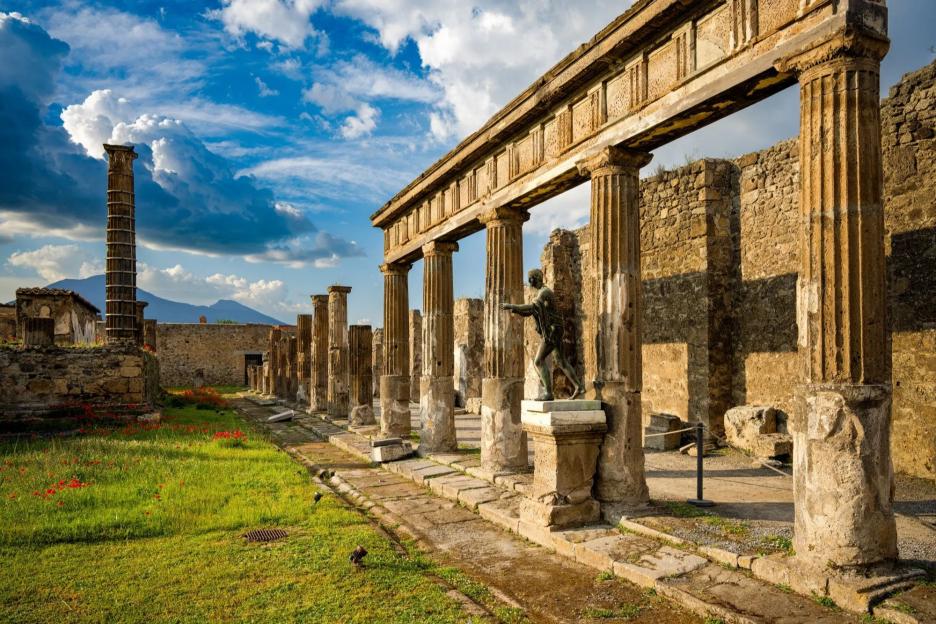
Tourist, 17, raped at Pompeii ruins by ‘man who posed as tour guide to lure teen to secluded area of ancient site’
A TEENAGE tourist was allegedly raped at the ruins of Pompeii after a man posed as a tour guide and lured him to a secluded area. The suspect, a caretaker at th...

Fintiri nominates chairman, commissioners for Adamawa electricity commission
Governor Ahmadu Fintiri has nominated a chairman and two commissioners of the newly established Adamawa State Electricity Regulatory Commission for confirmation...

Lere Olayinka blasts Igbo traders over Chinese protest
Lere Olayinka, the Senior Special Assistant on Public Communication and Social Media to the Minister of the Federal Capital Territory, FCT, Nyesom Wike, has bla...