Volodymyr Zelensky has said a new plan to end the war could freeze the front line while allowing for the creation of demilitarised zones.
The Ukrainian President said the 20-point plan agreed with the U.S. is still under Kremlin review, though Russia is unlikely to drop territorial demands.
 Zelensky is open to the possibility of demilitarised zonesCredit: AFP
He added there are still points in this latest proposal that are not to his liking.
However, it does appear Kyiv has been able to move away from the original 28-point plan – which heavily favoured Russia.
That plan demanded Ukraine withdraw from 20 per cent of the Donetsk region it currently controls.
It also mandated that land occupied by Moscow be recognised as Russian territory.
The requirement for Ukraine to abandon its plans to join Nato has also been removed from the latest plan.
“In the Donetsk, Lugansk, Zaporizhzhia, and Kherson regions, the line of troop deployment as of the date of this agreement is de facto recognised as the line of contact,” said Zelensky.
“A working group will convene to determine the redeployment of forces necessary to end the conflict, as well as to define the parameters of potential future special economic zones.”
Zelensky shared details of the updated 20-point plan with journalists in a briefing on Tuesday.
It raises the possibility of the withdrawal of Ukrainian troops and the creation of demilitarised zones.
“We are in a situation where the Russians want us to withdraw from the Donetsk region, while the Americans are trying to find a way,” Zelensky said.
“They are looking for a demilitarised zone or a free economic zone, meaning a format that could satisfy both sides.”
Any deal that involves Ukraine pulling its troops out would need to pass a referendum in Ukraine.
“A free economic zone. If we are discussing this, then we need to go to a referendum,” Zelensky said.
Sources in Kyiv also suggested Energodar, a Russian-occupied city that manages the Zaporizhzhia power plant, could become a demilitarised zone.
Zelensky has said he does not want Russia to retain any control over the facility.
He also said his country would only hold presidential elections after an agreement is signed.
This comes after reports Ukrainian troops have withdrawn from Siversk and Donetsk Oblast.
Fighting continues in the area around Siversk, but troops have been withdrawn “in order to save lives and maintain the combat capability of units”.
The General Staff said that Russian Forces advanced because of its “significant numerical superiority” and “constant pressure from small assault groups in difficult weather conditions”.
“The city remains under the fire control of our troops,” said the General Staff.
“The occupiers remaining in the city are being defeated and their logistics are being cut off. Enemy units are being blocked to prevent their further advance.”
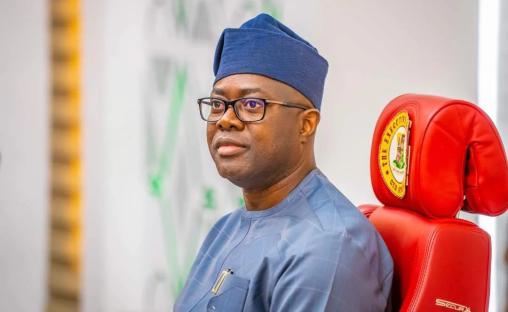
 The Ukrainian leader said there are still details to be ironed out in the peace dealCredit: Getty
 What's in the new 20-point plan?
- Ukraine’s sovereignty is reaffirmed by all signatories.
- Russia and Ukraine agree to a full, unconditional non-aggression pact with monitored front lines.
- Ukraine receives strong international security guarantees.
- Ukraine’s armed forces remain at 800,000 personnel in peacetime.
- The US, NATO, and European states provide Article 5–style guarantees, with sanctions snapping back if Russia attacks.
- Russia formally commits in law to a policy of non-aggression toward Ukraine and Europe.
- Ukraine is guaranteed EU membership within a defined timeframe and early market access.
- A global development and recovery package supports Ukraine’s economy, infrastructure, energy, and reconstruction.
- Major reconstruction, humanitarian, and compensation funds are established, including a $200bn US–EU fund.
- Ukraine accelerates a free trade agreement with the United States.
- Ukraine confirms its non-nuclear status under the NPT.
- The Zaporizhzhia Nuclear Power Plant is jointly operated by Ukraine, the US, and Russia.
- Both sides commit to education promoting tolerance, minority rights, and cultural understanding.
- Current troop positions in key regions are recognised as the line of contact, with withdrawals, monitoring, and possible demilitarised zones.
- Future territorial arrangements cannot be changed by force.
- Russia will not block Ukraine’s commercial use of the Dnipro River or Black Sea.
- A humanitarian committee oversees POW exchanges, civilian returns, and victim support.
- Ukraine will hold elections as soon as possible after the agreement.
- The agreement is legally binding and enforced by an international Peace Council, with sanctions for violations.
- A full and immediate ceasefire begins once all parties approve the deal.
Breaking News… More to Follow