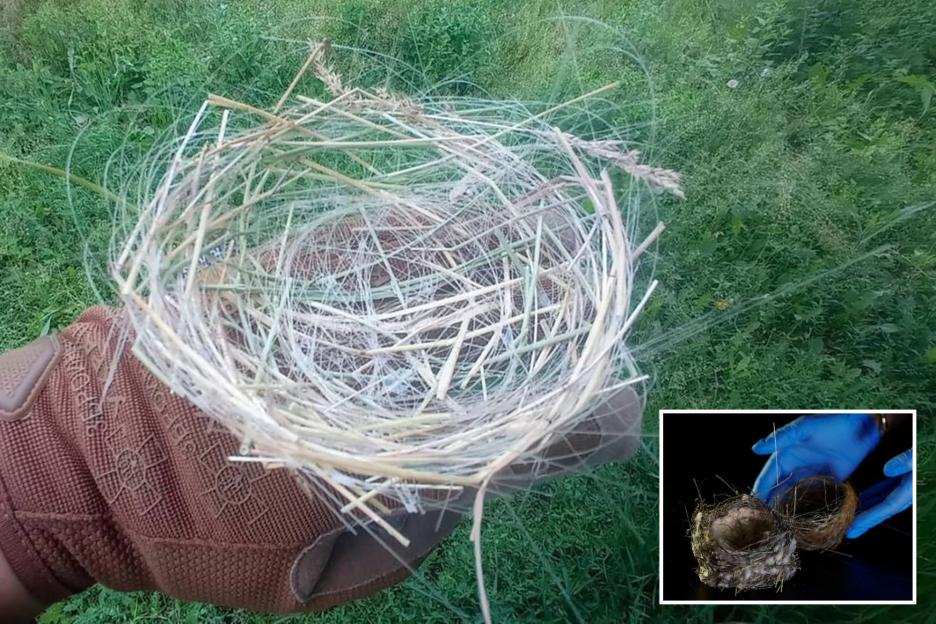
BIRDS living along Ukraine’s war-torn front line are building apocalyptic nests from discarded fibre-optic cables used to guide attack drone swarms.
Multiple nests woven with a mixture of grass, twigs, and the ultra-thin wires have sparked debate about how the brutal four-year conflict is reshaping nature.
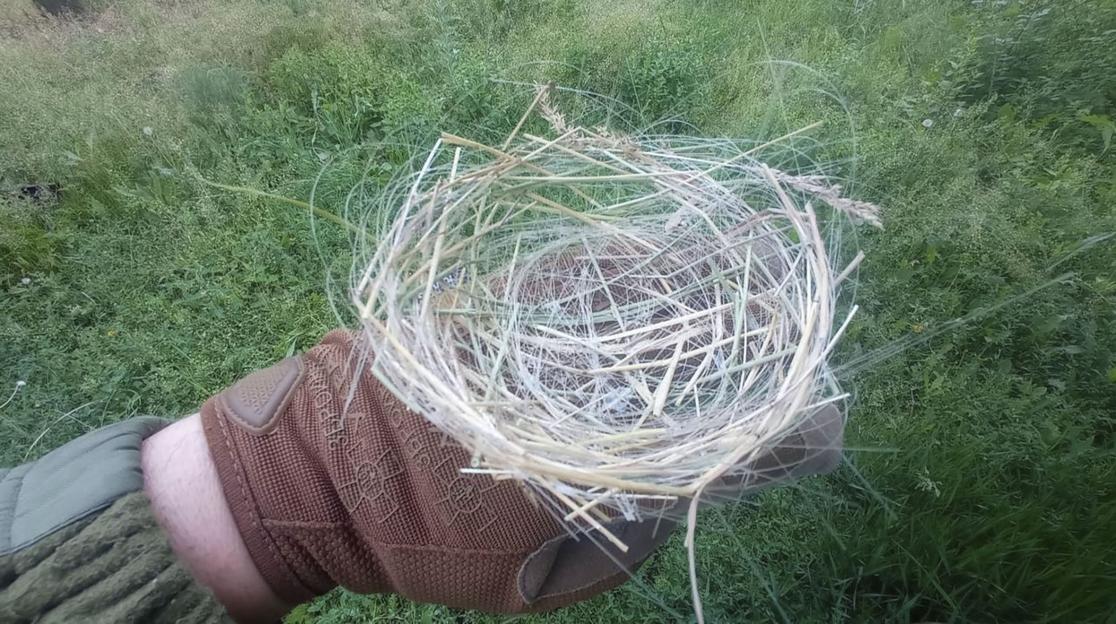 Birds use fiber-optic cables from killer drones to build nests in war-torn Donbas Credit: East2West
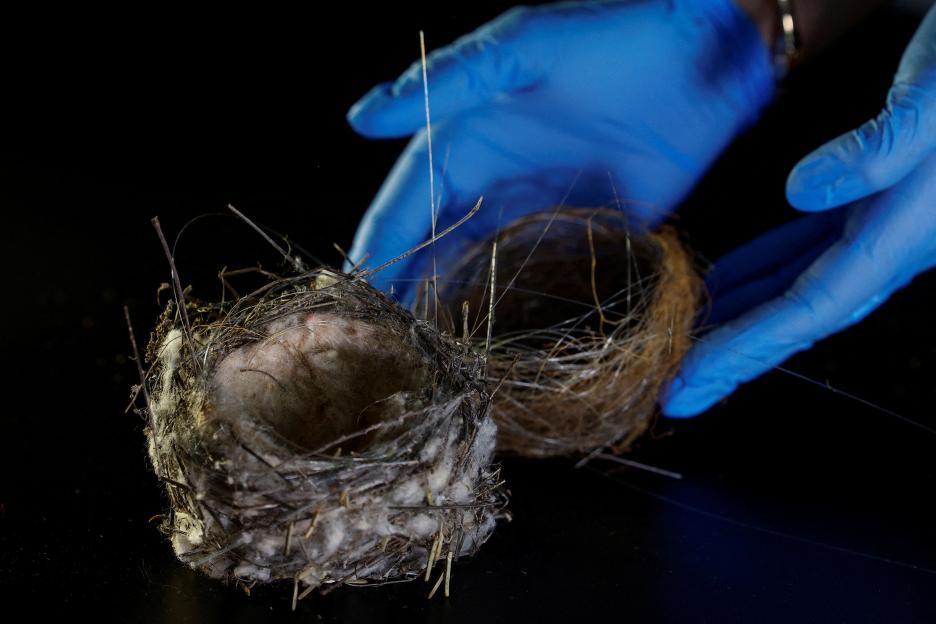 Two such nests made with fragments of optic fibre were found by Ukrainian troops Credit: Reuters
Giant spider webs of the fibre-optic cables, used by both and to make resistant to electronic jamming, now cover large stretches of the 746-mile front line.
launched his “special military operation” against Ukraine in February 2022 with tanks, armoured vehicles and artillery.
Since then, drones have become a dominant feature of the battlefield, with both sides increasingly reliant on them in combat.
The growing use of fibre-optic drones has left cables scattered across the landscape, where appear to be adapting to the new reality around them.
The abandoned cables can be found draped across rooftops, tangled in trees and strewn through fields.
Ukrainian troops have shared photos and videos of nests woven from dry grass and fibre-optic cable across battle-scarred regions including Donetsk, Kharkiv and Zaporizhzhia.
Olena Tregub, secretary general of the Ukrainian civil society group, NAKO, called the creations “apocalyptic”.
Yana Hrynko, a senior researcher at Kyiv’s War Museum, has examined two such nests sent from the front line by Ukrainian troops.
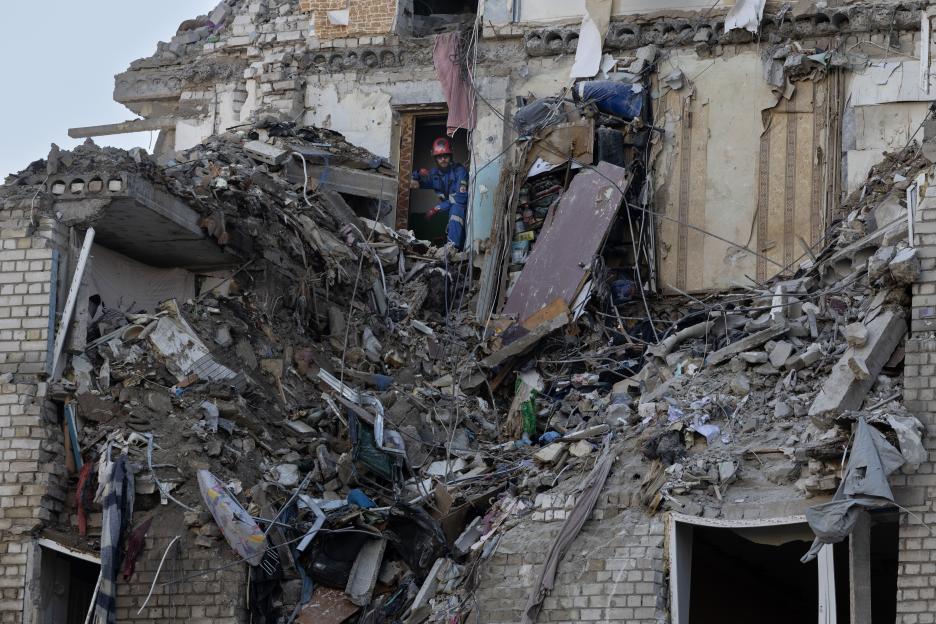 Vladimir Putin’s illegal invasion of Ukraine has devastated entire regions Credit: Getty
 A woman holding flowers looks at a damaged residential building following an airstrike on Kyiv Credit: AFP
She said: “Bird nests with fragments of optic fibre demonstrate the change in the nature of war.
“The first nest mainly contains dry grass and fibre-optic cable. And it’s pretty tightly twisted.”
Hrynko said researchers do not yet know which species built the nests or how the birds gathered the cables, which can stretch for more than 12 miles.
One nest was reportedly found after a Russian glide bomb knocked down a tree in Donbas.
A support battalion of Ukraine’s 12th Azov Brigade shared an image of a nest on Telegram last month.
The brigade said: “This is just one of dozens of manifestations of how nature survives in the flames of war.
“Between hundreds of drones, assaults, shelling, and kilometres of scorched earth.”
The unusual nests have attracted attention from researchers beyond Ukraine.
One of the two nests will remain in as part of the War Museum’s collection, while the other is being sent to the Netherlands for further study before being returned.
Auke-Florian Hiemstra, a biologist based in the Dutch city of Leiden who specialises in artificial nest materials, said testing could reveal which bird species built the nests.
She said: “We’re going to look for traces still in a nest to determine who actually made the nest.
“I have never seen nests like this before – and I have seen many, many bird nests.”
Hiemstra said the impact of fibre-optic cables on birds could be both positive and negative.
While birds could become tangled in the material, the cables may also help create stronger nests.
She said: “And by documenting this nest, we’re also documenting the impact of war on nature in Ukraine.”
Birds are often choosy about what they pluck for nests, but have been speculated to employ ingenious tactics – such as using snakeskin and toxic cigarette butts to ward off predators.
Researchers say that the animals are increasingly using everyday human rubbish to make nests.