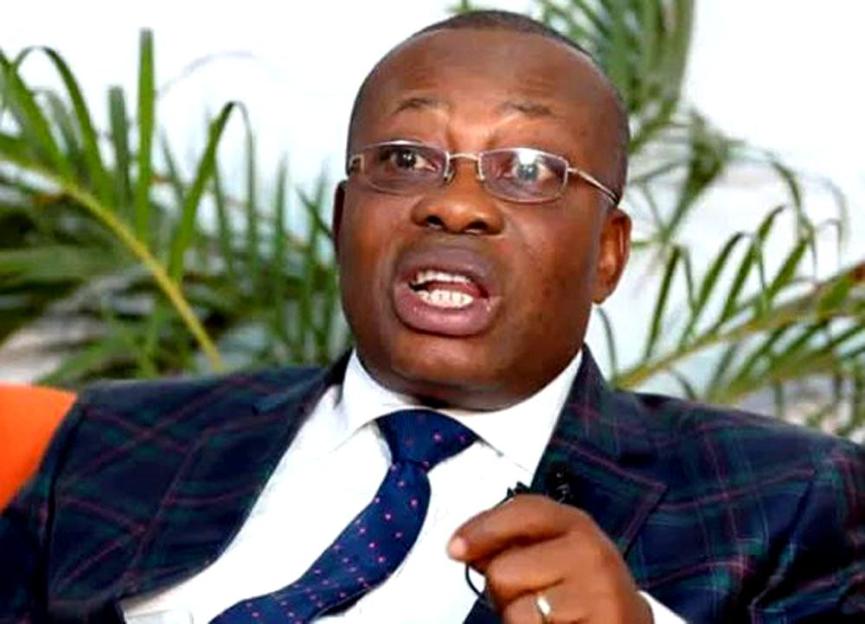
A Senior Advocate of Nigeria, Monday Ubani, has said President Bola Ahmed Tinubu was under no constitutional obligation to submit his primary and secondary school certificates to the Independent National Electoral Commission (INEC) for the 2027 election.
Ubani stated this on Wednesday during an interview on Eagle 102.5 FM, Ilese-Ijebu, monitored by DAILY POST, amid renewed controversy over the President’s educational credentials.
The controversy followed allegations by former Kogi West Senator, Dino Melaye, that Tinubu failed to include his primary and secondary school certificates among the nomination documents submitted to INEC.
The publication of candidates’ credentials by INEC reignited public debate over the constitutional educational qualifications for the office of the President, prompting questions about whether a university degree alone satisfies the constitutional requirement or whether candidates must also submit their primary and secondary school certificates.
Reacting to this on Wednesday, Ubani said the issue must be addressed from a legal perspective, not public sentiment.
“It is about the law, not about maybe sentiment or bias, which I see flying about,” he stated.
The constitutional lawyer cited Section 131 of the 1999 Constitution, which he said only requires a presidential candidate to show evidence of education “up to school certificate level or its equivalent,” noting that the section does not expressly compel candidates to produce primary or secondary school certificates.
“The Constitution says that whosoever will run for the office of the president must possess, show that he has attained the level up to school certificate level,” he clarified.
“There’s no legal compulsion that he must disclose his certificate or he must show it. I’ll say that it’s only a moral issue and it has nothing to do with legal compulsion.”
He argued that judicial pronouncements have already interpreted the provision to mean candidates are not required to physically present certificates, but only to demonstrate they attained the required level of education.
“There’s no constitutional compulsion to show a certificate, and there is a judicial pronouncement to that effect that the Constitution does not require the production of a certificate. It’s just for you to show that you have been educated up to that level.”
Ubani further explained that the law presumes a candidate with a university degree must have passed through primary and secondary school.
While defending the legal position, the SAN admitted the omission raises questions of transparency, saying, “I agree that ordinarily, whoever is submitting his credentials should have shown evidence of his primary school certificate and should have also shown evidence of his secondary school certificate.
“These are issues of transparency,” he stated.
Speaking on INEC’s role, Ubani said the electoral body acted within the law by only publishing candidates’ documents without verifying them, adding that disputes over educational qualifications are pre-election matters that must be challenged within 14 days of INEC’s publication.
Ubani also addressed concerns over discrepancies in the names appearing on the academic credentials of 2027 presidential candidate Peter Obi after questions were raised about variations across his WAEC, University of Nigeria, and National Youth Service Corps (NYSC) documents.
He said inconsistencies in names are not necessarily evidence of wrongdoing but must be properly documented.
“It’s an issue now. Peter Obi has to give a reason why the change and all that. It’s an issue. There must be a public document to that effect.”