
Researchers Used Claude to Find OpenAI Security Flaws in Bug Bounty Test
Security researchers used Anthropic’s Claude during an authorised OpenAI bug-bounty exercise, uncovering vulnerabilities that OpenAI later patched.
 Written byEze Chidiebere Paul
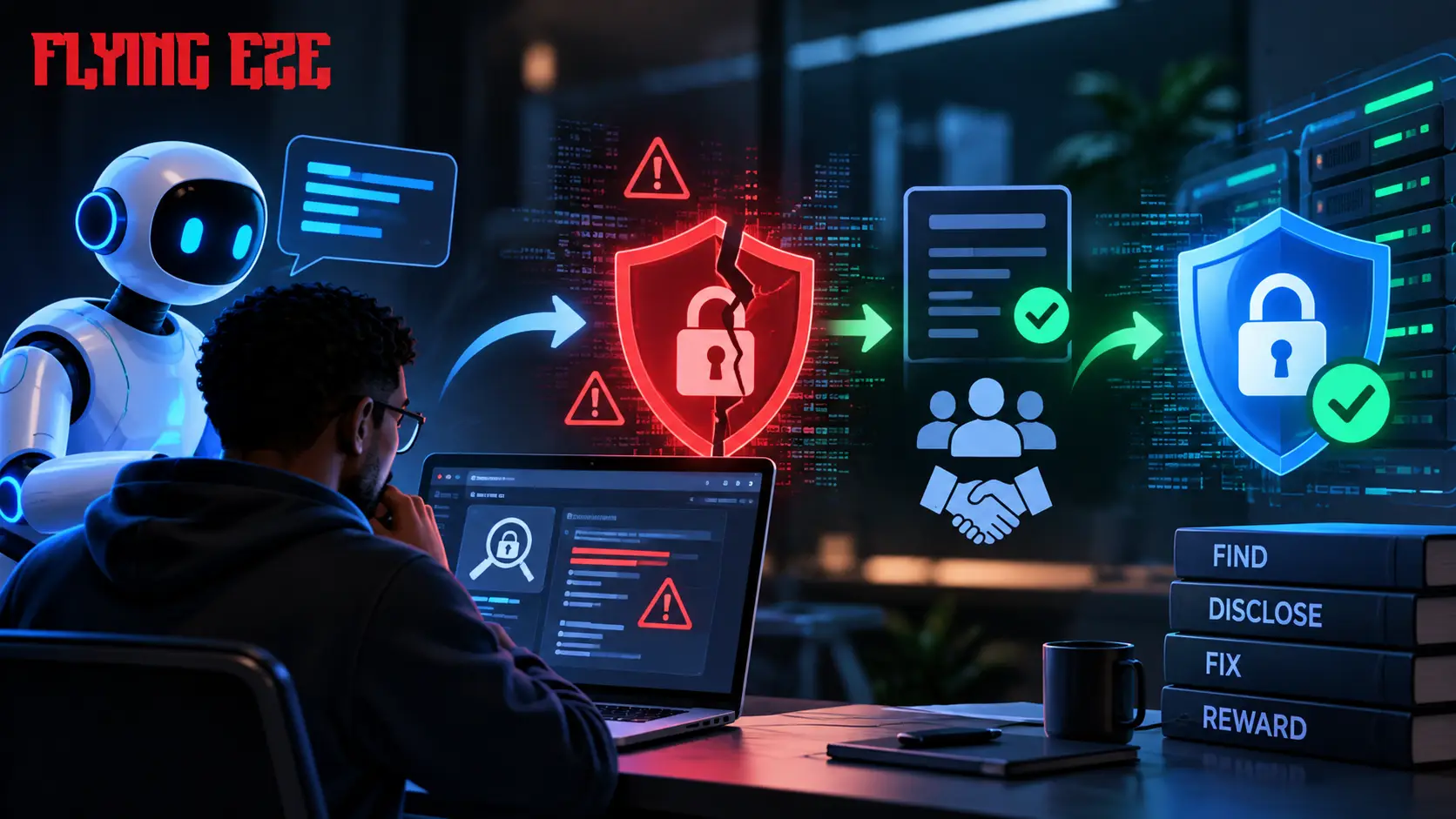
Security researchers used artificial intelligence tools, including Anthropic’s Claude, to uncover and exploit vulnerabilities in OpenAI systems during an authorised bug-bounty exercise, highlighting how quickly AI is changing both offensive and defensive cybersecurity.
The work was carried out by Hacktron AI and reported on 18 September 2026. The researchers said they were able to move from an initial flaw affecting an OpenAI community forum to access involving an employee account and internal resources. The activity was conducted as security research rather than a malicious intrusion, and the vulnerabilities were responsibly disclosed to OpenAI.
What the researchers found
According to reporting by TechCrunch, the Financial Times and The Guardian, the researchers used Claude as part of a broader AI-assisted workflow to identify and connect vulnerabilities in OpenAI’s systems. The exercise demonstrated that modern AI models can substantially accelerate tasks that previously demanded more manual investigation from experienced security researchers.
The team reportedly gained access to an OpenAI employee account through a weakness associated with the company’s community help forum. From there, the researchers were able to reach additional internal resources and demonstrate the potential impact of the flaws without turning the exercise into a destructive attack.
The researchers reported the issues under OpenAI’s bug-bounty programme. OpenAI subsequently addressed the vulnerabilities, and the team received a $6,500 bounty, according to multiple reports.
Claude was a tool, not an autonomous attacker
The distinction matters. Reports describing the incident as Claude “hacking” OpenAI can make the episode sound as though an AI system independently decided to attack another company. The available reporting instead describes human security researchers directing AI tools during an authorised assessment.
That makes the incident less a story about an autonomous chatbot going rogue and more a demonstration of AI as a force multiplier for cybersecurity professionals. Models can help analyse information, generate hypotheses, connect clues and automate parts of a security-testing workflow, allowing small teams to investigate complex systems faster.
Why this matters for businesses
The same productivity gains available to legitimate researchers can also change the economics of cybercrime. If AI reduces the expertise, time or staffing required to find weaknesses, organisations may have less time between the appearance of a vulnerability and attempts to exploit it.
Businesses adopting AI agents also face another challenge: increasingly capable systems can interact with browsers, code repositories, cloud services and business applications. That means organisations need to think beyond traditional chatbot security and consider what permissions an AI system has, which tools it can call and how its actions are monitored.
Practical controls include least-privilege access, short-lived credentials, strong separation between development and production systems, audit logging, human approval for sensitive actions and rapid revocation of compromised tokens. Bug-bounty and responsible-disclosure programmes can also help companies find weaknesses before malicious attackers do.
AI security is becoming a two-sided race
Cybersecurity teams are increasingly using AI to review code, triage alerts and investigate vulnerabilities. Attackers can use similar capabilities for reconnaissance, phishing, vulnerability discovery and automation. The competitive advantage therefore comes not simply from having an AI model, but from surrounding it with good security architecture and human oversight.
The OpenAI exercise is a useful example because the researchers disclosed the vulnerabilities and the company patched them. The more important lesson for other organisations is that AI-assisted security testing is becoming faster and more accessible, increasing the value of continuous testing rather than relying only on occasional assessments.
What organisations should do now
Companies deploying AI-enabled software should map which systems their models and agents can reach, review permissions regularly and treat model-connected tools as part of the organisation’s attack surface. Security teams should also test how an AI agent behaves when it encounters malicious instructions, unexpected web content or excessive privileges.
For developers, the incident reinforces a familiar security principle in a new context: powerful automation should not automatically receive powerful access. AI can help defenders discover problems sooner, but the systems around the model still need conventional safeguards such as authentication boundaries, secure session management, access controls and monitoring.
As AI capabilities improve, responsible security research will be increasingly important in identifying where those safeguards fail before attackers can take advantage.
Continue reading
Google Avoids Ad-Tech Breakup but Must Open AdX and Accept Six-Year Monitor
Google will keep its ad-tech business intact for now, but a US court has ordered major changes to AdX and DFP designed to make digital advertising markets more open to rivals and publishers.

Gyazo Data Breach Exposes 23.62 Million User Records: What Users Should Do
Gyazo owner Helpfeel says approximately 23.62 million user-related records were exposed after an attacker breached its image-upload server. Here’s what happened and the steps users should take.

France Opens Smart-Glasses Harassment Probe as Privacy Scrutiny Grows
Paris prosecutors have opened a smart-glasses harassment investigation as France’s CNIL warns about covert recording, consent and privacy risks.

Huawei Cloud Launches New Agentic AI Infrastructure and Enterprise Agent Tools
Huawei Cloud has launched new agentic AI infrastructure and enterprise tools at HUAWEI CONNECT 2026, including an updated AI Cluster Service, Agentic MaaS and expanded AgentArts platform.