
A MAN has urged others to take piles seriously after he spent weeks fighting for his life in hospital with a horrifying flesh-eating infection.
James Lamont, from Dumfries in , first noticed something was wrong with his scrotum in October 2025, but initially brushed it off as just a small lump and chose not to visit the .

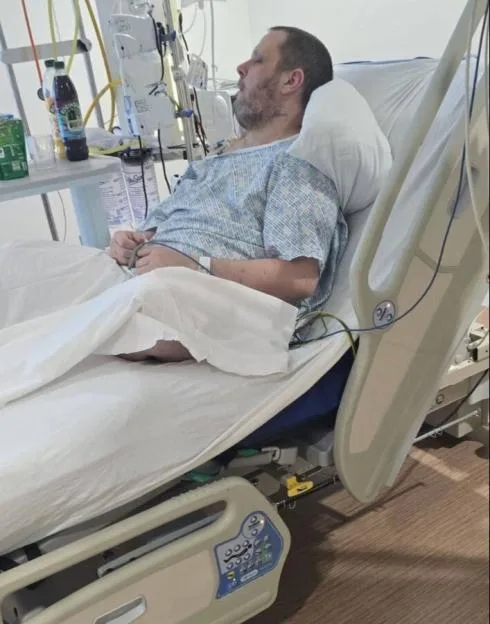
Instead, he asked his mum to buy creams over-the-counter to help with what he thought was piles.
The 43-year-old spent around three weeks using the creams, but suddenly his symptoms worsened, and James began feeling nauseous and in pain.
It was only after waking one morning to discover that he could hardly walk because his testicles had swelled so much they were the size of a melon that he was rushed to A&E.
Here, doctors discovered that he had a – a painful, swollen, pus-filled lump – right beside the rectum and back passage, which was fast becoming deadly.
He spent weeks in hospital, with his family fearing he may not survive, undergoing 11 gruelling operations, and skin grafts.
Recalling his horrifying diagnosis, he says: “I was sick for days, vomiting every time I ate, and I had a bath to soothe the pain but it only made everything worse.
“By the time I woke up the next morning, my testicles were swollen to the size of a melon and I couldn’t walk at all.
“It was an intense pain and swelling. My balls felt really warm and were purple.
“When I saw how swollen they were, it was frightening and a shock.
“I knew something bad was happening.”
He adds: “I wish I’d known that something that looks like just piles or a small abscess can turn into something this deadly in such a short space of time.
“I never imagined it was an abscess, and I had no idea how dangerous it could really become.”

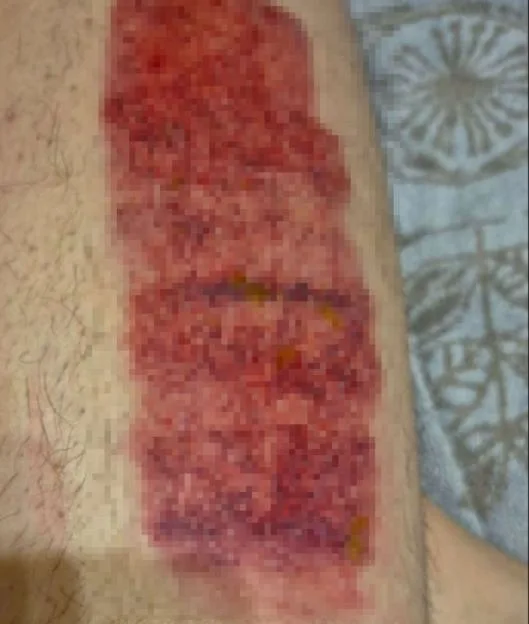
By the time he got to A&E, he claimed his scrotum was the size of a melon, “hugely swollen, rock hard, and agonising” and doctors took him into theatre within an hour.
They told him that the abscess had developed , a rare type of .
Necrotising fasciitis, also known as the “flesh-eating disease”, is a rare, the soft tissue and fascia beneath the skin.
Necrosis means body tissue is dead or is dying because of a lack of blood flow or a bacterial infection.
Fournier’s gangrene targets the genitals, perineum – area between the anus and genitals – and perianal region.
It needs to be treated in hospital straight away and can prove fatal if treatment is delayed.
The infection had spread so fast that the skin around James’ groin and scrotum turned dark and discoloured.
It then triggered , which is when the in response to an infection, attacking healthy organs and tissues.
When James was admitted on November 1, doctors reportedly told his family that they were doing everything that they could and he was unwell.
But two days later, they were given the heartbreaking that he may not survive.
James’ partner, Tracey Dickie, 43, who stayed by his bedside every night, said the moment doctors told her they might not be able to save him was one of the most frightening experiences of her life.
“It was devastating to see the gangrene was eating away at healthy tissue and there was nothing any of us could do to stop it,” she says.

What is necrotising fasciitis?
NECROTISING fasciitis is a rare but serious bacterial infection that affects the tissue beneath the skin, the surrounding muscles and organs.
It’s often referred to as a “flesh-eating” disease, though the bacteria don’t eat the flesh.
Rather, they release toxins that damage the nearby tissue.
The condition can start from a relatively minor injury, such as a small cut, but can progress and get worse very quickly.
If it’s not recognised quickly, the condition can become life-threatening.
Symptoms can develop quickly, and early signs include:
- a small but painful cut or scratch on the skin
- intense pain that’s out of proportion to the damage on the skin
- a high temperature, or fever – similar to flu
After a few days, it’s likely you’ll notice:
- swelling or redness in the area, which will often feel firm to touch
- diarrhoea and vomiting
- dark patches on the skin that turn into fluid-filled blisters
Necrotising fasciitis is a medical emergency that can spread very quickly. It is important if you suspect you are suffering with it, you dial 999 immediately.
“One of the hardest parts was being told that the person I loved might not come home.
“My mum had already passed away in March, then my family dog of 13 years passed away in the July.
“I thought ‘not again’ . I couldn’t have mentally handled another loss in such a short period.
“I felt so lost and frightened.
“I remember leaving that room after being told they didn’t think he would survive and breaking down in tears as I messaged his family and asked them if they were nearly at the hospital.
“They knew when they read that message something was serious wrong.”
James was in an induced coma on life support for four days.
He spent 21 days in intensive care and several more weeks in hospital, while doctors also feared that the and leave him needing dialysis.
Fortunately, he didn’t require dialysis.
But, the gangrene destroyed most of the skin and tissue from his scrotum, which had to be removed to save his life.
“Because the tissue had died from the gangrene and the sepsis was taking over, the surgeons had to act fast,” Tracey says.
“They removed most of the skin and tissue from his scrotum and clear all the dead and infected tissue and stop the sepsis from spreading further.”


He was later transferred to hospital in Glasgow for skin grafts to rebuild and cover the damaged areas.
Due to internal tissue also being damaged, James had a stoma fitted, which is a small opening in the abdomen connected to a pouch outside the body. It allows for waste (feces) to collect, instead of coming out the rectum.
Despite his ordeal beginning over a year ago, James says it is still far from over.
Currently unemployed, James adds: “Even now, I’m still healing. I have scars everywhere, ongoing pain, mobility challenges, and I am still adjusting to the stoma and all the changes to my body.
“I still go to appointments and follow-ups, and I know I have a long way to go before I feel like myself again.”
Looking back, James says the experience has changed him forever and made him realise how quickly a seemingly minor problem can become life-threatening.
He adds: “This experience has changed me forever. I don’t take a single day for granted anymore.
“I wish I’d known that necrotising fasciitis, Fournier’s Gangrene, and sepsis can start from something so small and move so fast.
“Please, learn from what happened to me. If something doesn’t feel right, if you have a lump that won’t go away, if you are in pain or being sick, don’t wait.
“Don’t assume it’s nothing. Get it checked. Your life could depend on it.”