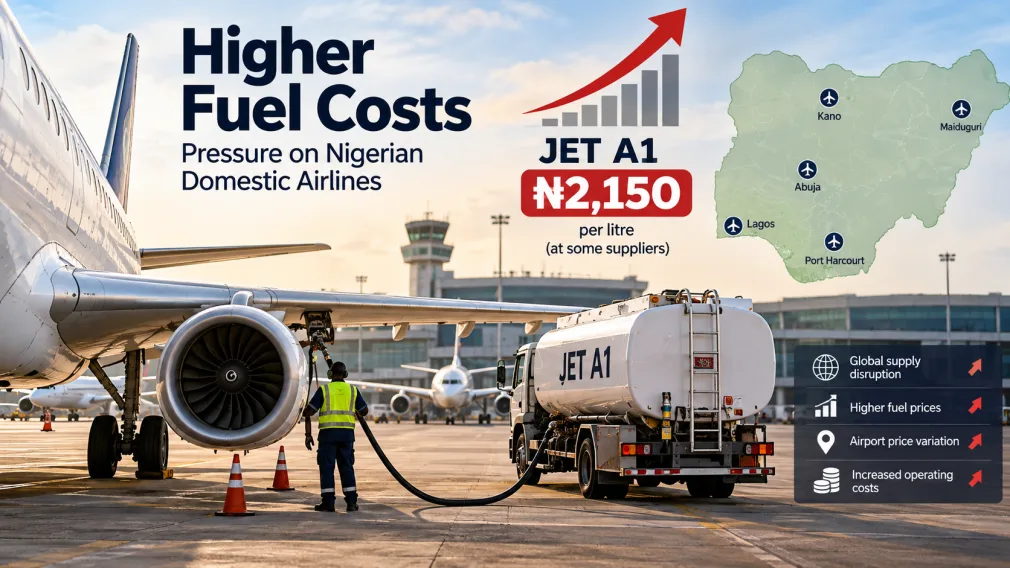
Nigerian domestic airlines are facing another increase in operating costs after aviation fuel prices rose sharply, with Jet A1 selling for as much as ₦2,150 per litre at some suppliers, according to a recent survey of airports.
Industry reporting indicates aviation fuel prices have climbed by about 20% amid disruption and uncertainty in global energy markets. The increase comes at a difficult time for airlines already dealing with high maintenance, financing, foreign-exchange and airport-related costs.
Jet A1 prices vary widely across Nigerian airports
A Daily Sun survey found significant differences between suppliers and airports. In Lagos, reported prices ranged from about ₦1,719 to ₦2,100 per litre, while Abuja suppliers ranged from roughly ₦1,190 to as high as ₦2,150.
The wide spread matters because fuel is one of the largest variable costs in airline operations. The amount an airline pays can depend on airport location, supplier, logistics and prevailing market conditions.
The ₦2,150 figure therefore should not be read as a single nationwide pump price. It represents the high end of surveyed supplier pricing, while other marketers were charging materially less.
Why aviation fuel has become more expensive
Recent Nigerian reports link the rise to instability in international oil markets and disruption to crude and refined-product supply. Jet fuel prices are sensitive to global energy conditions because aviation fuel is traded internationally and local supply chains are exposed to movements in crude prices, refining economics, shipping and foreign exchange.
For Nigerian carriers, those global pressures combine with domestic logistics and other operating expenses, making sudden fuel-price movements particularly difficult to absorb.
What higher fuel costs could mean for fares
Higher Jet A1 prices do not automatically produce an identical increase in every airfare. Airlines price seats using multiple factors, including route demand, booking date, aircraft utilisation and competitive conditions.
However, sustained increases in fuel costs can put upward pressure on fares because carriers have limited ways to offset a major rise in one of their biggest operating expenses. Airlines may also adjust schedules, capacity or promotional pricing if margins become too thin on particular routes.
Passengers may therefore see greater fare volatility if the higher fuel-price environment persists, especially on routes with fewer competing services.
Airlines seek government attention to wider costs
Nigerian domestic carriers have also been pressing the federal government to address taxes, charges and other structural costs affecting aviation.
The fuel increase adds urgency to that discussion because airlines must pay for many aviation inputs in currencies or markets that can move independently of domestic ticket revenue.
Industry operators argue that reducing avoidable costs could help carriers manage fuel-price shocks without transferring the full burden to passengers.
Why airport-to-airport differences matter
Fuel pricing can affect route economics differently depending on where an aircraft refuels. Carriers routinely plan fuel uplift with safety, payload, price and operational requirements in mind.
A large price gap between airports may influence where an airline chooses to take on additional fuel, although operational rules, aircraft weight and route length limit how much flexibility airlines have.
That means the current price variation is not simply an accounting issue: it can shape day-to-day flight planning and the economics of individual domestic routes.
What happens next
The immediate outlook will depend on both international energy markets and local supply conditions. If global oil and refined-product prices stabilise, pressure on Jet A1 could ease. Continued disruption, by contrast, would keep airline costs elevated.
For passengers, the key figures to watch are not only the highest reported fuel price but also whether elevated prices persist across major airports and whether airlines begin making broader fare or capacity changes in response.