Rail passengers across Britain have gained broader protection when their train is cancelled, with a new cross-operator ticket-acceptance scheme taking effect on Sunday, 20 September 2026.
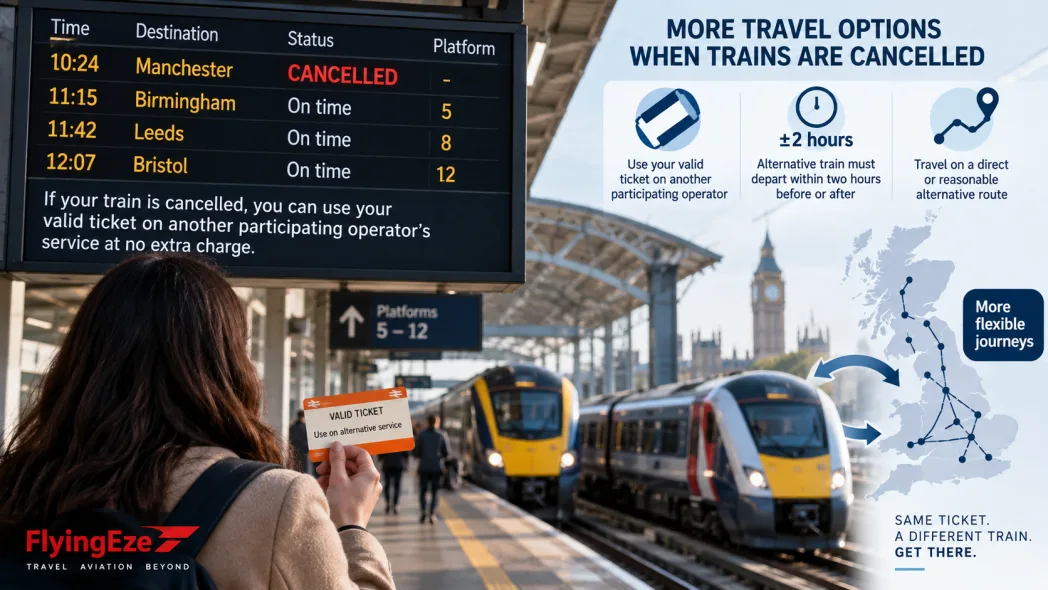
Under the Department for Transport arrangement, a passenger holding a valid ticket for a cancelled service can use another participating operator to complete the journey without paying for a new ticket.
How the new cancellation rule works
The alternative train must depart within two hours before or after the passenger's original cancelled service and follow either the direct route or a reasonable alternative route to the destination.
The change is intended to remove the uncertainty passengers can face when operators are negotiating ticket acceptance during disruption. Instead of waiting for an ad-hoc agreement or buying another ticket, eligible travellers can use a participating alternative service within the defined window.
Which operators are participating?
The arrangement already covered publicly owned operators and is being expanded to include Avanti West Coast, Chiltern Railways, CrossCountry and Great Western Railway. East Midlands Railway is expected to join later.
The scheme does not mean every train ticket can automatically be used on every operator in every circumstance. Passengers still need a valid ticket for the cancelled journey, must use a participating operator and must stay within the time and route conditions.
Why the government introduced the change
The Department for Transport says passengers have previously been left waiting at stations while operators agree whether tickets will be accepted elsewhere. Some travellers have bought replacement tickets to continue their journeys, creating additional cost on top of the disruption itself.
The government describes the new arrangement as part of wider rail reforms ahead of the creation of Great British Railways.
What passengers should do after a cancellation
Travellers should first confirm that their original service has been cancelled and check which alternative participating operator can complete the journey on a direct or reasonable alternative route.
The replacement service must fall within the permitted two-hour window either side of the cancelled train. Passengers should retain their original valid ticket because it is the document that provides entitlement to travel under the scheme.
It remains sensible to check live service information before changing trains, particularly during widespread disruption when the alternative operator may also be experiencing delays or cancellations.
Refund and delay rights remain relevant
Using another operator can help a passenger complete a journey more quickly, but it does not eliminate other passenger-rights questions arising from disruption. Travellers should check the terms applying to their ticket and the relevant operator's compensation or refund process if they arrive late or decide not to travel.
The new measure is specifically designed to make continuing a journey easier after cancellation. It should not be interpreted as unlimited ticket flexibility outside disruption or as permission to use non-participating operators.
A practical change from 20 September
For passengers, the most important change is that eligible cross-operator travel becomes a defined option rather than something that may depend on a last-minute agreement between train companies.
That could be particularly useful on corridors served by more than one operator, where an alternative train may leave soon after the cancelled service. The two-hour rule also gives travellers some flexibility to choose an earlier or later participating service when disruption is known in advance.
The Department for Transport says the measure is intended to reduce cancellation limbo and avoid unnecessary replacement-ticket costs. Passengers should still check journey information because participation, route eligibility and the timing window remain important conditions.