
Groundbreaking Surgery: Expectant Mother Has Womb Removed and Reinserted to Repair Baby's Intestines Outside the Body
A BABY boy has become the first in the UK to undergo pioneering surgery for a rare condition, while still in his mum’s womb. Little Theo’s mum, Maisie Savage,...
 Written byEze Chidiebere Paul
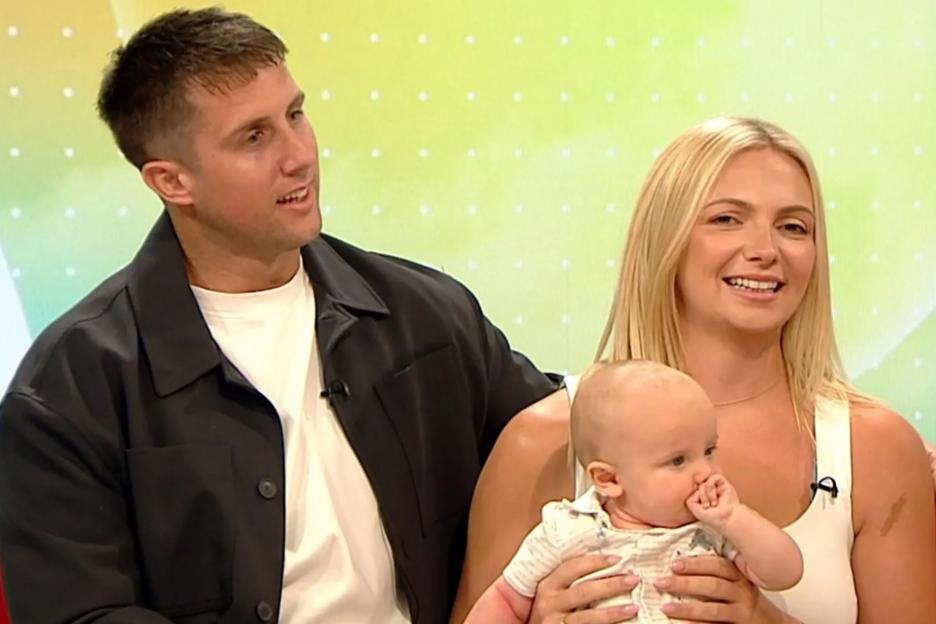
A BABY boy has become the first in the UK to undergo pioneering surgery for a rare condition, while still in his mum’s womb.
Little Theo’s mum, Maisie Savage, 29, underwent the operation when she was 26 weeks pregnant.
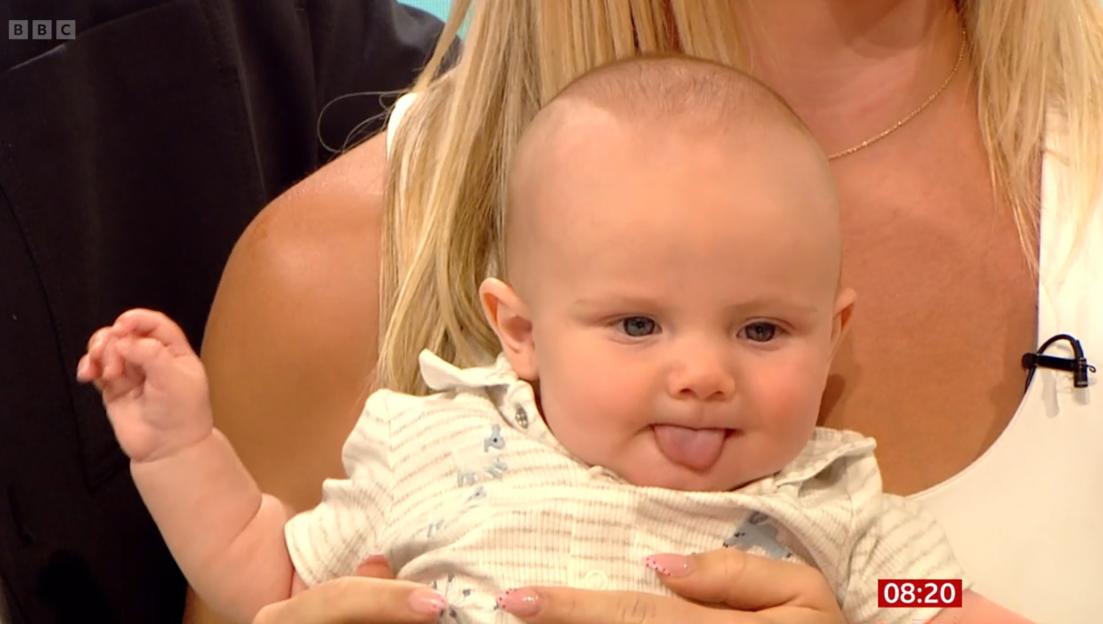 Baby Theo had gastroschisis Credit: BBC
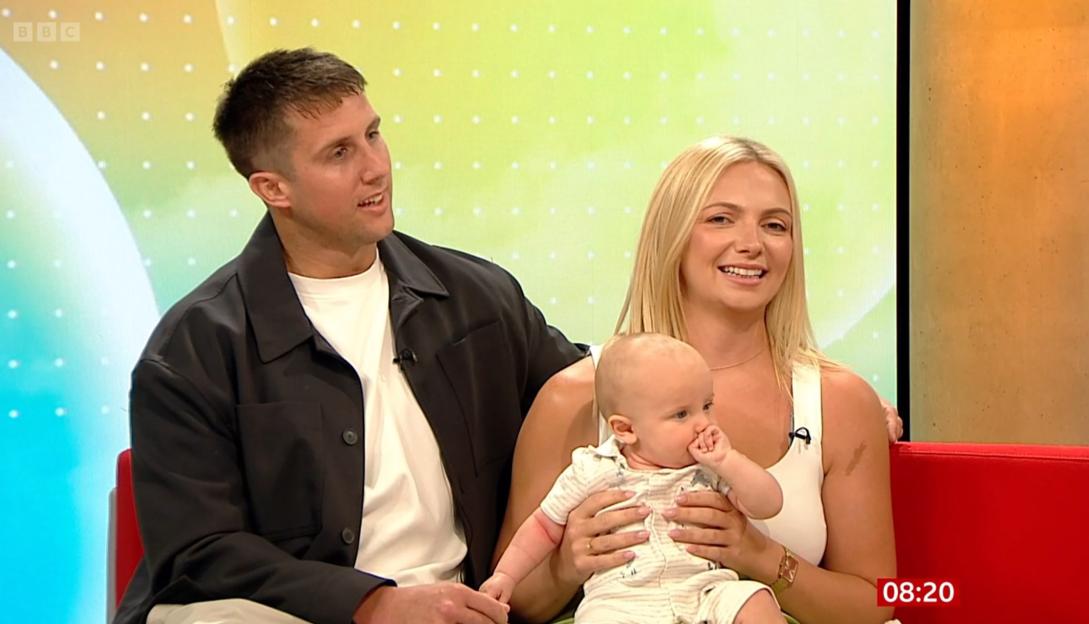 Maisie Savage, pictured with partner Josh French, was operated on by doctors in the US while she was 26 weeks pregnant Credit: BBC
Surgeons partially exposed her womb, before gently pushing Theo’s intestines back into his body using keyhole surgery.
Maisie then had her uterus replaced and she gave birth naturally 14 weeks later.
The procedure was performed at Texas Children’s Hospital as part of a clinical trial which is taking place in partnership with Great Ormond Street Hospital (GOSH) and KU Leuven.
Theo had been diagnosed with , where the belly button doesn’t develop properly, causing intestines to grow outside of the body.
The serious birth defect affects 200 to 300 babies in the UK each year and can be fatal – or mean tots face months of corrective surgery and intensive care.
Theo was the third baby in the world to benefit from a ground-breaking clinical trial aiming to to repair the condition before a baby is born.
Maisie, from London, was told Theo had the condition after her 20-week scan.
She was referred to Texas Children’s Hospital in Houston, after doctors at London’s GOSH discovered Theo had complex gastroschisis, which is more serious, the BBC reports.
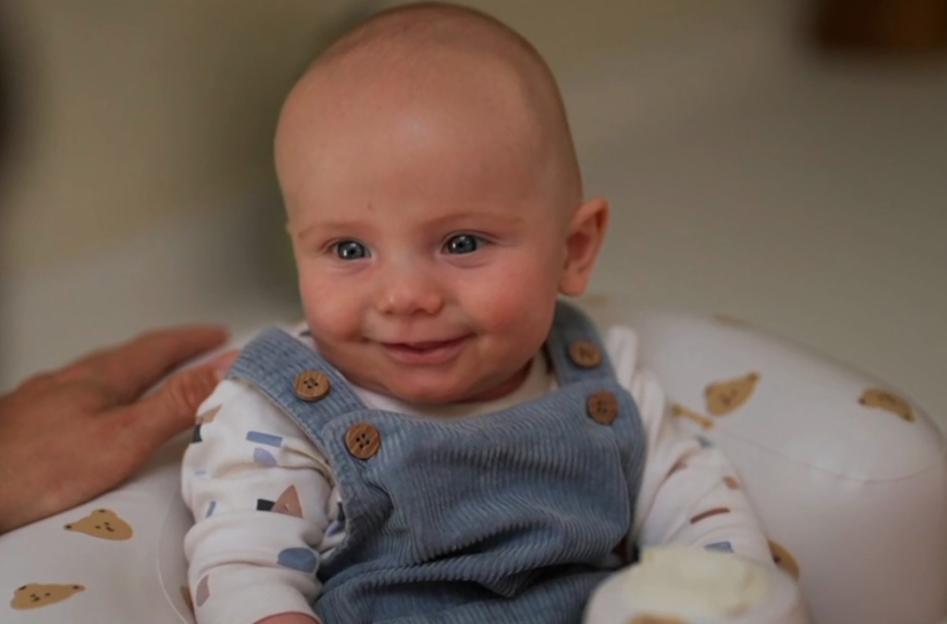 Theo is now five months and thriving Credit: BBC
 What is gastroschisis and what are the risks?
Gastroschisis is a condition where the baby develops a defect (hole) in the abdominal wall during development, while still inside the womb.
This is usually to the right side of the umbilical cord and some of the bowel escapes through this hole and continues to develop outside your baby’s abdomen.
This happens in approximately one in 3,000 births.
There is an increased chance that your baby will be born premature and low in weight.
There are two important issues after birth:
- Returning the bowel back into the abdomen and repairing the defect. This is either by a primary or staged procedure (these terms will be explained later.)
- Establishing your baby onto milk feeds. This can often take a long time (several weeks to months) as the bowel which was outside the abdomen may not work properly. By a drip your baby will be given nutrition.
Source: The NHS
In November last year, Maisie first travelled to Leuven Hospital, in , where specialists gave a Botox injection through her womb, to relax the muscles in Theo’s abdominal wall to make the repair easier.
In Houston, surgeons – led by Dr Michael Belfort – partially exposed Maisie’s womb, before draining it of amniotic fluid and and filling it with carbon dioxide (CO2) gas to give them more space.
Using keyhole surgery, Theo’s organs were pushed back inside his abdomen, which was stitched closed.
Maisie’s womb was then placed back inside her, leaving her with a scar similar to that from , but larger.
The technique is similar to that used on babies with spina bifida, where doctors operate to close the gap in the spine, typically between 19 and 26 weeks of pregnancy.
Maisie carried Theo to term and gave birth to him in February in Texas.
She told BBC News Theo was a “little miracle”.
He was the first UK baby to benefit from the procedure.
Gastroschisis is usually picked up at the mother’s 20-week scan.
Babies currently require an operation soon after birth to put the intestines back into the body, spending weeks in intensive care recovering and being fed through a tube.
Tots with may need multiple surgeries, and can spend months in hospital.
In severe cases, the defect can be life-threatening and lead to life-changing complications, including damage to the intestines, according to GOSH.
Up to one in 10 babies with the condition can die.
With the new surgery, surgeons hope to prevent damage that occurs in the womb before birth and improve outcomes for the baby afterwards.
Paolo De Coppi, NIHR and Nuffield professor of paediatric surgery at UCL Gosh Institute of Child Health and consultant foetal and paediatric surgeon at GOSH, said: “Previous success rates with spina bifida indicate this could essentially offer a cure for gastroschisis.
“If the results are positive, we hope this could become the standard operation for complex gastroschisis cases.
“Families can go home sooner after birth with a healthy baby that shows few signs of their bumpy start in life – the whole process has been very exciting and a big team effort.”
Prof de Coppi added that Theo, who is now five months old, is “doing remarkably well”.
Maisie also said: “Everything they did just completely reversed what could have been a really horrible start to his life and he’s just the best.
“He’s a completely normal baby essentially.”
According to the BBC, if the trial is a success, the procedure could be performed on patients in the UK.
Continue reading
Mum, 34, who took her own life ‘said she was “better off dead” while waiting for ADHD assessment for over three years’
A MUM who took her own life said she was “better off dead” while waiting for an ADHD assessment for over three years, an inquest heard. Bethany Hewitt, 34, told...
I sold my parents’ home to pay the man I loved £500k to save his life – then I found out the horrifying truth
When Gaby received a LinkedIn message from a handsome stranger in 2019, she thought she had found the man of her dreams. Handsome, green eyed and in his forties...
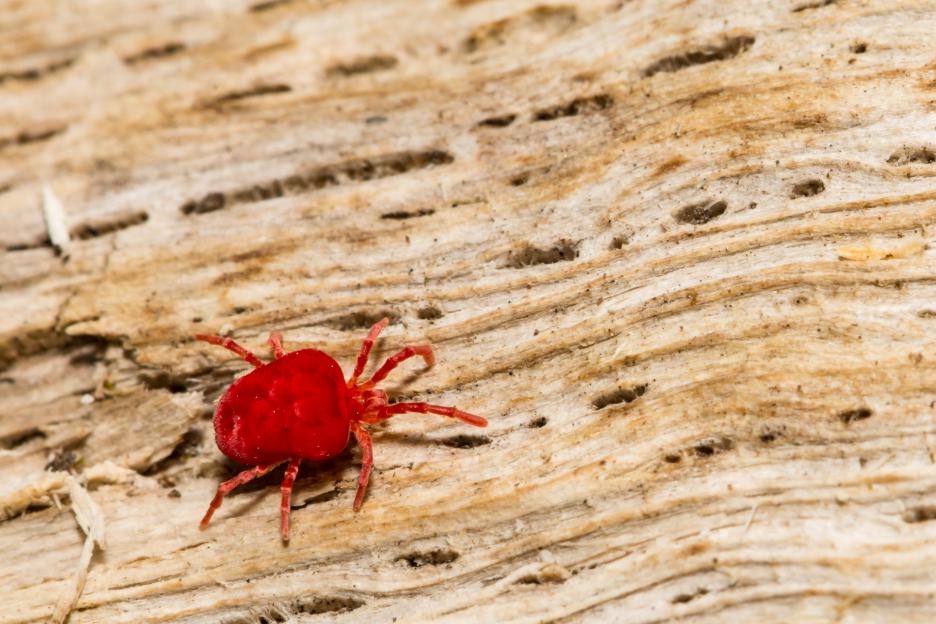
Parasitic bugs that inject and EAT human skin cells are thriving in UK this autumn – 3 signs you’ve been bitten
AS the summer’s hot temperatures have finally dropped and the autumn season begins, many Brits will welcome the cooler weather. But with this comes the threat...

Popular supermarket hand wash is urgently recalled over microbiological risk with users warned ‘stop using immediately’
A POPULAR UK supermarket hand wash has been urgently recalled over a microbiological risk. Customers who have bought the item have been urged to “stop using imm...