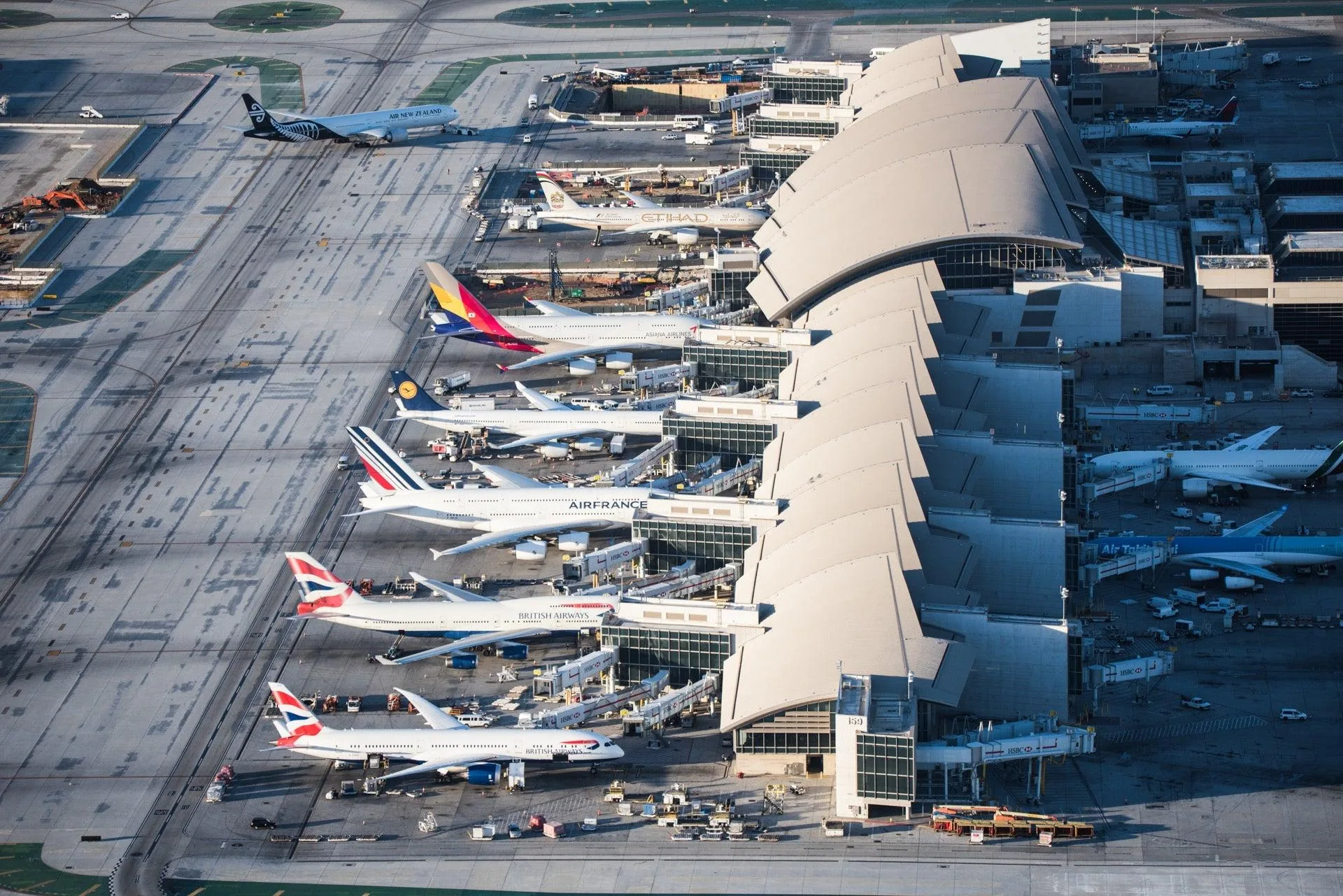
Choosing a US West Coast airport is not simply a matter of finding the biggest terminal or the lowest airfare. For African travellers and exporters, Los Angeles International Airport (LAX), San Francisco International Airport (SFO) and Seattle–Tacoma International Airport (SEA) serve different airline networks, cargo markets and onward destinations.
Two new routes make the comparison particularly relevant in 2026: Royal Air Maroc began nonstop Casablanca–Los Angeles service in June, while EgyptAir launched nonstop Cairo–Los Angeles service in May. These flights create direct links between LAX and North Africa, even though many other African city pairs still require at least one connection.
Here is how the airports compare for passenger journeys, air freight and practical business connections between Africa and the western United States.
The major West Coast gateways at a glance
Official airport statistics show the different scale of the three hubs. LAX recorded 73.7 million passengers in calendar 2025. SFO reported 54.1 million in fiscal 2025, while SEA recorded 52.7 million in calendar 2025. Those reporting periods differ, so the figures are broad size indicators rather than a strict calendar-year ranking.
| Airport | Reported 2025 cargo | Best use to investigate |
|---|---|---|
| LAX — Los Angeles | 2,070,220 metric tonnes (calendar 2025, ACI) | Southern California demand, large freight network, direct Casablanca and Cairo services |
| SFO — San Francisco | 541,998 metric tonnes (fiscal 2025, airport) | Bay Area businesses, international connections through Europe or the Gulf |
| SEA — Seattle–Tacoma | 427,971 metric tonnes (calendar 2025, airport) | Pacific Northwest customers, established international connections |
Methods: ACI's calendar-year freight-and-mail figure for LAX; SFO's fiscal-year loaded-and-unloaded cargo and mail; the Port of Seattle's calendar-year cargo total. Because periods and reporting methods differ, these numbers should not be used to calculate exact market shares or relative efficiency.
Raw airport volume cannot tell you whether a specific flight has vacant seats, whether cargo space is available or how quickly customs will release your shipment.
What changed in 2026: LAX now has two nonstop links to Africa
Los Angeles to Casablanca, Morocco
Royal Air Maroc's announcement confirmed that its Casablanca–Los Angeles route began on 7 June 2026, offering three weekly nonstop flights. The airline's current LAX–Casablanca booking page and late-October schedules confirm continued availability. Casablanca is a potential transfer gateway for other African destinations, depending on the final city, operating day and ticket.
Los Angeles to Cairo, Egypt
EgyptAir confirms it introduced direct service between Cairo and LAX using Terminal B. The route started in May 2026; current winter-season schedules show three weekly flights on the carrier's long-haul aircraft. Cairo can offer onward flights into other African markets when schedules and entry requirements align.
What “nonstop” means: the LAX–Casablanca and LAX–Cairo sectors do not require an intermediate aircraft stop. That does not mean a traveller flying between Los Angeles and Lagos, Accra, Nairobi, Addis Ababa, Johannesburg or Cape Town has a nonstop itinerary. Check the complete journey and avoid relying on outdated articles about historical Ethiopian Airlines service at LAX.
LAX: strong scale and Southern California market access
LAX combines a substantial international passenger network with a broad cargo ecosystem serving the Los Angeles region. Los Angeles World Airports identifies the airport as a significant international logistics centre supported by freight forwarders and customs brokers.
For African travellers visiting Los Angeles, Orange County or nearby business districts, arriving at LAX can limit unnecessary onward flying. For exporters sending commercial goods to Southern California customers, landing at LAX may reduce ground distribution distance compared with SFO or SEA.
However, a major airport can still involve busy road access, high destination-handling costs and changes caused by construction. Compare door-to-door delivery and terminal instructions rather than assuming a large airport is always faster or cheaper.
SFO: useful for Bay Area business and onward networks
San Francisco International Airport serves Silicon Valley and the wider Bay Area. Its fiscal 2025 fact sheet records 368,582 metric tonnes of international cargo within a total of 541,998 metric tonnes of freight and mail.
SFO's October 2026 nonstop destination list features major European and Middle Eastern transfer markets. As published, that list does not show a nonstop African destination, meaning travellers going directly from the Bay Area to African cities generally compare connecting itineraries.
SFO may make more practical sense than LAX for a Kenyan software founder meeting Bay Area investors or an exporter whose importer and warehouse are in Northern California. A cheaper ticket to LAX can lose its apparent advantage once a separate domestic flight, rail journey or long truck transfer is included.
SEA: a gateway for Pacific Northwest customers
Seattle–Tacoma International Airport serves Washington State and the wider Pacific Northwest. The Port of Seattle reports 52.7 million passengers and 427,971 metric tonnes of air cargo during calendar 2025.
Its 2026 international routes include London, Paris, Frankfurt, Amsterdam, Istanbul, Doha and Dubai—cities that can connect travellers onward to Africa. The published list does not identify a nonstop African destination.
SEA is worth considering for people visiting Seattle, Washington-based technology businesses or suppliers across the Pacific Northwest. Its air-freight operations also matter for regional customers, but a route to Africa may involve a transfer, consolidation or cargo interline arrangement.
Ask whether the advertised journey is a true through-ticket or through-air-waybill service, and whether a connection exposes luggage or freight to additional handling.
What about Portland, Oakland and San Diego?
Smaller West Coast gateways deserve consideration when the final destination is nearby. Portland International Airport publishes international and domestic nonstop routes, including some European services. Oakland San Francisco Bay Airport plays a significant role in regional cargo activity, including integrator traffic, while San Diego may be a practical arrival point for southernmost California customers.
These airports should be treated as specific delivery-market alternatives, not assumed substitutes for the full intercontinental and freight networks of LAX, SFO or SEA. Compare the actual carriers, routing, product acceptance, customs arrangements and inland journey for the intended date.
Which airport gives African travellers the best connections?
Start with the African departure or destination city. A passenger travelling from Casablanca to Los Angeles can investigate the direct Royal Air Maroc service; someone travelling from Cairo can investigate the nonstop EgyptAir flight. Travellers from other African cities should compare connections through North African gateways, European airports, the Gulf or appropriate US hubs.
A practical comparison should include:
- Total elapsed journey: all flights, transfer waits, terminal changes and time-zone differences.
- One protected ticket: whether the carrier is responsible for reaccommodation after a disrupted connection.
- Baggage: fees, allowances and whether checked luggage is tagged to the final airport.
- Transit rules: whether visas, permissions or further screening are required at each connection.
- Final destination: the cost and time needed to get from LAX, SFO or SEA to the real hotel or business address.
Do not call an itinerary “direct” merely because an airline offers it on its website: a booking can include a connecting flight. Conversely, a nonstop flight on one route does not guarantee an attractive onward connection within Africa.
Immigration and US connections still matter
Under typical US entry arrangements, passengers arriving on an international flight must clear US Customs and Border Protection at the first US port of entry , unless they were processed at an approved preclearance airport. For onward domestic flights, baggage collection, recheck and another security screening may be required; certain approved exceptions exist.
Importantly, the United States generally requires suitable permission even for travellers who are only transiting through a US airport. Consult the State Department's transit-visa guidance and your airline.
As of October 2026, nationality-specific US visa restrictions affect some African passport holders, subject to exceptions. Confirm eligibility before purchasing nonrefundable tickets. The existence of a nonstop route does not mean every passport holder may board or enter the United States.
Compare Africa–West Coast cargo differently from passenger flights
Air freight depends on the available capacity for a particular commodity, not merely a passenger schedule or an airport's annual tonnage. A nonstop passenger flight may provide belly-cargo capacity, but that capacity can be restricted by weight, dimensions, temperature requirements, dangerous-goods rules and commercial agreements.
Ask freight forwarders for written quotations to at least two suitable West Coast gateways. Include the African origin airport, commodity description, harmonised tariff classification, packaging, chargeable weight, insurance, inspection risk, delivery deadline and the US buyer's precise address.
The forwarder should identify any intermediate airport, whether freight transfers between carriers and who handles customs clearance. A direct LAX passenger route does not establish that every shipment from Casablanca or Cairo can travel on that aircraft.
The final customs responsibility belongs to the identified importer of record. CBP advises that importers remain responsible for compliance even when a licensed broker files their entry paperwork. Food, plants, medicines and other controlled commodities may also need separate agency approvals.
A simple formula is useful: total landed cost = origin handling + air freight + insurance + import duties and fees + broker and cargo-terminal charges + final inland delivery. The lowest airport-to-airport quote need not be the cheapest shipment delivered to the buyer.
Five steps to choose the right West Coast hub
- Identify the real destination. Separate a visit to Los Angeles from one to San Francisco or Seattle; for freight, use the buyer's warehouse postcode.
- Compare current flight schedules. Check African nonstop routes where available, then assess one-stop options via relevant hubs.
- Check permissions and practical handling. Confirm US entry rules for travellers and regulatory, airline and broker requirements for cargo.
- Request end-to-end quotes. Compare fare plus ground transport for passengers, or full landed cost for freight, using the same requirements.
- Test reliability. Review the connection buffer, missed-flight protection, freight transfer exposure and contingencies for delay.
A traveller preparing sales meetings can use FlyingEze's related LAX business-trip planning guide for African entrepreneurs to organise the commercial side of the visit.
Frequently asked questions
Are there nonstop flights from Los Angeles International Airport to Africa in 2026?
Yes. Royal Air Maroc operates Los Angeles–Casablanca and EgyptAir operates Los Angeles–Cairo. Both launched their current services in 2026. Schedules can change, so confirm the date and operating flight with the airline.
Does San Francisco or Seattle have the same direct Africa links?
The October 2026 official nonstop lists reviewed for SFO and SEA do not identify an African destination. Both offer connections through European or Middle Eastern hubs, depending on the itinerary.
Which West Coast airport is best for African cargo?
LAX has greater overall reported cargo volume among these three hubs, but the best choice depends on the commodity, available aircraft space, customs handling and final buyer location.
Are LAX's 2025 cargo totals directly comparable with SFO's?
Not perfectly. The LAX figure cited is ACI's calendar-year 2025 metric-tonne measure, while SFO publishes fiscal-year figures. Both help indicate scale, not a precise like-for-like operational ranking.
Conclusion
LAX stands out for Southern California market access, high freight throughput and two recently launched nonstop routes linking the US West Coast with Casablanca and Cairo. SFO is a strong option for Bay Area business, while SEA suits Pacific Northwest destinations and international connections through major overseas hubs.
For African passengers and exporters, the right airport is the one that best matches the specific city, airline schedule, cargo requirements and complete journey cost. Verify those details before treating airport size as a shortcut to the best decision.
Research verified 28 October 2026. Flight schedules, entry restrictions, cargo rules and published airport figures may change. Consult operators and competent authorities before booking or shipping.