MILLIONS more people may have been infected with killer Oropouche virus than previously thought, scientists have warned.
The little known disease, nicknamed , strikes suddenly – causing agonising joint pain and muscle aches that can make sufferers double over in pain.
 Credit: Alamy
An outbreak in and other Latin American countries sparked concern in 2023, with more than 30,000 cases.
But two new studies published in Nature Medicine and Nature Health suggest that Oropouche may have spread much more widely than official figures suggest.
Researchers claimed that the virus has infected approximately 9.4 million people in Latin America and the Caribbean since 1960.
In Brazil alone, roughly 5.5 million people have been struck down, mathematical calculations, historical data, and blood bank analysis showed.
José Luiz Proença Módena, from Laboratory for the Study of Emerging Viruses at the State University of Campinas and co-author of the studies: “We’re facing a disease of much greater magnitude than previously imagined, which requires greater attention.
“We estimate that one in every thousand diagnosed cases progresses to serious complications such as neurological disorders, microcephaly, miscarriages and liver complications, raising the priority level for public .”
Oropouche is carried by biting midges three times smaller than .
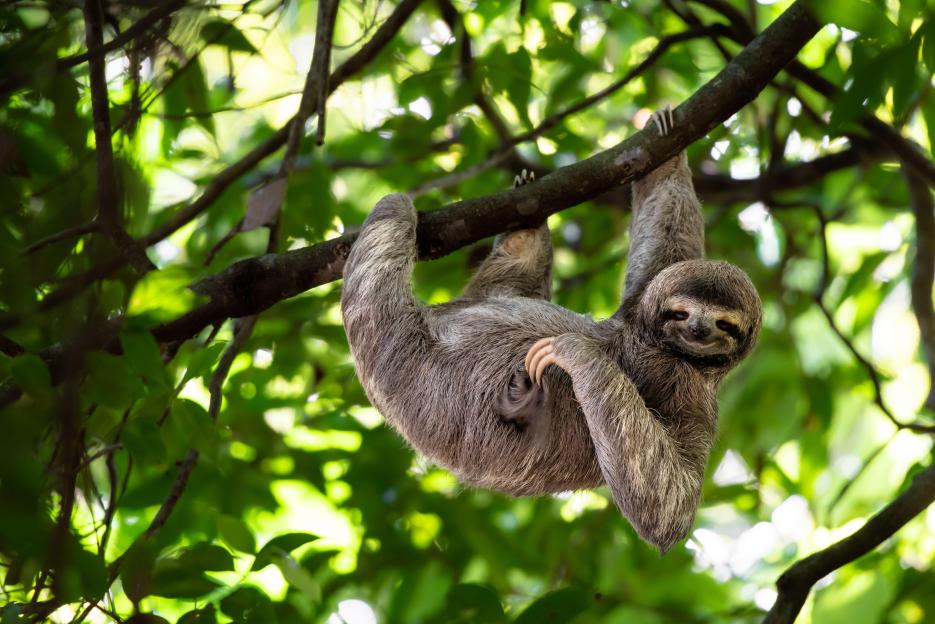
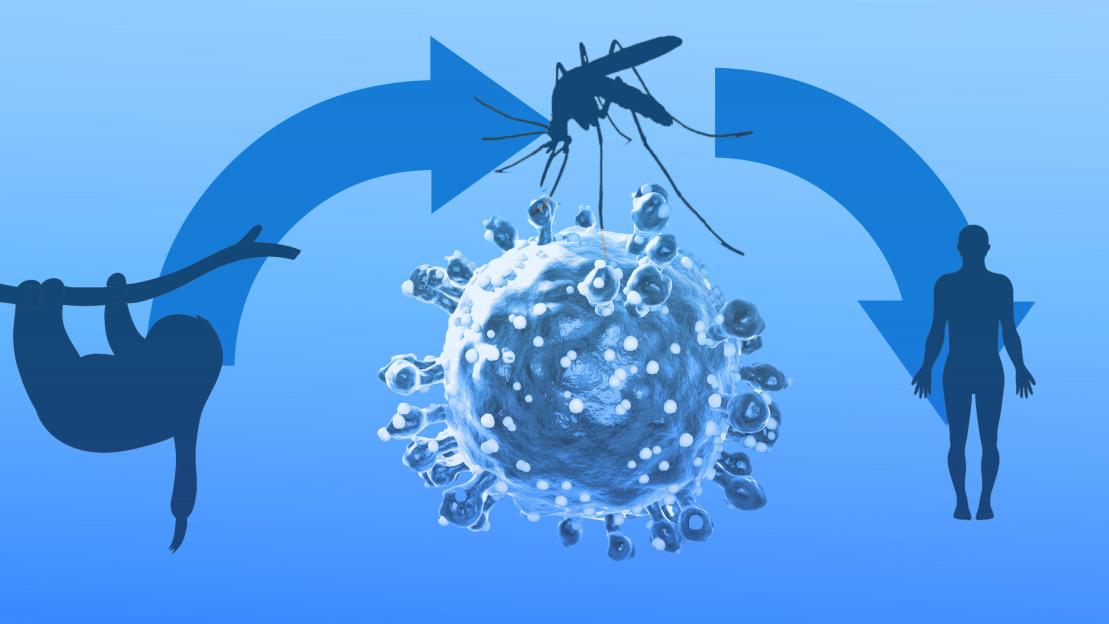
It typically circulates between primates, including sloths – hence the nickname – before it is occasionally passed to humans by the critters.
 Credit: PA
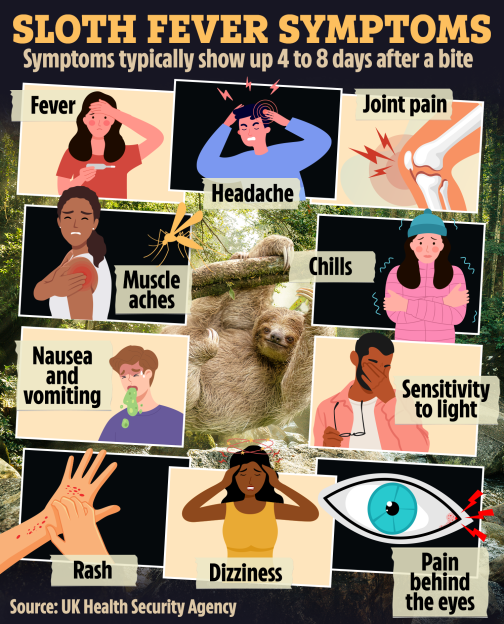
Though there’s currently no specific treatment against the disease, symptoms such as fever, muscles aches, dizziness and vomiting resolve after a week.
But some patients will see their symptoms return or develop neurological symptoms like or meningoencephalitis – a life-threatening condition where membranes surrounding the brain and spinal cord swell.
Birth defects have also been recorded in babies whose mums were infected with Oropouche while pregnant.
Historically, the disease was confined to the Amazon basin in South America, including Brazil, , , , , and .
But in 2024, cases were also detected in Cuba and Barbados.
That same year, – which officials believe were linked to travel to these two countries.
Oropouche also cropped up in the UK last year, with three people testing positive for it between January and June after visiting Brazil.
These are referred to as imported cases, versus autochthonous – when an infection or disease is acquired locally.
Research shows that Oropouche was also imported to , , , , the Netherlands, the US and in 2024 and 2025.
An estimated 300,000 people were infected between 2023 and 2024 in Manaus, the largest city in the Brazilian state of Amazonas, the new studies indicate.
This is nearly 260 times higher than the number of confirmed cases.
Researchers conducted blood sample analysis to identify Oropouche antibodies.
These are proteins produced after an infection, which would indicate someone has been infected with sloth fever.
According to the researchers, the prevalence of antibodies in the blood samples they tested increased from 11.4 per cent in November 2023 to 25.7 per cent in November 2024, indicating widespread transmission of the disease.
William de Souza, a professor at the University of Kentucky who also co-authored the study, said: “The capital of the state of Amazonas is a city with over two million inhabitants and is considered the gateway to the Amazon region.”
He explained that the “striking underreporting” of Oropouche cases probably occurred as “the virus circulated silently before reaching the outskirts of the urban centre, with many cases being asymptomatic or mild and going undiagnosed”.
This also helped the virus spread widely across all Brazilian states and into neighbouring countries, he added.
The researchers found that the Oropouche virus circulates continuously, though often at levels so low that it becomes nearly undetectable by standard surveillance systems.
Prof Módena said: “We identified two major Oropouche virus outbreaks in the Amazonian capital: one in the 1980s and one in 2023.
“Each one infected more than 12 per cent of the population.”
The 6 things all travellers must do to protect themselves from ‘sloth virus’
Dubbed a "mysterious threat" in the journal The Lancet, little is known about Oropouche as it is still an emerging disease.
But it is transmitted by biting midges and mosquitoes that have fed on sloth, monkey or bird blood, so avoiding bites can help keep you safe.
There are also five other .
1. Prevent bites
The number one thing you can do to protect yourself from Oropouche, as well as , and other viruses transmitted by insects, is preventing bites, according to the Centers for Disease Control and Prevention (CDC).
This means using , wearing long-sleeved tops and trousers, and staying in places with air conditioning or that use window and door screens and/or mosquito nets.
Avoiding strong perfumes, soaps, shampoos and deodorants can also help, the says.
2. Time it right
Anyone who has been to areas where Oropouche is present should continue to prevent insect bites for three weeks after travel, the CDC warns.
“This is to mitigate additional spread of the virus and potential importation into unaffected areas,” it adds.
3. Know the signs
Another major line of defence is being aware of the most common symptoms of Oropouche.
The CDC says these are a fever and , which usually begin three to 10 days after being bitten by an infected bug.
Other potential signs include muscle aches, stiff joints, nausea, vomiting, chills and sensitivity to light.
“Most people infected with Oropouche feel better within a week, but symptoms often come back,” the CDC adds.
4. Seek medical help
According to the CDC, travellers to areas with Oropouche transmission, including South America or the , who develop a fever, chills, headache, joint pain or muscle pain during or within two weeks after travel should:
- Seek medical care and tell their healthcare provider when and where they travelled
- Not take aspirin or other NSAIDS (e.g. ibuprofen) to reduce the risk of bleeding
- Continue to prevent during the first week of illness to avoid further spread, especially in areas where mosquitoes or biting midges are active
5. Plan ahead
Before jetting off, holidaymakers should discuss plans with their GP, CDC guidance states.
This should include their reason for travel, how to prevent insect bites, and all potential risks associated with travel.
The dangers of Oropouche during pregnancy are unknown, but experts say it acts similarly to Zika, which can be passed to unborn babies and cause miscarriages, stillbirths, birth defects, seizures, vision problems and hearing loss.
6. Avoid non-essential travel
Finally, if you are pregnant, you should reconsider non-essential travel to Brazil, Bolivia, Peru, Colombia and Cuba, the CDC says.
“If travel is unavoidable, pregnant travellers should strictly follow Oropouche virus prevention recommendations to prevent insect bites during travel,” it adds.
Researchers said the gunpowder midge, which spreads Oropouche through its bites, thrives in humid climates and “moist, rich soil” – meaning the disease is more common in rural rather than urban areas.
As a result, combating sloth fever is different to combating mosquito-borne diseases.
Prof Souza said: “Strategies such as fumigation in squares and on paved streets are likely to be ineffective against Oropouche.
“The gunpowder midge doesn’t live in household drains but rather in the humidity of forested areas and the vegetation on the outskirts of cities.”
The midges are also small enough to sneak through mosquito nets.
Prof Módena added: “The re-emergence of Oropouche shows us that we can’t combat all arboviruses with the same approach because the gunpowder midge doesn’t follow the same rules as Aedes [the mosquito that spreads dengue and Zika].
“That makes current surveillance against the Oropouche virus insufficient and drastically underestimates the true scale of the disease.”
He said surveillance must extend beyond major cities.
“Although long-term immunity appears to exist for those who have already been infected, the speed with which the virus has spread across all Brazilian states shows that the healthcare system needs new detection systems, including those focused on surveillance far from major urban centres,” the expert stated.
Until last year, experts didn’t think Oropouche could spread from person to person.
But a study published by Italian scientists in 2025 suggested it could spread in semen, sparking concerns about possible .
Scientists are currently investigating whether the infection can be passed on from mothers to babies during , after the .
For most people, Oropouche infections are mild, with symptoms typically showing up four to eight days after a bite.
While symptoms typically last less than a week, they can occasionally reoccur.
In severe cases, the virus can also attack the brain leading to meningitis or , which can be fatal.
It is estimated that fewer than four per cent of patients will develop neurological symptoms.
The first ever deaths linked to the virus were reported in Brazil in July 2024, where two people died.
There are currently no specific antiviral treatments or vaccines available.
Treatment for symptoms can include rest, fluids, and the use of medicines to reduce pain and fever.