
What Causes Dark Marks on the Back of My Hands and Arms? – Answers to Your Health Questions
DRY eyes might be bothering you more this season, thanks to the summer heat, dry air and air conditioning. It happens when the tear film breaks down and can get...
 Written byEze Chidiebere Paul
DRY eyes might be bothering you more this season, thanks to the summer heat, dry air and air conditioning.
It happens when the tear film breaks down and can get very uncomfortable, but it rarely requires a hospital trip.
 Dr Zoe gives you health advice
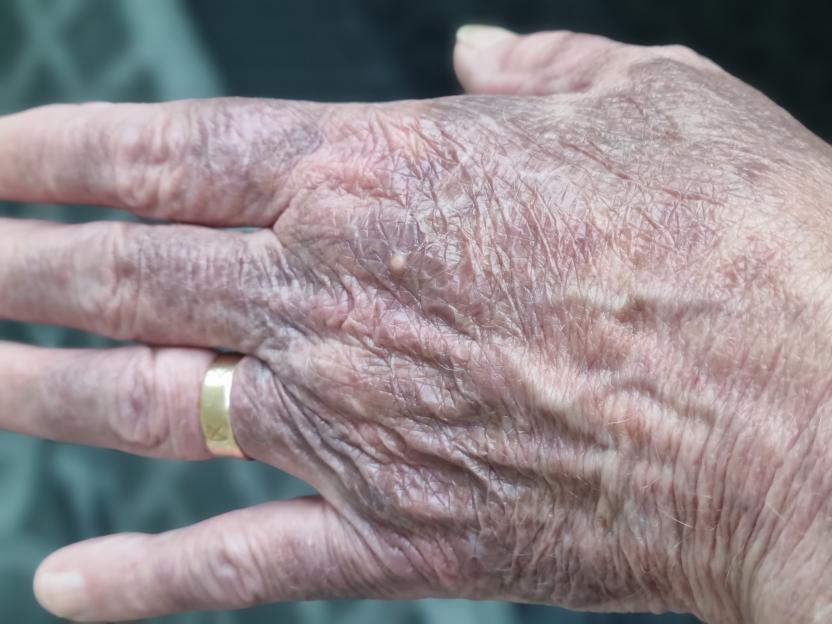 This week a reader is concerned about dark markings on the back of their hands Credit: Unknown
Data shows there are around 780,000 visits to A&E each year for conditions like dry eyes and conjunctivitis.
But almost half could be avoided if everyone had equal access to high street optometrists.
While a postcode lottery leaves many stuck, I would advise anyone to try and see a high-street optician, who can diagnose and treat you.
If cost is a barrier, check if you can get free eye tests – under-16s, over-60s and people with are among those who are eligible.
You only need an eye test every two years, the NHS says, unless you need to visit for symptoms.
Pharmacists can advise on over-the-counter eye drops or gels.
Here’s a selection of readers’ questions this week . . .
Q) WHY do I get very dark markings on the back of my hands and up my arms?
Some purplish blemishes are starting to appear on my legs as well. My skin tears easily on my hands and also bleeds badly.
A) Thank you for sending the photo, from which I can see the marks are very visible.
You don’t say your age, but one likely explanation for purple marks on the backs of the hands and arms is actinic purpura, sometimes called senile purpura.
It is a common condition, especially with age and long-term sun exposure.
Over time, the skin on the hands and forearms becomes thinner and more fragile.
The tiny blood vessels underneath can break after minor knocks – sometimes so minor that you don’t even remember them.
This can lead to dark purple bruising, fragile skin and tears that can be painful, take longer to heal and be hard to manage.
It often affects the backs of the hands and arms first, but similar bruising can appear on the legs, too.
However, because you say the marks are spreading and your skin bleeds for ages, I would advise booking in for a review.
Your doctor might want to check your medication list – especially aspirin, clopidogrel, warfarin, apixaban, rivaroxaban, steroid tablets or steroid creams, as these can make bruising or skin thinning worse.
They may also consider carrying out blood tests, including a full blood count, platelets, liver function and clotting tests, particularly if the bruising is increasing or appearing without injury.
To protect the skin, moisturise regularly, wear gloves for or housework, consider tops with long sleeves and treat skin tears promptly with gentle cleaning and a non-stick dressing.
Seek urgent medical advice if you start developing nosebleeds, blood in your urine or poo, black stools, widespread tiny red or purple spots, very large unexplained bruises or bleeding that will not stop.
Actinic purpura itself is not usually dangerous, but new or worsening bruising should always be checked by a medical professional.
FEEL HOT ALL THE TIME
I WAS given sertraline 14 weeks ago after losing my mum and, since then, I have been feeling rough all the time.
I understand that any medication may come with side-effects but I feel like I am hot inside all the time. I am 67.
My doctor, who didn’t seem to be aware of this symptom, has advised me to come off them by having one every other day for the first week, then one every three days for the second, then stopping.
Is this safe? I am awaiting the results of a blood test and also have anxiety issues.
I’m sorry to hear about the loss of your mum – it is understandable that your anxiety symptoms may worsen during this time.
Feeling hot inside, sweating more, suffering nausea, disturbed sleep, shakiness or feeling “wired” can happen to some people who are prescribed sertraline, which is a type of selective serotonin reuptake inhibitor.
Anxiety itself can also cause waves of heat, so it can be difficult to separate the medicine from the condition.
Some medicines, including SSRIs such as sertraline, can make people more vulnerable in hot weather.
They may increase sweating or affect your temperature regulation, so in the summer months, it is important to keep cool, drink regularly and seek medical advice if you feel unusually unwell.
You are right to have arranged blood tests, as feeling hot all the time can also be linked to infection, thyroid problems, blood sugar changes, anaemia, inflammation, dehydration, low sodium or other medication effects.
If your doctor has advised reducing sertraline gradually, then follow their instructions and don’t stop suddenly.
Coming off any medicine too quickly can sometimes cause dizziness, nausea, headaches, poor sleep, mood changes, anxiety or odd “electric shock” sensations.
Keep in touch with your GP while you are gradually reducing the dose, especially if your symptoms worsen or your anxiety becomes difficult to manage.
Make sure you seek urgent medical advice if you develop a very high temperature, confusion, severe agitation, muscle stiffness, diarrhoea, a racing heart, fainting, or feel seriously unwell.
IRON TABLETS ARE MAKING MY WIFE ILL
 One reader wants to know if there is an alternative to iron tablets Credit: Olga Pankova
MY wife has been put on iron tablets (ferrous fumarate 210mg) because she is anaemic, but they make her sick.
Is there an alternative, or a supplement she could take? She is a type 2 diabetic, for which she injects Trulicity weekly.
At the hospital, she had a capsule camera put in her body to look for bleeds, but they found none.
It is completely reasonable to ask about alternatives if the tablets make her feel sick. The priority is always to understand why someone is anaemic.
It sounds as though she has already had some bowel investigations, including a capsule camera, which is reassuring.
But if anaemia keeps returning, her GP may still want to review other causes, including diet, absorption problems such as coeliac disease, inflammation, kidney disease and whether any medicines could contribute.
Ferrous fumarate 210mg is a commonly prescribed iron tablet, but nausea, stomach pain, constipation, diarrhoea and vomiting can happen.
Taking it with food may make it easier to tolerate – although slightly less iron may be absorbed into the body.
Some people do better with a lower dose, taking iron on alternate days, or switching to a different preparation such as ferrous gluconate or liquid iron, so it is worth asking a pharmacist or your GP which option best fits her blood results.
Over-the-counter “gentle iron” supplements or iron sprays may be easier to tolerate, but they may not be strong enough to correct significant anaemia.
Diabetes and Trulicity are also relevant because GLP-1 medicines can cause nausea or upset stomachs.
If she cannot tolerate any oral iron, there are other options – including iron given by infusion – but this would usually be considered further down the line.
She shouldn’t simply struggle with feeling sick, though. Ask your GP to review the cause, dose and formulation.
‘SOCIALS HYPE AUTISM’
THE autism spectrum may be “too broad” as people self-diagnose via social media, a leading expert has said.
Professor Uta Frith said the definition has “widened” to include people with “milder traits” who do not have learning or language difficulties.
The scientist blamed social media hype and a craze for using medical labels to explain away “everyday life problems”.
She also warned the diagnosis explosion means severe cases risk being ignored or completely misunderstood.
Autism affects the way people communicate and experience the world, affecting thinking, learning, attention, and response to sounds, smells, tastes and light.
Some autistic people may have learning disabilities, while others may have above-average intelligence. Prof Frith added: “Today, anyone of any age or intelligence level can be diagnosed with autism if they meet certain criteria.
“Autism is no longer just a medical term – it has become part of popular culture.”
It is estimated that around one million people in the UK have autism, with roughly 240,000 on NHS waiting lists for assessment.
Reacting to the claims, Mel Merritt, head of policy and influencing at the National Autistic Society, said: “Autism is understood as a spectrum.
“Today we understand the spectrum to mean each autistic person has a unique combination of characteristics.
“Terms such as ‘milder traits’ may be misleading in reflecting the difficulties and impact of navigating daily life for so many.”
CANCER RISK CONCERN
 Young women considered at risk of breast cancer are not being detected by the NHS Credit: Guillermo Spelucin
UP to 95 per cent of young women considered at risk of are not being detected by the NHS, analysis suggests.
In England, women at a higher risk of the disease are referred by their GP for further assessment.
This is based on family history, and criteria set by the National Institute for Health and Care Excellence (NICE).
But, University of Cambridge researchers who analysed data from 1,258 women under 50, found that NICE criteria is missing up to 95 per cent of at-risk women who go on to develop the disease within ten years.
The experts used a new tool, called Boadicea, which identified eight times as many women.
It led to 26.5 per cent being classed as high-risk and referred for assessment, including almost 35 per cent of women under 50 who develop it within a decade.
Meanwhile, the current NICE criteria would result in 1.4 per cent women being referred for tests, including 4.4 per cent who go on to develop breast cancer.
Researcher Dr Juliet Usher-Smith said: “We need to get better at identifying women at the highest risk of breast cancer so that we can intervene early, when there are more options for preventing their disease.
“It’s time to look again at these criteria in the light of our findings.”
But NICE said “current evidence does not warrant a change to our existing familial breast cancer guideline at this time”.
In the UK, breast cancer is one of the leading causes of death in women under the age of 50.
TIP OF THE WEEK
ONE in ten people will be affected by kidney stones during their lifetime – and we sometimes see a peak at this time of year.
If you have a history of kidney stones, try drinking three litres of water a day with fresh lemon juice to prevent calcium crystals clumping together in your urinary tract.
Continue reading

I ballooned to 40st after spending £16k a year on takeaways – a free trick helped me lose 25st without jabs or surgery
HENRY Gonzalez feared he would be dead before 30 after his weight soared to almost 40 stone. At his biggest, he struggled to tie his own shoes, wore 7XL shirts...
Woman, 58, dies after overdosing on ‘addictive’ prescription & OTC painkillers – as GP’s warned ‘be alert’
A CORONER has issued a warning to GPs over prescribing large doses of painkillers taken by thousands of Brits following a woman’s death. Alison Thomas, 58, coll...

Conjoined twins, 2, attached at head since birth separated in gruelling surgery that took more than 24 hours
TWIN sisters joined at the head have been successfully separated following a gruelling 24-hour procedure. The crowns of 2-year-old twins – Hiyab and Wuhbto – w...

Mum, 34, who took her own life ‘said she was “better off dead” while waiting for ADHD assessment for over three years’
A MUM who took her own life said she was “better off dead” while waiting for an ADHD assessment for over three years, an inquest heard. Bethany Hewitt, 34, told...