A MUM who started getting rashes out of the blue initially blamed them on the stress of her divorce, but when her fingers turned “ghostly white”, she knew something more serious was going on.
Along with the rashes, Kristina Hamilton, 43, was experiencing sores, gut issues, joint pain and difficulty swallowing, but she put this all down to “stress and exhaustion”.
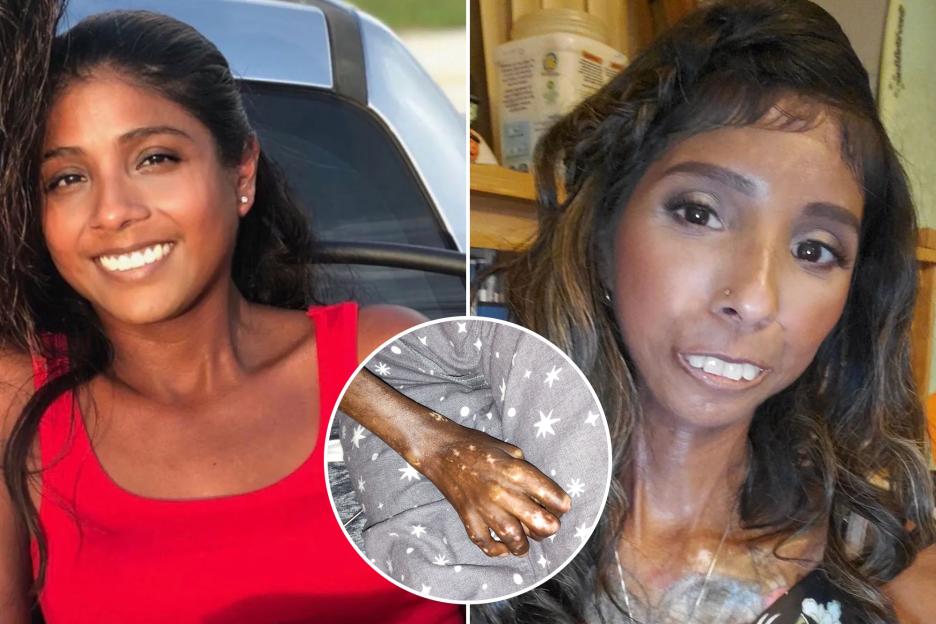
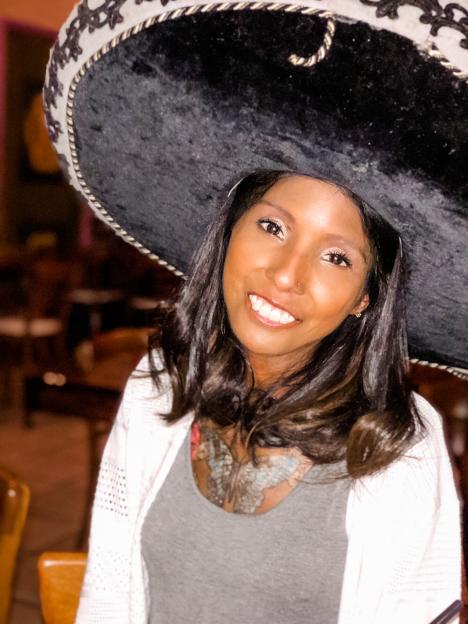 When Kristina first started feeling unwell, she blamed it on the stress of her divorce Credit: Jam Press
 But when the mum-of-three’s fingers started turning “ghostly white”, she knew something more serious was wrong Credit: Jam Press
The mum said: “Even when my body started changing, and the pain became harder to ignore, I still tried to push through it because that’s what I’ve always done in life.”
But when Kristina’s hands started to turn white, she realised her symptoms were a sign of something much worse than stress.
She was given the shocking diagnosis of diffuse systemic in 2022 and the mum-of-three is now unsure how long she has left.
The rare autoimmune disease causes hard, thickened areas of skin, along with problems with blood circulation and internal organs.
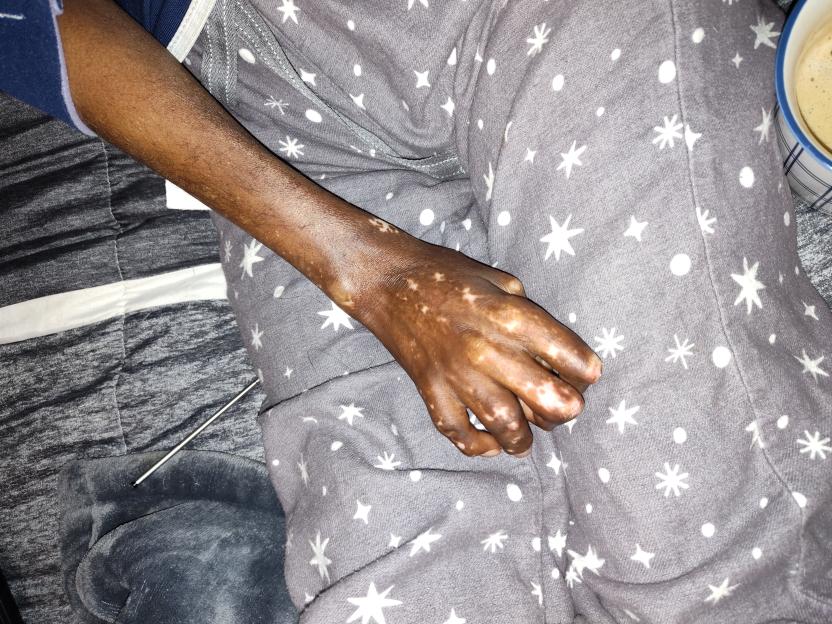 Kristina was sadly diagnosed with diffuse systemic scleroderma in 2022 Credit: Jam Press
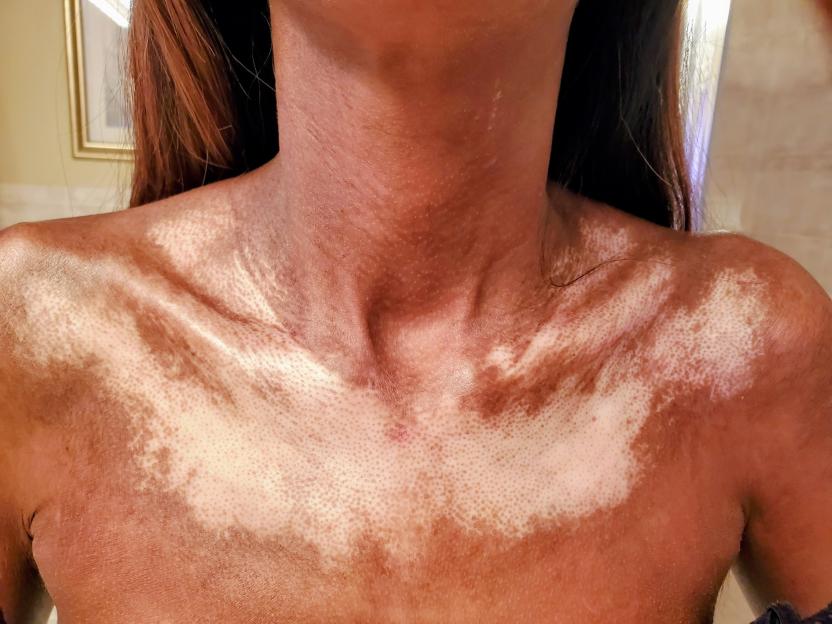 The rare autoimmune condition caused her skin to become discoloured Credit: Jam Press
Other symptoms include weight loss , fatigue, joint pain and stiffness.
It is thought that occurs because part of the immune system has become overactive and out of control.
This leads to cells in the connective tissue producing too much collagen, causing scarring and thickening of the tissue, the NHS says.
So, Kristina’s body is essentially attacking itself on a daily basis, including vital organs like the lungs, heart, kidneys and gastrointestinal system.
When Kristina, who lives in Florida, US, started developing symptoms of the condition, she said she “didn’t want to believe something serious was wrong”.
She was going through a tough , raising three kids and working a full time job.
“But, deep down, I knew something didn’t feel right,” Kristina said.
Speaking about her diagnosis, she said: “In medical terms, what I’ve got is a rare and chronic autoimmune disease. In my terms, it’s a glitch in the system.
“The clinical definition doesn’t come close to capturing the reality of living with it. I had no idea what the condition meant for me – until it started to steal my life.
“As things got worse, I became scared and confused. I remember looking down at my hands when they started to turn white and feeling confused because I had never seen anything like it before.”
Kristina continued: “I tried to convince myself it was poor circulation or maybe I was just cold. They didn’t feel like my own anymore.
“And then when my started falling out, it was devastating.
“I felt like I was losing parts of myself piece by piece. Every time I looked in the mirror, I saw someone I didn’t recognise anymore.”
She says the condition has stiffened her joints into “stones”, making previously simple every-day tasks practically impossible now.
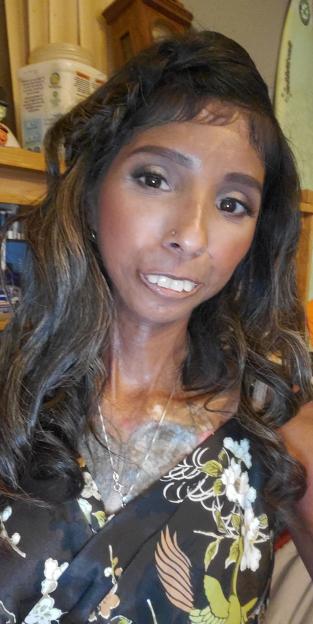 The condition also caused Kristina’s teeth to fall out and loss a lot of weight Credit: Jam Press
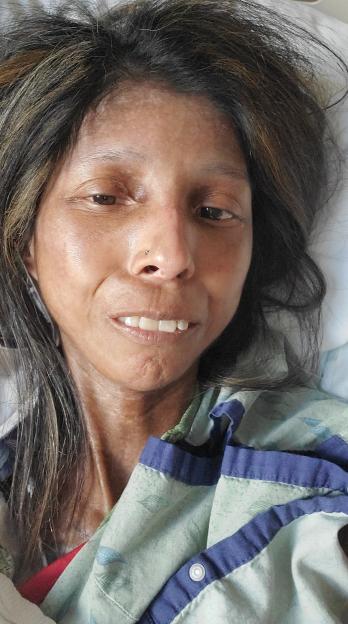 The mum has been upset by the way people look at her and treat her differently now Credit: Jam Press
Kristina said: “My hands, once capable of providing medical care to others, began curling into a claw-like position.
“They were frozen and painful. I’ve watched helplessly as my weight has dropped to the point where I look like a skeleton.
“When my appearance began to change, I noticed people reacting differently to me.
“Some stared without realising, while others looked away quickly because they didn’t know what to say.”
She added: “There were moments that hurt deeply; whispers, uncomfortable looks and even comments that made me feel self-conscious about changes I couldn’t control.
“I’ve had people assume I was contagious and speak about me with pity instead of understanding.
“It’s been painful, because behind the disease, I’m still the same person. I’m a mother, a wife, a friend and someone trying to live life fully.”
It is not clear what causes diffuse systemic scleroderma, though it is believed to be linked to a genetic issue that has been triggered – by stress, trauma or illness – to “wake up”.
Kristina doesn’t think she was born sick, but she thinks the disease has been “lying dormant for years”.
She said: “There have been challenges with chronic fatigue, pain, mobility, daily tasks and adjusting to a body that sometimes feels unfamiliar to me.
“Beyond the physical changes, there has been anxiety and grief for the life and appearance I once knew. It’s made me feel isolated.
“And financially, it’s been overwhelming. Everything adds up quickly, especially as I can no longer work.”
Sadly, as there are only 100,000 cases globally, there’s little to no research and so there’s no cure.
Kristina said: “Learning this was incurable was one of the most devastating moments of my life.
 Kristina said that learning her condition was incurable was “one of the most devastating moments” of her life Credit: Jam Press
 What is scleroderma?
Scleroderma is the name for a range of conditions that affect your immune system (autoimmune conditions) and can cause hard, thickened areas of skin and sometimes problems with muscles, bones, internal organs and blood vessels.
The two main types of scleroderma are:
- localised scleroderma (morphoea) – this mostly affects the skin but some types can also affect tissues under the skin, such as muscle and bone
- systemic sclerosis – this may affect blood circulation and internal organs as well as the skin
Some types may eventually improve on their own, while others can lead to severe and life-threatening problems.
Although there’s no cure for scleroderma, symptoms can usually be managed by a range of different treatments.
Everyone’s experience of scleroderma is different.
Symptoms of diffuse systemic scleroderma are:
- weight loss
- fatigue
- joint pain and stiffness
- breathlessness
- high blood pressure
- hypertension
Common treatments for scleroderma include:
- medication to improve circulation
- medicines that reduce the activity of the immune system and slow the progression of the condition
- steroids to relieve joint and muscle problems
- moisturising affected areas of skin to help keep it supple and relieve itchiness
- various medicines to control other symptoms (such as pain, heartburn and high blood pressure)
- You will also need regular blood pressure checks and other tests to check for any problems with your organs
Source: NHS
“It felt like the ground beneath me disappeared. And then I was told it was life-threatening. It was the hardest reality to face.
“As it affects the vital organs, it’s unpredictable what damage it’s doing.
“I’ve had to confront fears I never imagined having at my age, such as leaving my children and husband too soon.”
Kristina met her now husband, Chris, 44, just before her diagnosis and he proposed in May 2024.
In April 2025, Wish Upon a Wedding – a which works by granting this wish to those with terminal illnesses – gave them the to get married.
She said: “At that point in my life, I was carrying so much uncertainty.
But they turned what could have been a really stressful time into one of the most beautiful and unforgettable moments of my life.”
Now, as it’s unclear how long Kristina has left, she’s looking toward the future with gratitude and hope.
She said: “Along with daily medications and four monthly infusions, it’s hoped that progression is slowing down.
“As long as I am breathing, I’m still healing.
“And, most of all, I’m still standing.”