GCSE results day is coming up fast.
Whether heading to , , or an , these grades set the stage for you or your teen’s next big move.
 GCSE results day is coming up soon Credit: Alamy
 A numbered system replaced the lettered GCSE grades between 2017 and 2020 Credit: Alamy
Why are there numbered GCSE grades?
First rolled out in 2017 and fully phased in across all subjects by 2020, the 9–1 numerical system was introduced to clearly separate top performers.
Modern GCSE content is significantly more challenging. (the Office of Qualifications and Examinations Regulation) designed the 9–1 scale around what it calls “demanding and fulfilling content.”
Grading varies across the UK: England uses the 9–1 numerical scale, Wales uses A*–G letter grades, Northern Ireland uses a system combining both, and Scotland operates its own GCSE equivalent – National 5 qualifications graded A–D.
What is a pass now?
A Grade 4 is set as a ‘‘ for a GCSE examination. It is comparable to an old low C grade.
A Grade 5 is a strong pass, the equivalent of between a B and C.
Note: If you do not achieve at least a Grade 4 in GCSE English Language or Maths, government rules require you to resit these subjects in sixth form, college, or during an apprenticeship until you pass.
What are the letter equivalents of the GCSE grades?
Here is what the number grades mean in order from lowest to highest:
- U: ungraded / unclassified
- 1: a low F or G
- 2: an E or high F
- 3: a D or low E
- 4: a standard pass, a C equivalent
- 5: a strong pass, equal to between a B and C
- 6: a high B
- 7: an A
- 8: between an A* and A
- 9: higher than an A*
Keep in mind that grade boundaries change slightly every year based on overall cohort performance and are published on the morning of results day.
When is GCSE results day?
In 2026, is Thursday, August 20.
is the earliest time results can be released.
Every school handles it differently; some hand out printed slips, some have online portals, and others use email correspondence.
Can you challenge a GCSE grade?
Yes, you can request a .
A review is not a fresh re-mark of the paper, but it checks whether the original mark scheme was used accurately and corrects any marking errors.
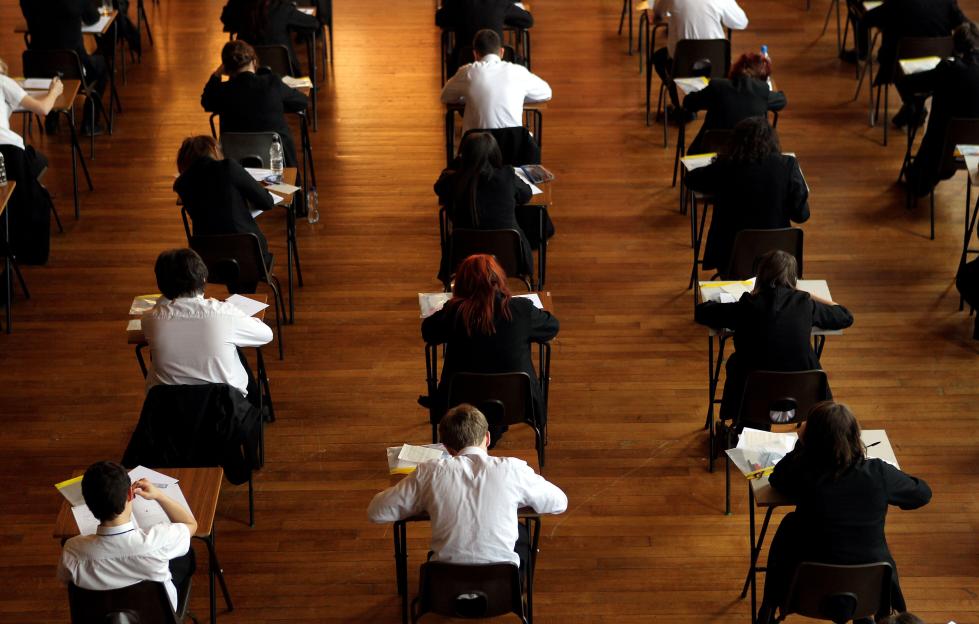 Students can request a review of their GCSE exam Credit: Alamy
If you are at a school or college, then that institution will need to request the review, so make sure to speak to staff first.
Before requesting a review, you can ask your school to download your marked paper for free using the exam board’s “Access to Scripts” service so a teacher can check for marking errors to determine if a review is worth the financial and mark-reduction risk.
A review can cause a mark to go down as well as up, so there is some risk in the request.
Reviews can be requested from results day onwards and the last date for exam boards to receive them is Thursday, September 24, 2026.
The cost is £44.85 to £67.75 depending on the specific exam board.
If your grade does change, the exam board fee is completely refunded.
A review of marking is Stage 1. If you and your school still believe an error remains after the review, your school can submit a formal Stage 2 appeal to the exam board.