KITCHEN fires are a daunting occurrence that can happen to anyone.
The risk of a fire starting on your stove, in your oven, or other cooking surfaces is always present regardless of whether you’re a culinary whizz or an amateur chef who occasionally dabbles.
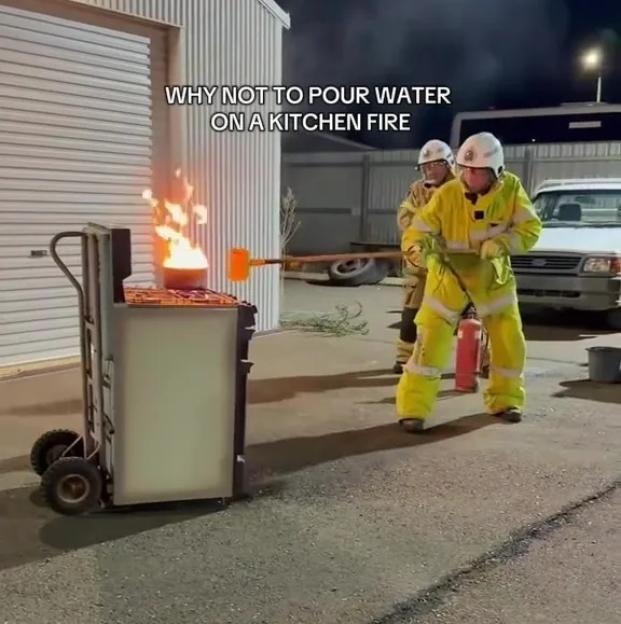 The crucial mistake, which can cost lives, is attempting to douse the grease fire with waterCredit: tiktok/@dfes_wa
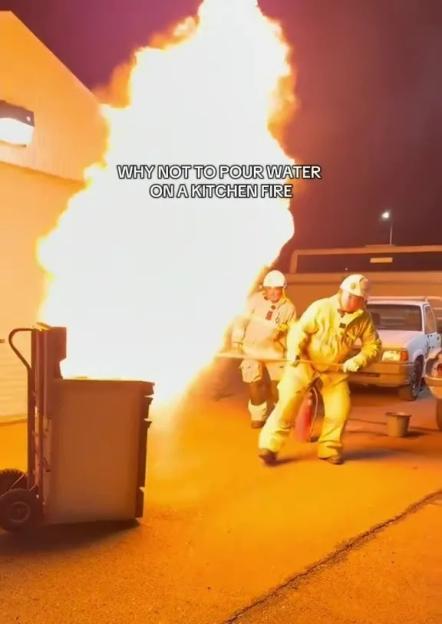 The jaw-dropping fireball, more than twice as high as the firefighters, spread rapidlyCredit: tiktok/@dfes_wa
In the 12 months up to March 2025, there were approximately 142,494 fires that had to be dealt with in the UK, the Home Office reported .
A key finding about the data is that the most common cause of accidental dwelling fires is cooking appliances. accounted for 44% of all the accidental dwelling fires in the year to March 2025.
The UK also still had a taste for fried food, as chip/fat pan fires accounted for 1,182 fires in the year ending March 2024.
Grease fires are notorious for their ability to escalate rapidly – and while your first instinct might be to use water to fight it, a viral video has shown why you should never do it.
The Department of Fire and Emergency Services (@ dfes_wa ), from Australia, shocked social media users after showing how these fires become more dangerous when, in panic, someone uses water to put it out.
In the clip , which has since racked up a whopping 5millions views, the firefighters could be seen approaching a stove with a burning pot on it.
To attempt to tackle the fire, the experts used a relatively small amount of water – but just milliseconds later the kitchen fire turned into a “massive” blaze.
The , more than twice as high as the firefighters, spread rapidly – and this could have fatal consequences if it was a real-life scenario.
The crucial mistake, which can cost lives, is attempting to douse the grease fire with water.
This, the experts at Element Fire explained , is because the water will instantly vaporise upon contact with the scorching temperatures of the fire and expand instantly.
“This propels the burning grease into the air and will cause the fire to spread dramatically,” they warned.
“The small is now an explosive inferno that can lead to more severe fire injuries or even a full-scale house fire that you can’t control.”
When a grease fire starts, the steps you take right away can make a huge difference.
Staying calm is probably the hardest thing to do when faced with such a situation – however, panicking can impair judgment.
If you feel like it’s safe enough to reach the controls without risking injury, turn off the burner or heat source – but do not attempt to remove the pan, as this could only spread the fire.
If you don’t have a kitchen at hand, the experts advised to use a metal lid over the flame to deprive it of oxygen.
“Ensure the cover is large enough to cover the pan completely. Using a glass lid is risky as it can shatter from the heat so avoid those. Don’t open the cover until it has cooled to prevent reigniting,” they emphasised.
In the informative clip, the firefighters also shared another solution – using a damp towel to cover the pot.
They explained in the comments: “The safest and most effective way to put out an oil or grease fire is to turn off the heat and use a fire blanket.
“If you don’t have one, carefully slide a lid over the pan or use a damp towel large enough to smother the fire.”
If you cannot safely put out the fire, leave the kitchen immediately, close the door behind you, evacuate everyone and call 999.
Do not attempt to re-enter the building until it is declared safe by fire officials.
Fit smoke and heat alarms
Shockingly, a quarter of Britain’s homes do not have a smoke alarm, according to research.
The study of 2,000 homeowners also found 27 per cent do not have a carbon monoxide detector installed, and 41 per cent of those who do fail to test the battery annually.
But smoke and heat alarms save lives every year.
As recommended by GMFRS, you should fit a minimum of one smoke alarm on every level of your home, preferably in the hallway.
Fit additional alarms in others rooms which are regularly inhabited and where there could be a risk of a fire starting.
Your kitchen should also have a heat alarm to help keep you save.
The GMFRS also urge to test the alarms at least once a month – you can do this by pressing the test button until the alarm sounds.
Source: GMFRS .