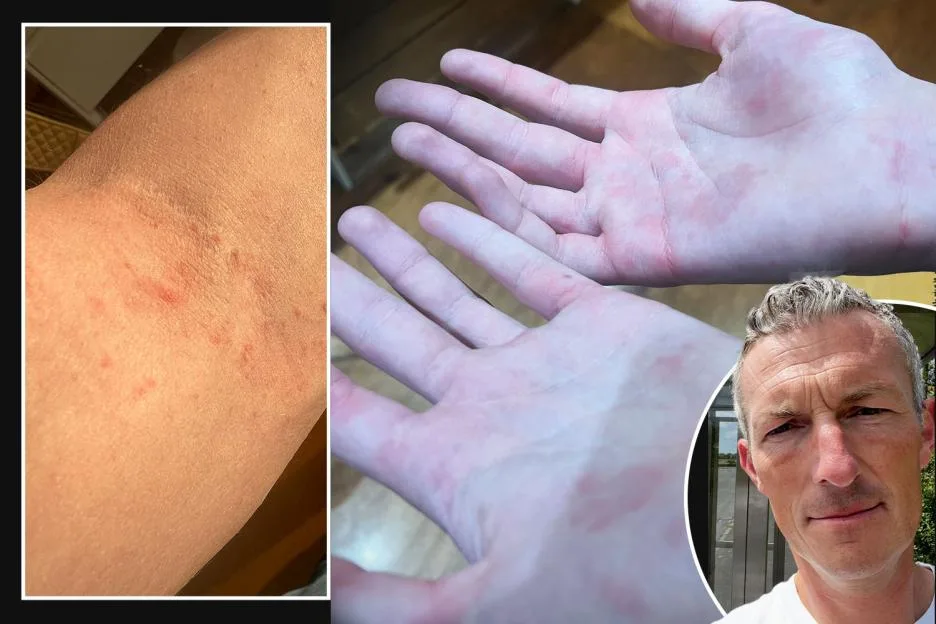
AS autumn temperatures plunge and families huddle indoors, I fear the invisible bug that quietly invades homes – as well as schools and university dorms – that rocked my family home for weeks on end.
It started one October evening, when my 15-year-old son got a rash. Before long, we were all confined to bedrooms, unable to hug or kiss, unable to , and desperately hoping the would work.

has been on the rise in the UK for years. This year, there has been an unusually high rate of cases seen in with incidences already well above the five-year average in 2026, according to data from the Royal College of General Practitioners.
Last week, a major hospital, the two of its wards to visitors to control an outbreak.
Another hospital, Glangwili Hospital, was over the in order to manage an outbreak.
Cases were also confirmed at a college in last year, while reports suggested five had to shut due to suspected outbreaks.
“Scabies spreads easily through prolonged skin-to-skin contact,” says Professor Tess McPherson, from the British Association of Dermatologists.
“This can occur between between family members, sports teams, students in shared accommodation and residents of care , any setting where people live together.”
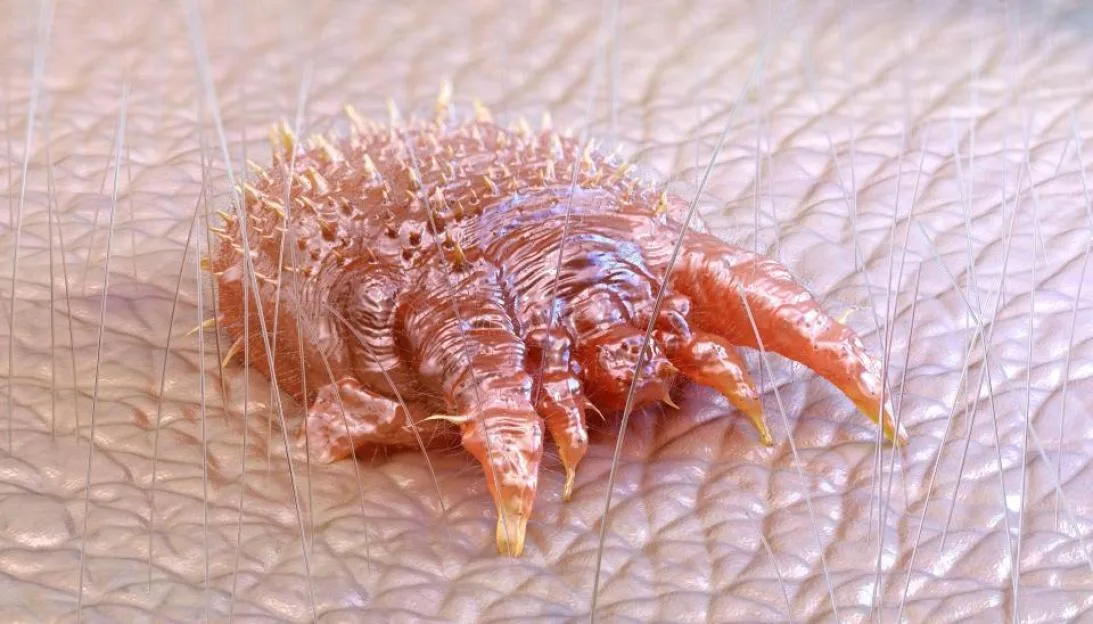
Microscopic mites that cause the condition are , as we all begin to spend more time indoors, nights draw in and temperatures fall.
Once on the skin, the mites, which are smaller than a pin head, burrow down and lay their eggs, causing a spotty rash and bouts of intense itching.
The female lays around 25 eggs and then dies, with those eggs developing into adults in 10-15 days.
Because the mites can’t be seen with the naked eye, it’s important to on the skin.
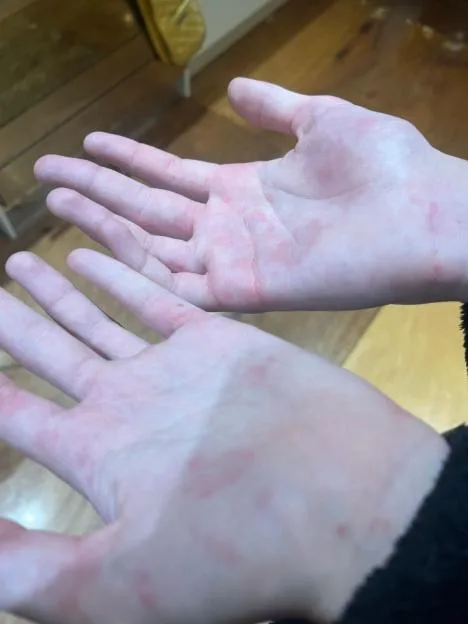
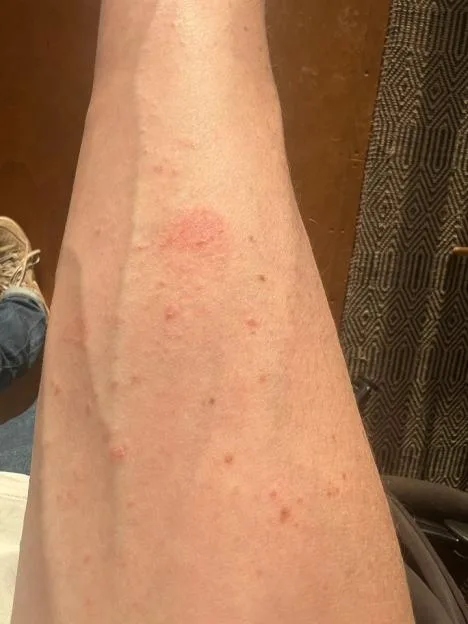
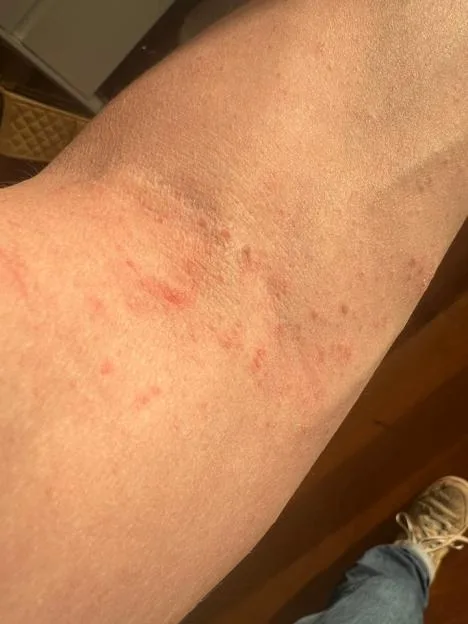
At first, the spotty rash is easy to dismiss as an allergic reaction, but the itching that accompanies it is the true tell-tale sign of scabies.
It was the first symptom that alerted me to the fact that my family had been infected in October 2025.
My 15-year-old son was reduced to tears as he scratched away at his groin, one of the areas of the body most commonly affected by the mites.
The scabies rash usually affects the skin between the fingers, the wrists, under the arms, and around the waist, groin and bottom.
You don’t have to wait for a appointment to get diagnosed. A trip to the identified his condition straight away from the red spots on his hands.
In my son’s case, the pharmacist was even able to identify the silver-coloured burrow lines, which appear as the female mites tunnel into the skin to lay their eggs.
We were told that the whole family would have to be treated at the same time even though we did not have symptoms – yet…
“If all close contacts aren’t treated at the same time, scabies can continue to pass between people,” says Professor McPherson.
“This means someone who has completed treatment may become reinfested through contact with someone who hasn’t yet been treated.
“Even if someone has been infected, symptoms can take weeks to appear, so coordinating treatment at the same time helps to break this cycle and prevent further spread.”
Treatments come in two stages. First, a whole-body cream, called permethrin, available over-the-counter from a pharmacist.
If that doesn’t work, you’ll need an oral called ivermectin via a GP prescription.
Within 24 hours of starting either treatment, you are no longer considered contagious, but it’s important not to have close contact with anyone for that first day.
guidelines say that you can go back to work or school as soon as everyone has started treatment, but advise avoiding close contact with other people for the first 24 hours.

Thankfully, all our treatments started at the weekend, so no one had to take any time off school or work.
You repeat the treatment after a week, to boost the chances of it working.
The over-the-counter cream needs to be meticulously applied to ensure nowhere on the body is missed and then rubbed in thoroughly.
It has to stay on the body for up to 12 hours to be effective, before it’s washed off – not entirely pleasant, especially for children.
On the first day of treatment, you need to or clothing at 60C or higher, and if possible, spun in a hot dryer.
This helps ensure the mites are killed off, which made for a very busy laundry day in our household.
Anything that we couldn’t wash at this temperature had to be stored away in its own sealed bag and left for three days, as the mites can’t survive for any longer than that when off the body.
After this, it could be washed at normal temperatures.
The same rule applied to footwear, and even cuddly toys, anything that could harbour the mites.
It meant our regular family movie nights were abandoned for the weekend, as mites can survive for a time on soft furnishings, like sofas, then start living on skin again.
While the treatment ran its course, everyone was largely confined to their rooms for the weekend.
By this stage, I’d become paranoid about how contagious the mites were.
When usual hugs and kisses became exchanged for virtual hugs, it felt like we were back in dreaded times again.
I thought we’d followed treatment to the letter.
So I was horrified to see that a week later, a rash had developed on my arms.
My daughter, until now unaffected, also had a rash appear on her hands.

How to treat scabies
If you or someone in your family has scabies:
- Wash all bedding and clothing in the house at 60C or higher, and if possible in a hot dryer, on the first day of treatment
- Put clothing that cannot be washed in a sealed bag for at least three days until the mites die
- Do not have sex or close physical contact until you have completed the full course of treatment
- Do not share bedding, clothing or towels with someone with scabies
A pharmacist will be able to give you a cream or lotion that you apply over your whole body, including your scalp and face.
You’ll need to repeat the treatment seven days later.
Everyone in your home needs to be treated at the same time, even if they do not have symptoms.
But do not use pharmacy treatments on children under two years old, they will need to see a GP.
Adults and children aged five years or over can go back to work or school as soon as they have started treatment.
It’s important to avoid close contact with other people for the first 24 hours.
Children under five years old can go back to nursery or pre-school 24 hours after the first treatment.
Although the treatment kills the scabies mites quickly, the itching can carry on for a few weeks.
See a GP if:
- Your child is under two years old and has symptoms of scabies or someone else in your household has scabies
- You have scabies and think your skin may be infected or you have another skin condition, such as eczema
- You have a crusted, flaky rash on your elbows, knees, hands or feet
- You’ve used pharmacy treatment for scabies and your skin is still itching two to four weeks after treatment has finished
Source: NHS
The GP confirmed there had been reinfection – the first line of treatment hadn’t worked and now we were all suffering the dreaded itch.
We were prescribed oral ivermectin and, once again, avoided close contact for 24 hours and blasted all the laundry in a hot wash.
The thought of mites burrowing into your skin and laying eggs is unpleasant enough and it’s one of the reasons we kept this hush from the youngest member of the family.
But the worst part is the intense itching that becomes so much worse at night.
“This may be linked to increased mite activity and the skin becoming warmer under bedding, which can make the itching feel more intense,” says Professor McPherson.
This had a huge impact on our lives, as nights of broken sleep took their toll on the school and work day.
Everyone was waking up exhausted and the children were falling asleep in their lessons and unable to concentrate.
Even after treatment, the itching often continues for up to four weeks as the immune system reacts to the dead mites and their faeces, which break down under the skin.
It took another course of ivermectin and a huge amount of organisation for my family to finally break the dreaded cycle of infection and reinfection.
But I’m determined not to let the miserable condition take hold again, which is why I’m nervous about every little scratch and itch as October comes around again.