BLOOD tests to detect cancer will be given to thousands of Brits aged 45 and over who are suffering from “vague symptoms”.
People who have visited their with abdominal symptoms such as persistent bloating or discomfort will be given the tests as part of a new trial.

Called STRIDE-RCT, the trial will see more than 20,000 NHS patients from 200 GP surgeries given the blood tests in a bid to detect in its earliest stages.
Scientists say the blood tests can pick up signals in the blood to indicate whether a person needs further for suspected cancer.
The aim of the trial is to catch cancer cases earlier and reduce unnecessary referrals to hospital for invasive tests.
Work so far suggests that the blood tests – of which there are three different types – could be used to pick up signs of , ovarian, lung, pancreatic, liver, bile duct and .
The trial is backed by the National Institute for Health and Care Research (NIHR) and will help to determine whether the tests should be rolled out across the NHS.
So, who will be eligible?
The tests are designed to catch cases of abdominal cancer, so patients aged 45 and older who visit their GP with abdominal symptoms will be invited to participate.
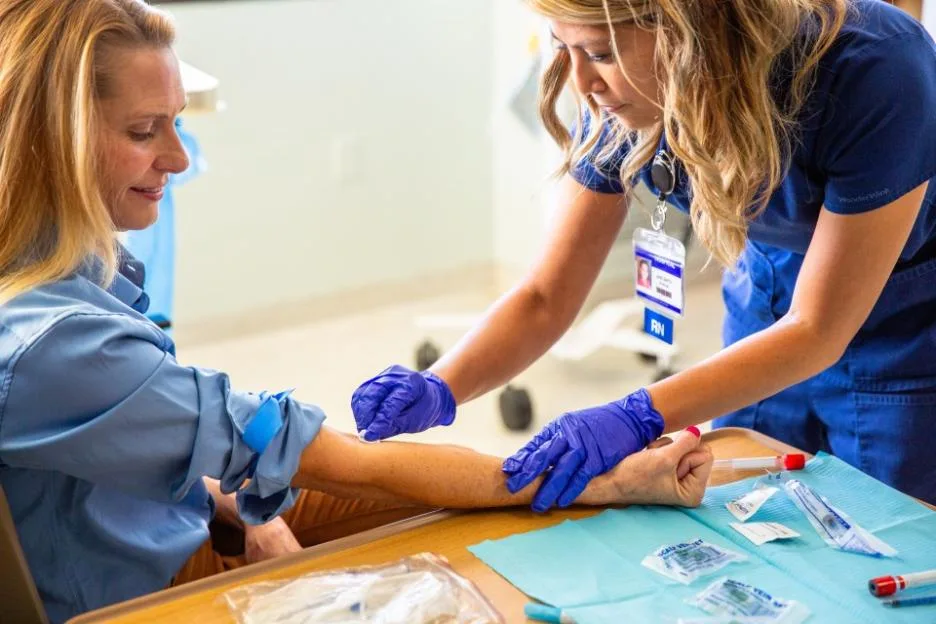
They will have one or two tubes of blood drawn at their surgery during routine blood tests.
A positive result will guide GPs on whether an urgent referral is needed, although it isn’t a standalone cancer diagnosis.
Around 71,000 people receive a diagnosis of bowel, stomach, liver, pancreatic, or in each year and these cancers cause nearly 35,000 deaths annually, the NIHR says.
Abdominal cancers are notoriously difficult to detect because symptoms, such as persistent bloating or stomach discomfort, may be brushed off as non-serious illnesses.
This means that many patients receive a diagnosis too late.
The three blood tests being used in the trial are called the Enlighten test, the PinPoint test and the Halo test.
It’s possible that further tests will be added at a later date.
Once blood has been taken, , tumour detection and blood protein measurements will all be used to search for signs of multiple cancers in a single sample.
Results from the test are then returned to the GP with a red, amber, green system to recommend what happens next.
Green suggests low risk (rule-out), amber is average risk, meaning continue with standard assessment and red is high risk, which should be prioritised.
Speaking about these new tests, secretary said: “The earlier cancers are diagnosed, the more chance they can be successfully treated, and lives can be saved.”
Meanwhile, Professor Peter Johnson, NHS national clinical director for cancer, said: “We are at the start of revolution in cancer diagnosis, and this trial will help us to find out whether blood tests can help GPs get the right patients to the right tests sooner, supporting earlier diagnosis when treatment is most likely to be successful.
“It is vital that we gather the evidence about these new technologies and I am grateful to everyone taking part in this research.”
Michelle Mitchell, chief executive of , welcomed the trial and said its findings will be “valuable in guiding further research”.
She said: “GPs have long needed better tools to help them navigate that uncertainty by identifying which patients require further testing and this trial in England is an important step towards addressing that need.”