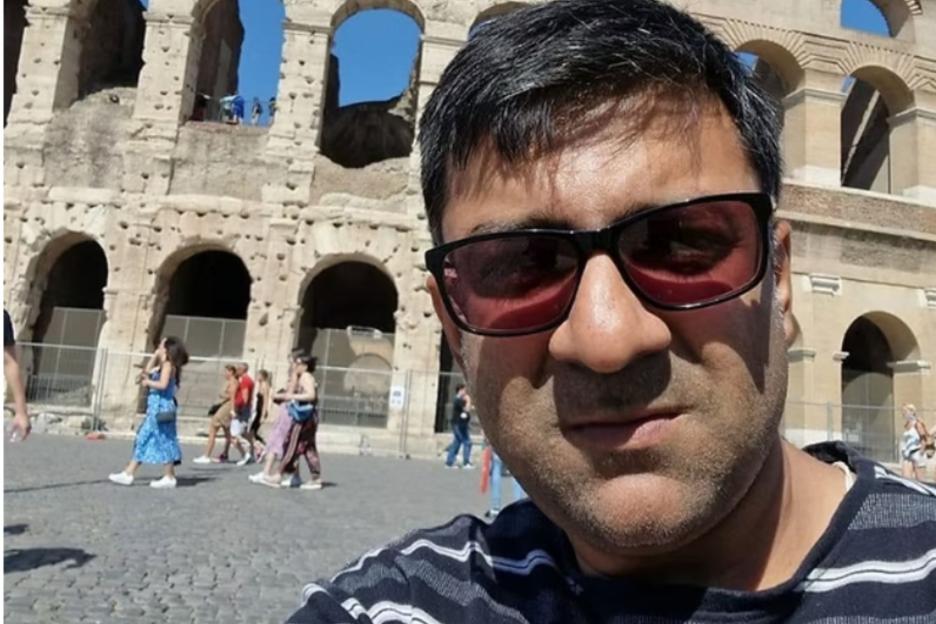
A DAD who was repeatedly misdiagnosed with sinusitis tragically died from a rare bleed after medics failed to refer him for an emergency CT scan, an inquest heard.
Shre Chatterjee, 44, spent eight weeks trying to get treatment after developing a “sudden and severe” on August 14 2023, before passing away in October.
When Shre went to the doctors on August 16 complaining of neck ache, he was told he had “probable front sinusitis” – a .
But an inquest into his death heard that his symptoms were actually a sign of a subdural haemorrhage, a rare type of brain
bleed for someone of his age.
As the weeks went on, Shre experienced blurred vision, memory loss and became unable to work, but he wasn’t referred to A&E or for a CT scan.
Rosamund Rhodes-Kemp, area coroner for Hampshire, and Southampton, said that there were numerous missed opportunities to refer him for emergency care.
In a Prevention of Future Deaths report, she concluded that if Shre had been seen by a doctor face-to-face sooner, “then the seriousness of his condition would have been diagnosed more swiftly and he was likely to have survived”.
Between August 16 and 23, Shre saw numerous practitioners in urgent care and was prescribed several different medications for his head and .
 Shre Chatterjee sadly passed away in October 2023 after being repeatedly misdiagnosed with sinusitis Credit: Essex News & Investigations
 The dad developed a sudden and severe headache, which turned out to be the sign of a rare brain bleed Credit: Essex News & Investigations
By September 4, he had sent an email to his and booked an appointment for over a month later.
But before this appointment came around, Shre called 111 on September 25 saying he had been experiencing for over two weeks and was advised to make an appointment with his GP.
That same day he had a call from an out-of-hours practitioner where he mentioned that he couldn’t drive anymore and he was again urged to see his GP as soon as possible.
A few days later he had a physiotherapy appointment for his neck pain and a healthcare worker recorded that he had a headache, memory loss, blurry vision and was sleeping much more than usual.
Then on October 1, Shre called 111 again and described all these symptoms to them, as well as saying he couldn’t work.
An out-of-hours doctor told him that he needed a scan for reassurance but that he had to contact local services for this.
October 6 was the date that Shre was meant to have his first GP appointment, but it was cancelled due to GP sickness and rescheduled for October 10.
But on this day, Shre became , so his wife called him an ambulance, which arrived at 4am.
Paramedics, however, were reassured by his 10am GP appointment that morning, so did not bring him to hospital.
This appointment was over the telephone and the doctor ended up speaking to Shre’s wife as he was asleep, which resulted in a referral to a neurology department for an appointment that same day.
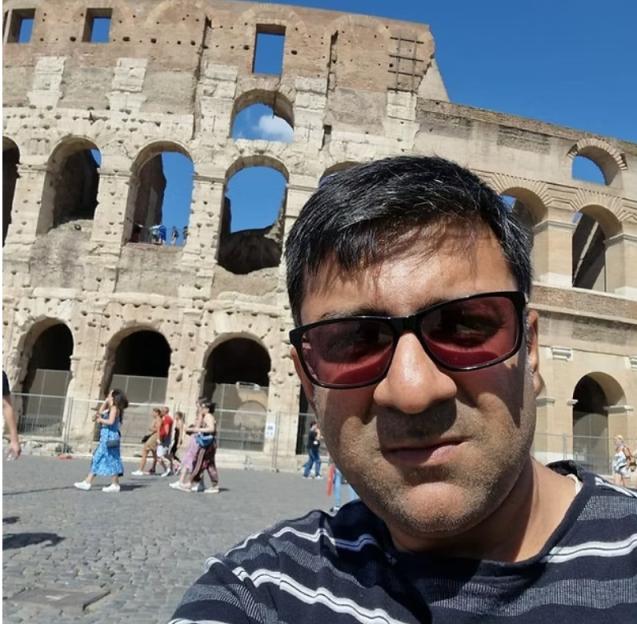 Over the course of eight weeks, Shre experience head and neck pain, blurred vision and memory loss Credit: Essex News & Investigations
 What is a subdural haematoma?
A subdural haematoma is bleeding inside the brain, usually caused by a head injury.
The symptoms may start straight away, or come on gradually over a few weeks.
Symptoms of a subdural haematoma include:
- a bad headache that does not get better after taking painkillers
- feeling and being sick
- confusion and memory problems
- changes in personality, such as being unusually aggressive
- drowsiness
- slurred speech and problems with swallowing
- problems with vision, like blurred or double vision
- loss of balance and having falls
- having problems moving one side of your body (paralysis)
- seizures (fits)
- loss of consciousness – the person affected may not respond when you talk to, or touch them; this may just last for a few moments or could be much longer
Source: NHS
But by the afternoon another ambulance was called for Shre and he was taken to hospital as he vomited and was found unresponsive at home.
It was only then that a CT scan was done, revealing that he had an acute chronic subdural haematoma – a.
Two days after this, on October 12 2023, Shre sadly died in hospital due to the bleed.
Discussing the case, the coroner said: “When by 25th September Shre Chatterjee described worsening red flag symptoms such as visual disturbance, there was a missed opportunity to refer him to A&E for a CT scan.
“Again, on the 1st of October when, in addition to his other symptoms, he reported memory loss there was a further missed opportunity to refer him to A&E for a CT Scan.
“There was a final window closed to him in the early hours of 10th October when the ambulance crew did not convey him to hospital.
“Had he been taken to hospital on 25th September or 1st October a CT scan would have been arranged, surgery performed and on balance it is likely he would have survived.”
Ms Rhodes-Kemp said that this case raised a number of concerns, stressing that action needs to be taken to prevent future deaths from occurring.
In her report, she wrote: “During the course of the inquest it became clear that whilst out-of-hour (OOH)/111 doctors should be able to access direct booking with a patient’s own GP in cases requiring a face-to-face assessment, this facility is being blocked by some GP surgeries.
“This means that if a patient requires an urgent assessment the OOH doctor can only refer them to contact the GP surgery or direct to an urgent care centre which is supposed to treat minor injuries and where they may still not be examined by a Dr, and blood tests imaging are not available.
In Shre’s case, “despite numerous attempts to access a GP appointment”, he didn’t see a doctor from August 23 until he was admitted to hospital with a fatal brain bleed two days before he died.
The coroner concluded: “It was agreed by witnesses that if a Dr had seen the deceased face-to-face sooner, particularly one who knew him, then the seriousness of his condition would have been diagnosed more swiftly and he was likely to have survived.”