
IT’S a chilly morning and you’ve just set off for work, when your brisk pace is suddenly stilled by an unbearable itch.
Panicking, you drop your bag to give your limbs a good scratch, but nothing seems to ease the , stinging and burning sensation spreading across your legs like a swarm of ants.
Sound familiar? You haven’t gone mad or developed a sudden allergy to your clothing.
Instead, you might have a little-known condition called cold-induced urticaria.
It occurs when exposure to cold temperatures triggers an allergic reaction.
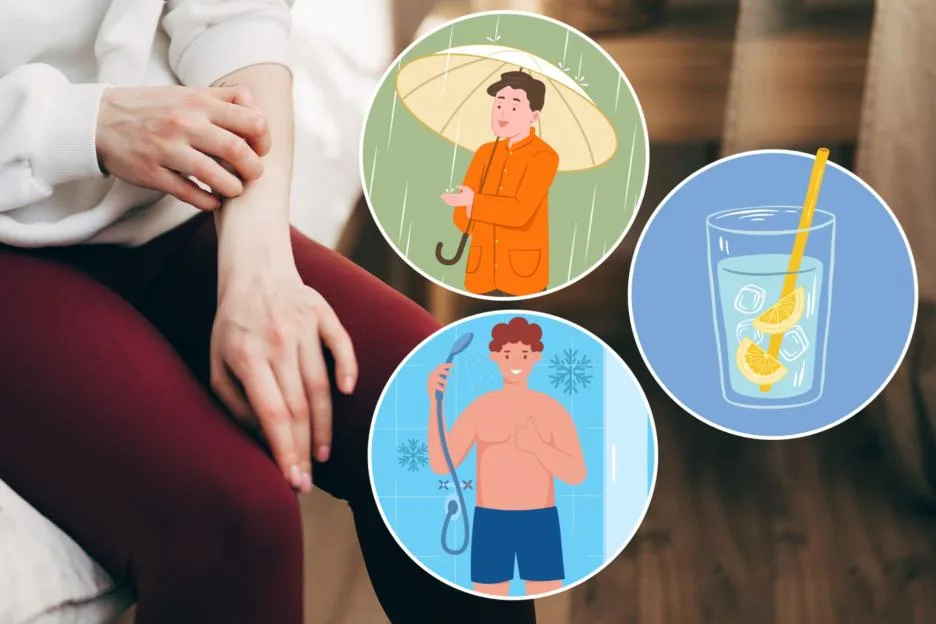
The chilly we’re starting to see could set it off, but walking in the rain, in cold water, or having ice-cream and iced drinks can also trigger this strange reaction.
It occurs when cold air, water, food or drink cause mast cells in the skin to release histamine – a chemical circulated by your immune system in response to potential allergens.
In mild cases, you may see your skin break out in hives or a rash, causing infernal itching.
But for a rare few, the cold can trigger a dangerous allergic reaction known as , which may be life-threatening.
Around 20 per cent of people will struggle with urticaria – allergic skin reactions characterised by hives and swelling at some point in their lives, according to the British Association of Dermatologists (BAD).

What to do if you have anaphylaxis
Follow these steps if you think you or someone you’re with is having an anaphylactic reaction:
- Use an adrenaline auto-injector (such as an EpiPen) if you have one – instructions are included on the side of the injector.
- Call 999 for an ambulance and say that you think you’re having an anaphylactic reaction.
- Lie down – you can raise your legs, and if you’re struggling to breathe, raise your shoulders or sit up slowly (if you’re pregnant, lie on your left side).
- If you have been stung by an insect, try to remove the sting if it’s still in the skin.
- If your symptoms have not improved after five minutes, use a second adrenaline auto-injector.
Do not stand or walk at any time, even if you feel better.
It’s hard to say how many of these cases are caused by the cold.
Some estimates suggest that 0.05 per cent of the population have cold urticaria.
Some people with urticaria have other conditions, such as thyroid disease or other autoimmune disorders, the BAD adds.
Cold urticaria usually develops within minutes of cold exposure.
In some cases, symptoms may appear later.
They tend to include:
- Raised bumps, welts or patches
- Itching — often intense and difficult to ignore
- Stinging or burning sensations
- Localised or widespread rash across the body
- Swelling, especially of the hands, face or lips
You may also notice fatigue, joint pain and a headache.
Symptoms can fade in a few hours, but taking antihistamines can also ease them.
In very rare cases, people with cold urticaria can experience a severe reaction.
Check if it’s anaphylaxis with the ABC of symptoms:
- Airway – swelling in the throat, tongue or upper airways, hoarse voice, difficulty swallowing
- Breathing – sudden onset wheezing, breathing difficulty, noisy breathing, persistent cough
- Circulation – dizziness, feeling faint, sudden sleepiness, confusion, pale clammy skin, loss of consciousness or collapse
You may also notice a rash, swelling in the face, lips or eyes, tingling or itching in the mouth, throat tightness, stomach pain, nausea and vomiting.
It’s important you get immediate help if you notice the ABC symptoms, as they may lead to unconsciousness. On rare occasions, they can be fatal.
If you suspect you may have cold urticaria, Anaphylaxis UK suggests you speak to your who can refer you to an allergy specialist.
To manage the condition, avoiding cold exposure and carrying layers with you to stay warm can help.
You’ll also need to plan ahead for activities such as swimming, outdoor sports, or spending time in weather.
Non-drowsing antihistamines can help control itching, hives and swelling.
If you’ve experienced more serious reactions, you may be prescribed adrenaline to carry with you.
It’s worth noting that not all cases of cold-weather itching will be an allergic reaction.
Often, chilly temperatures can dry out the skin and cause a condition known as winter itch – or pruritis hiemalis.
Chartered chemist and founder of SOS Serum Skincare Bruce Green : “Winter itch mostly occurs on the legs and is usually caused by both cold, dry air and friction caused by winter clothing such as tights.”
“The itching sensation can often occur suddenly and is most commonly experienced when clothes are removed, or at night.”
He suggested paying attention to the material of your tights, as the conditions can be aggravated by certain types such as wool.
“Reduce and soothe the symptoms of winter itch by wearing lighter fabrics indoors that won’t irritate skin,” he added.