
DAYLIGHT hours are shifting as we head deeper into autumn and toward winter.
A few short months ago, 6am brought near-full daylight.
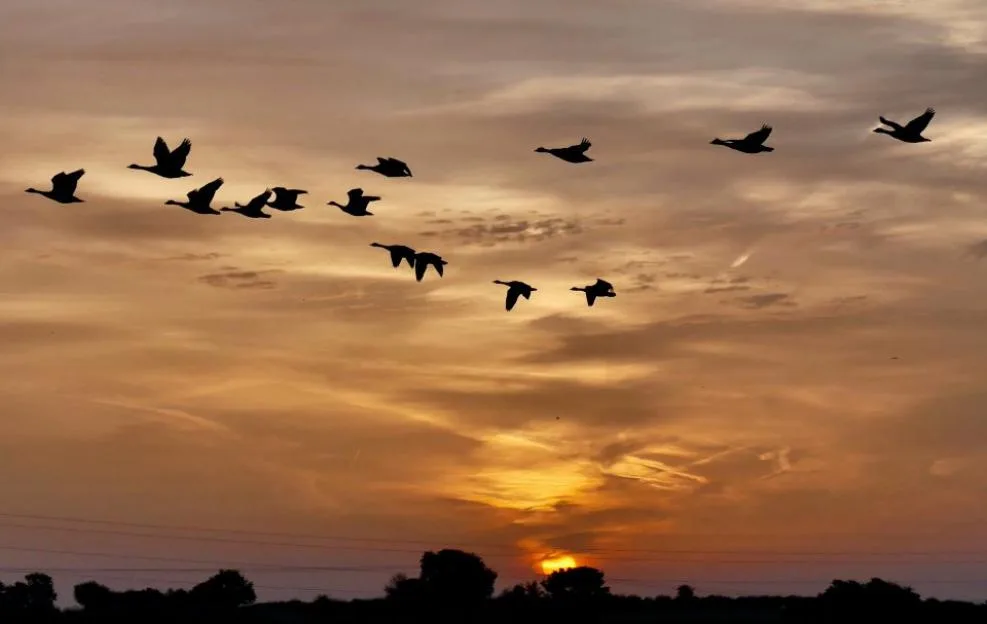

But now, those early starts are made all the more difficult by a significant lack of vitamin D.
One way to stay hopeful that the sun will – at some point – show its face as you trudge into work is to understand when it actually gets light.
And surprisingly, it’s not when the sun rises above the horizon.
It’s a common point of confusion for early risers. While many rely on to work out when the day “begins”, sunrise and “first light” are not the same thing.
Here’s a guide to the different stages of dawn, how they impact visibility, and a full list of UK first light times for the remainder of 2026.
What is Civil Twilight and Civil Dawn?
“Civil dawn” marks the moment that “civil twilight” begins in the morning.
It occurs when the geometric centre of the sun reaches six degrees below the horizon.
It’s the most practical and important phase of morning light for the general public.
During civil twilight, enough sunlight scatters in the atmosphere that the sky takes on a bright, clearly visible hue.
It’s during this phase that it becomes light enough to carry out ordinary outdoor activities without artificial lights.
It’s when automated streetlights switch off and vehicle headlights are typically no longer necessary.
You can comfortably read, drive, or work outdoors relying only on natural illumination.
Civil twilight lasts from civil dawn until sunrise.
Full list of UK morning light times for 2026
Because the UK covers a large area, civil dawn times vary slightly depending on how far north, south, east, or west you live.
The following Time and Date figures provide a week-by-week guide, using London to act as a national baseline.
- October 12 – 6.45am
- October 18 – 6.55am
- October 25 – 6.07am
- November 1 – 6.18am
- November 8 – 6.30am
- November 15 – 6.41am
- November 22 – 6.52am
- November 29 – 7.02am
- December 6 – 7.10am
- December 13 – 7.17am
- December 20 – 7.22am
- December 27 – 7.25am
- December 31 – 7.26am
The most dramatic change comes on October 25 because that morning.
At 2am, the clocks go back one hour to 1am as the UK returns to .
What are Astronomical and Nautical Twilight?
Before civil dawn, the Earth passes through two darker phases of morning twilight, which constitute the true “first light.”
Astronomical Twilight is the earliest stage of morning light, beginning when the sun is 18 degrees below the horizon.
To the naked eye, the sky still appears completely dark.
This phase is significant to astronomers because the faintest stars and galaxies begin to vanish from view as sunlight starts scattering in the upper atmosphere.
Nautical Twilight is the subsequent phase, beginning when the sun reaches 12 degrees below the horizon.
The sky begins to take on a noticeable bluish tint, and the horizon becomes visible against the sky.
It is named “nautical” twilight because, historically, this was the moment sailors could distinguish the horizon well enough to navigate using the remaining bright stars.
Despite this slight illumination, it remains too dark for most regular activities, and artificial lighting is still required to see clearly on the ground.
When will it get light today (October 15)?
Here’s when you can expect it to get light in the UK this morning, once again using London as a baseline.
The key times are:
- 5.33am – Astronomical Twilight
- 6.12am – Nautical Twilight
- 6.50am – Civil Twilight