
UAE Flight Disruptions Continue as Dubai, Abu Dhabi and Sharjah See Cancellations
Travellers using Dubai, Abu Dhabi and Sharjah airports are seeing selected cancellations, delays and revised departure times on 19 September 2026, while most UAE airline operations continue.
 Written byEze Chidiebere Paul
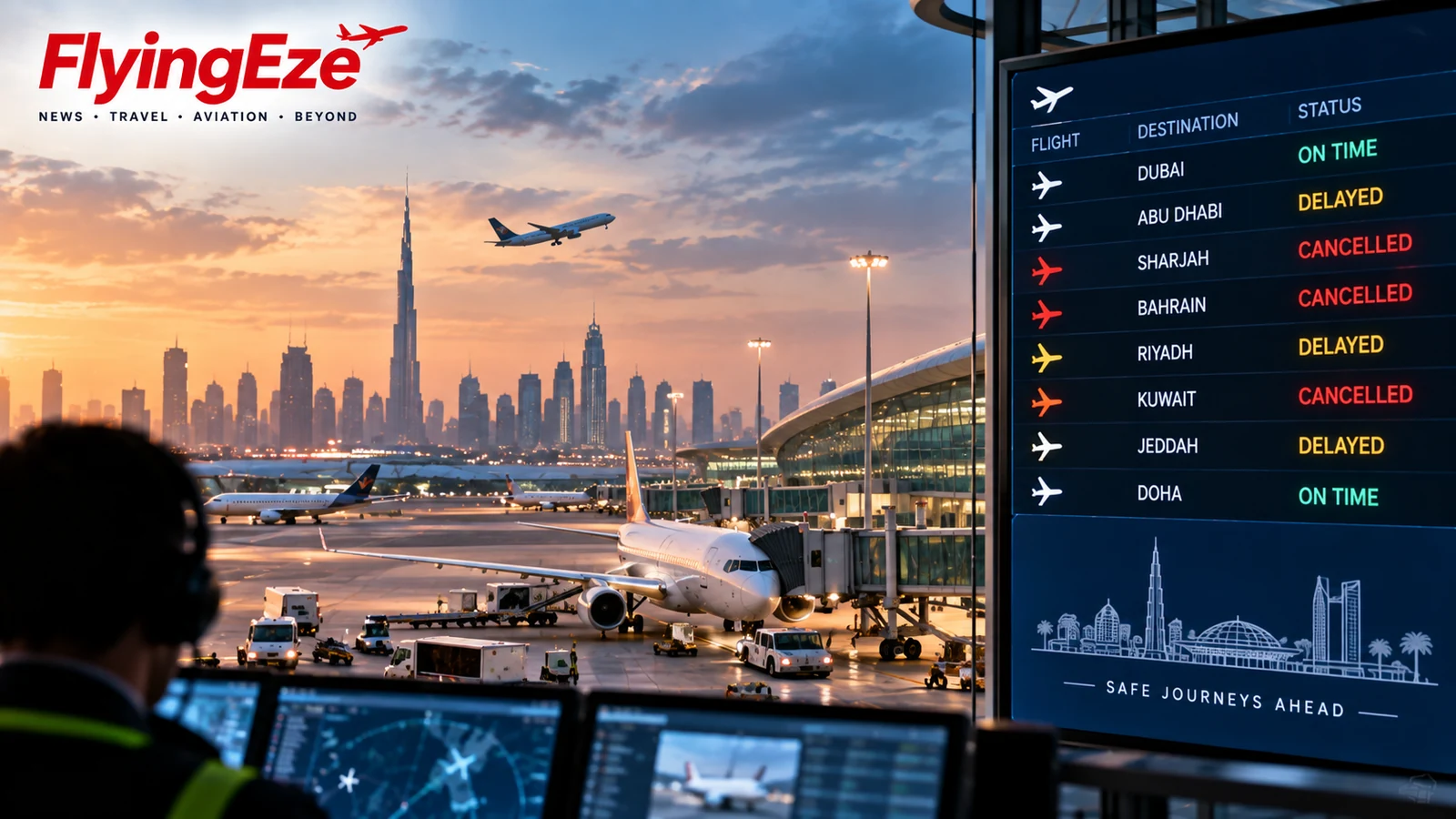
Travellers flying through the United Arab Emirates on Saturday, 19 September 2026 are facing a mixed operational picture, with selected cancellations, delays and revised departure times affecting services from Dubai, Abu Dhabi and Sharjah.
Current reporting indicates that the disruption is concentrated on particular routes rather than representing a system-wide shutdown. Passengers are therefore being advised to check their individual flight status directly with their airline before travelling to the airport.
Which UAE flights are affected?
Gulf News reported on 19 September that several Air Arabia and flydubai services were cancelled, including flights linking the UAE with Bahrain, Saudi Arabia and Kuwait. The same report said some Emirates, flydubai and Etihad departures were operating with revised timings.
Among the flydubai services reported as cancelled were flights between Dubai and Bahrain, Abha and Yanbu. Air Arabia also listed selected cancellations involving Kuwait, Bahrain and Abha.
At the same time, Emirates and Etihad indicated that their wider scheduled operations were continuing, although individual services could still be delayed or retimed. Emirates' own flight-status tools allow travellers to check current departures by route or flight number.
Dubai, Abu Dhabi and Sharjah remain operational
The important distinction for passengers is that Dubai International Airport, Zayed International Airport in Abu Dhabi and Sharjah International Airport remain active. The current disruption does not amount to a blanket suspension of UAE air travel.
Instead, passengers may encounter different conditions depending on their airline, destination, departure time and the operational circumstances affecting a specific flight.
Why are flights being disrupted?
There is no single confirmed cause covering every delayed or cancelled service. Airline schedules can change because of aircraft rotations, crew availability, airport constraints, technical issues, airspace restrictions, security considerations and other operational factors.
Regional tensions have affected aviation across parts of the Gulf in recent months, but it would be inaccurate to attribute every cancellation or delay on 19 September to the same cause. Travellers should rely on the explanation provided by their airline for a particular service where one is available.
What passengers should do before leaving for the airport
- Check the latest flight status directly on the operating airline's website or app.
- Confirm the departure terminal and revised boarding time before travelling.
- Allow additional time if the airline advises earlier airport arrival.
- Monitor email, SMS and app notifications for schedule changes.
- If a flight is cancelled, contact the airline or booking agent about rebooking, refunds or onward connections.
Passengers with tight onward connections should pay particular attention to revised departure times, since even a moderate delay on the first sector can affect a later connection.
UAE aviation networks are still operating
The latest disruption comes while Gulf airlines continue rebuilding and adjusting their networks after a period of wider regional aviation pressure. Reuters reported earlier this week that flydubai expects to return to full operational capacity by the end of 2026 after operating at about 85% of its network capacity.
For travellers, the practical message is straightforward: UAE airports remain open and most services continue to operate, but selected routes can change at short notice.
FlyingEze has also been tracking other recent aviation disruptions, including the UK air traffic control software outage investigation .
Bottom line
Flight operations across Dubai, Abu Dhabi and Sharjah are continuing on 19 September 2026, but selected cancellations, delays and schedule revisions are affecting travellers. Passengers should verify their exact flight directly with the airline before setting out for the airport and continue checking for changes until departure.
Continue reading

Air Peace Challenges NCAA August Delay Data, Says 700 Flights Were Omitted
Air Peace has challenged NCAA August 2026 delay statistics, saying more than 700 of its flights were omitted from the dataset and the published figures distort its performance.

UK Air Traffic Control Outage: Software Defect Blamed for 2,000 Flight Cancellations
NATS says a software defect caused the 8 September UK air traffic control outage that led to more than 2,000 flight cancellations and widespread delays.

Abuja Hosts 35th ACI Africa Assembly as 500 Airport Leaders Gather
Abuja is hosting the 35th ACI Africa Annual General Assembly, Regional Conference and Exhibition from 19–25 September 2026, bringing together more than 500 aviation stakeholders.

Ethiopian Airlines to Launch Port Harcourt–Addis Ababa Flights in December
Ethiopian Airlines will begin four weekly passenger flights between Port Harcourt and Addis Ababa on 1 December 2026, expanding its Nigerian network to five destinations.