THIS evening’s solar eclipse is the best the UK has seen since 1999, and the first instinct for many will be to reach for their phones.
But just – do that and you risk damaging your camera, and more importantly your eyesight.
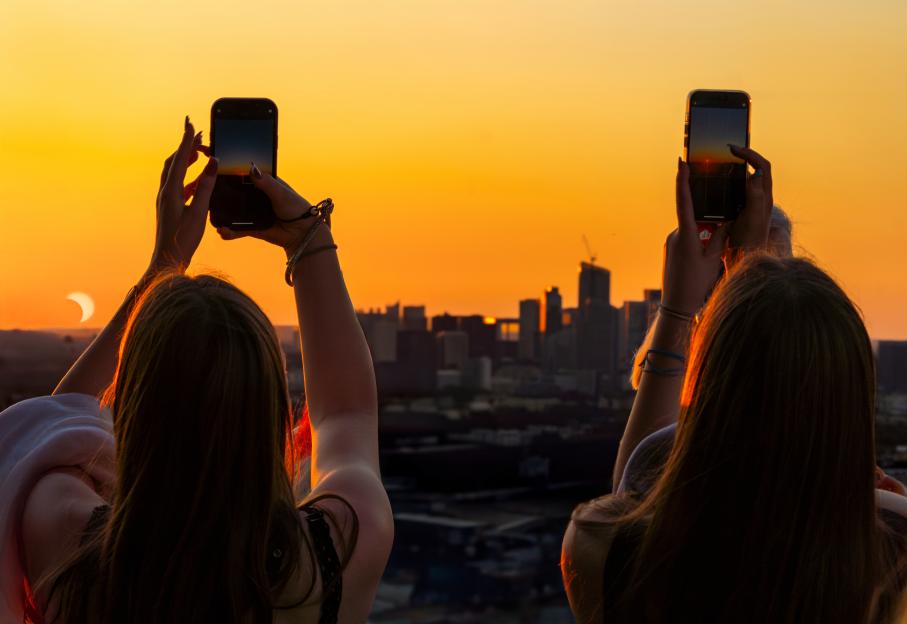 Snapping pictures of a solar eclipse on your phone without taking precautions can be dangerous Credit: Getty
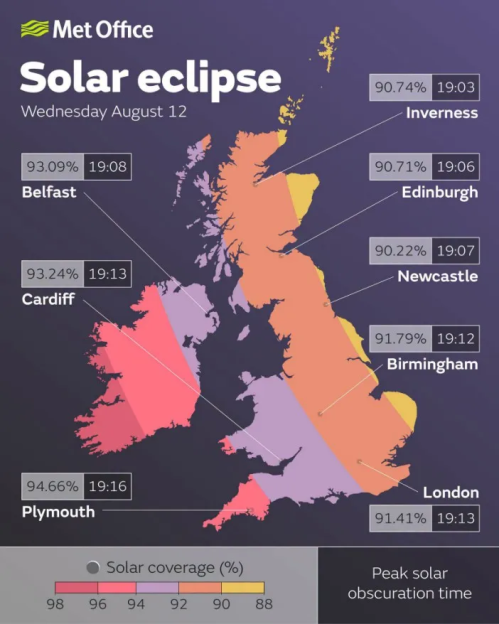 The Met Office’s map shows when and where the Sun will be most obscured by the Moon, and by how much
Can I take photos of the solar eclipse?
Without protection on the lens, the Sun’s rays can overheat the camera module inside, permanently burning parts of the sensor and leaving blotches or dead pixels that can’t be fixed.
Asked about the risk at the time of the total solar eclipse in the US in 2024, said: “Yes, the phone sensor could be damaged just like any other image sensor if it’s pointed directly at the Sun.
“This is especially true if you’re using any sort of magnifying lens attachment on the phone.
“You would need to utilize the proper filters just like on any other camera.”
The agency suggested an alternative, adding: “The best practice would be to hold a pair of in front of your phone’s lenses when photographing the Sun.”
It is also a good idea to take the phone out of its case first so the filter sits flat against the camera.
How do you photograph a solar eclipse safely?
The bigger danger isn’t the equipment, it’s your eyes.
Space.com says: “It is possible that viewing the unfiltered Sun on your cellphone or tablet screen could damage your eyes if you stare at the screen long enough.
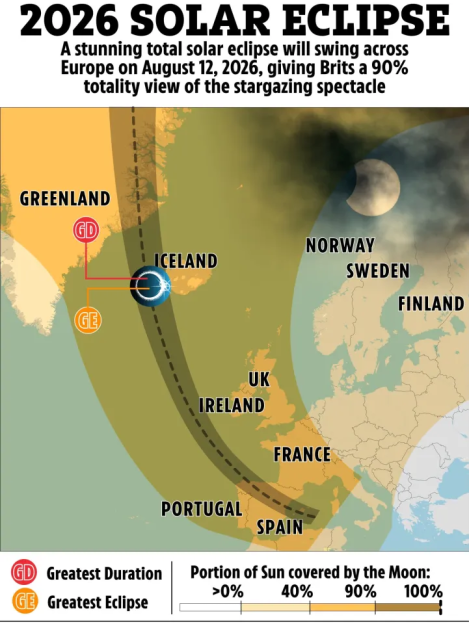 As seen from the UK, the Moon will cover between 90% and 96% of the Sun
“This is another reason to use a solar viewer over the camera.
“But a more serious threat is the possibility that amateur photographers will inadvertently while trying to snap a photo.
“If you point your cellphone up toward the Sun, the phone or tablet might not block the bright glowing orb as you attempt to look at the screen.
“Thus, you could unintentionally look directly at the Sun while trying to take a photograph (even if the camera is covered with a solar filter).”
Any glasses used as a filter must be genuine, complying with the and bought from a reputable retailer such as an optician, science centre or astronomy supplier.
For a proper camera, eclipse glasses are not a suitable substitute for a certified solar filter.
A filter designed specifically for solar photography is required, and it needs to be fitted exactly as instructed.
Never look through a camera, telescope or binoculars while wearing , as concentrated sunlight can burn through the filter and cause severe eye injury.
All of those devices require purpose-made solar filters secured over the front of the lenses and expert guidance.
Sunglasses, neutral density filters and smoked glass are all completely useless here – you should never attempt to .
How can you get the best photos?
On a phone, take the case off so the filter sits flush, hold eclipse glasses flat over the lens, turn the flash off, tap to focus and drag the exposure slider down – auto settings will blow out the image.
With a proper camera, a solar filter must be expertly secured over the front of the lens. Use a tripod and delayed shutter release so you are not touching the camera as it shoots.
But the better photograph may be behind you – NASA photographer Bill Ingalls reckons the real pictures are “of the people around you pointing, gawking and watching it”.
falls between roughly 7.05pm and 7.15pm, with timings and coverage varying across the country.
More than 96% of the Sun will be obscured in the far South West, while the whole country will enjoy at least 90% coverage.
As the eclipse occurs in the evening in the UK, the Sun will already be low in the western sky, meaning viewers will need a clear, unobstructed view towards the horizon.